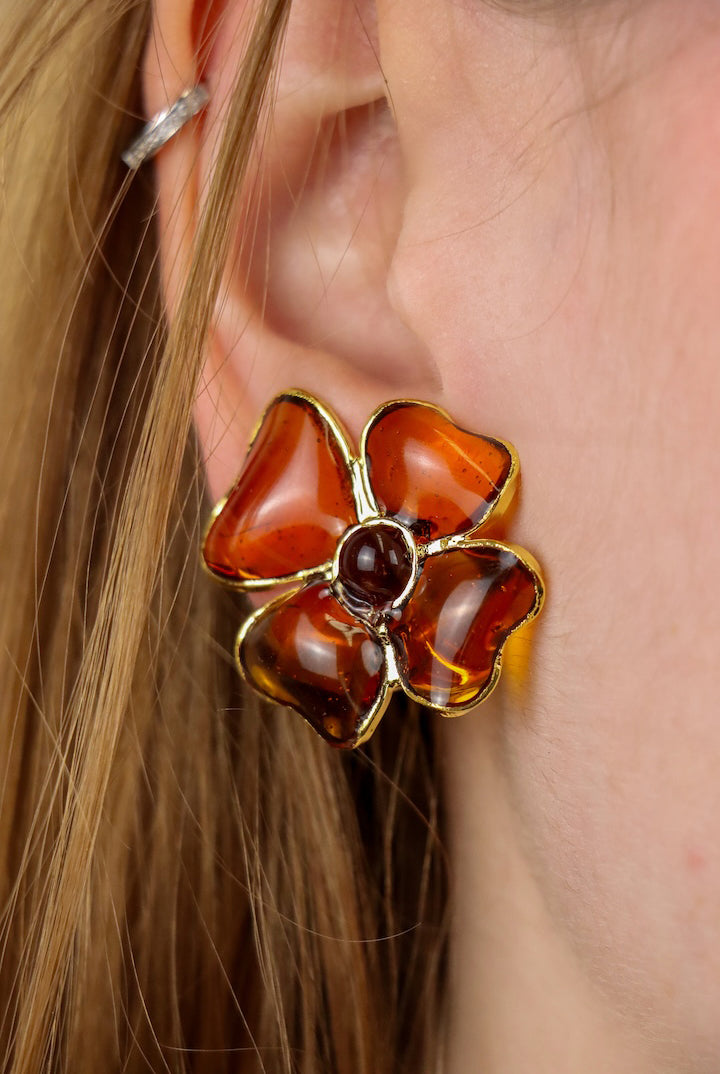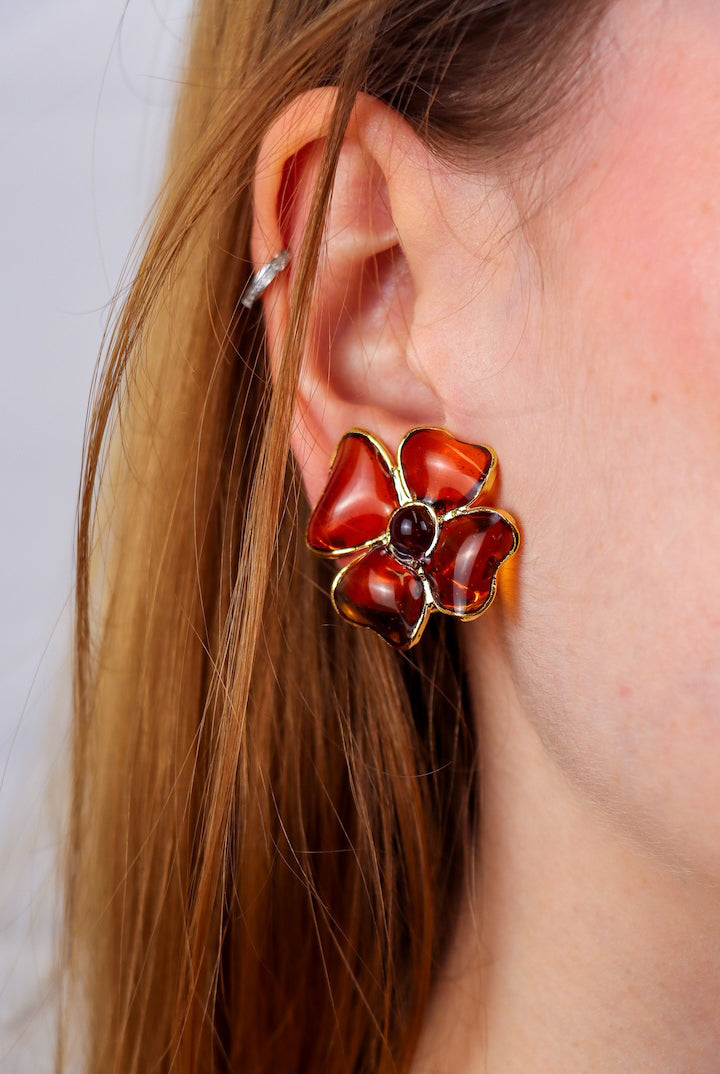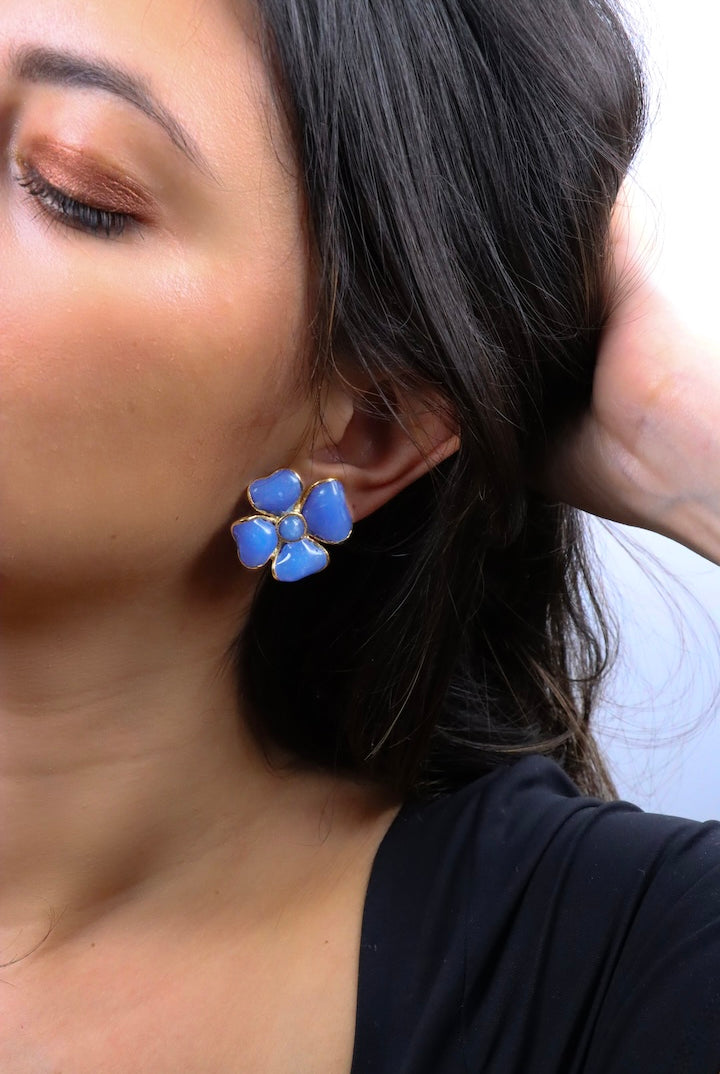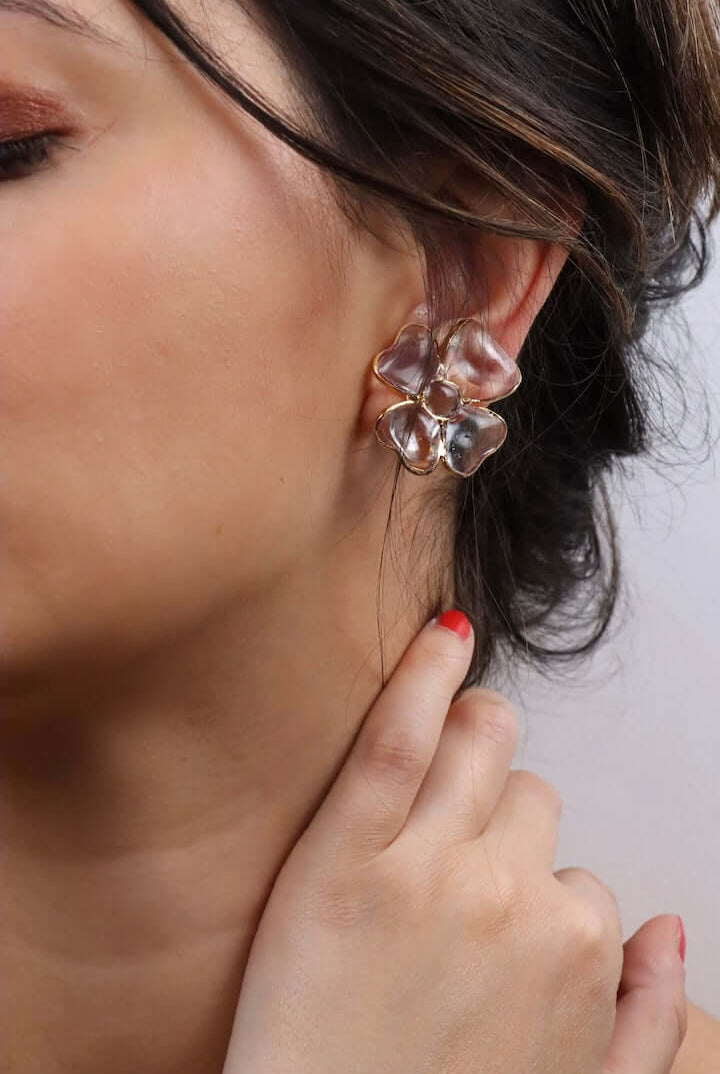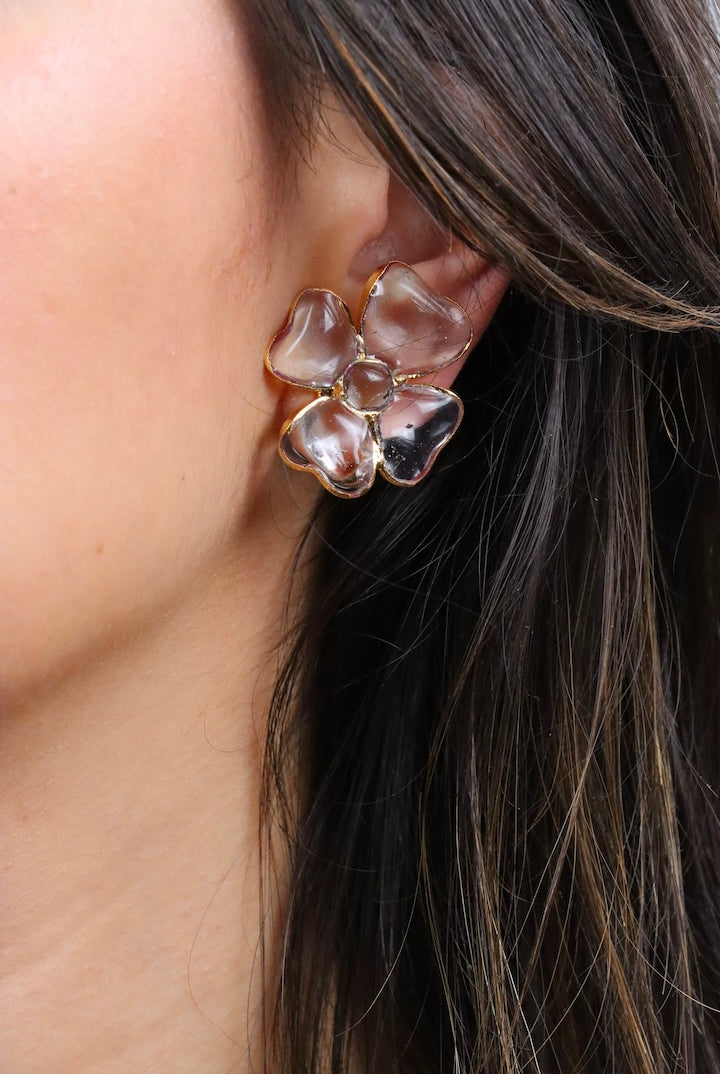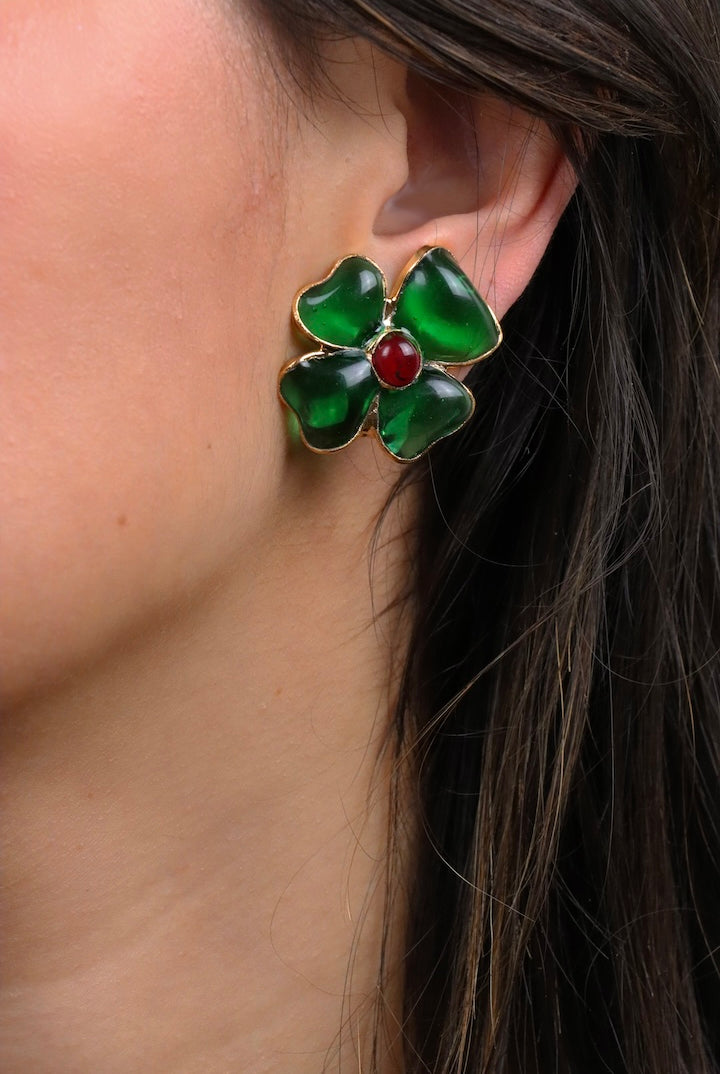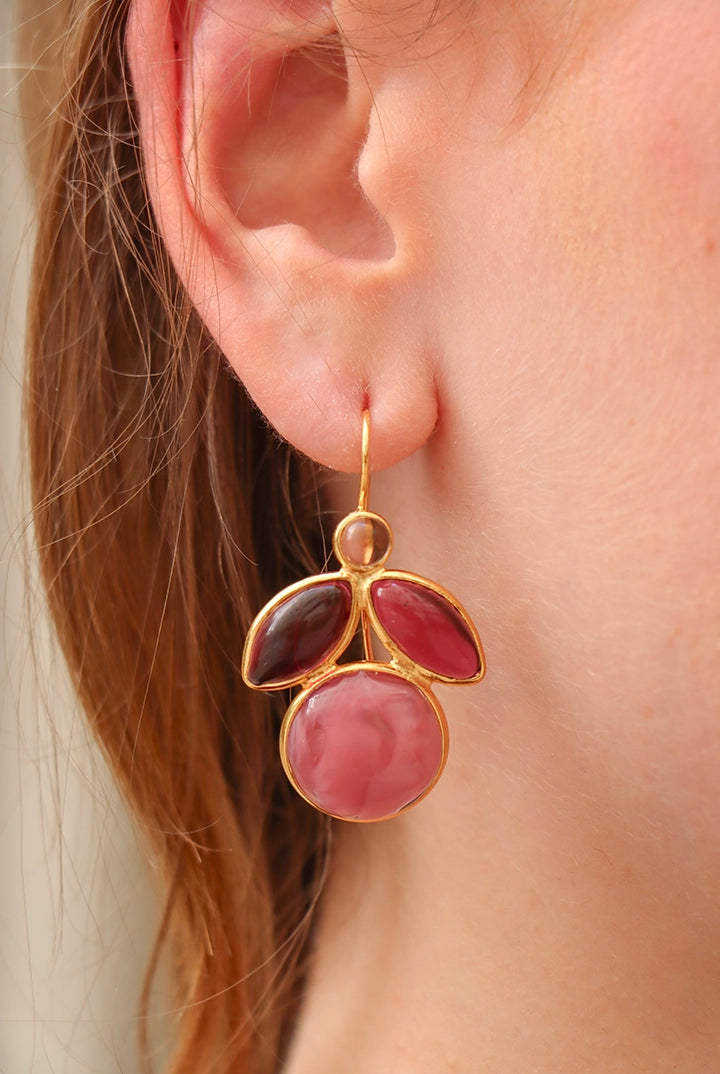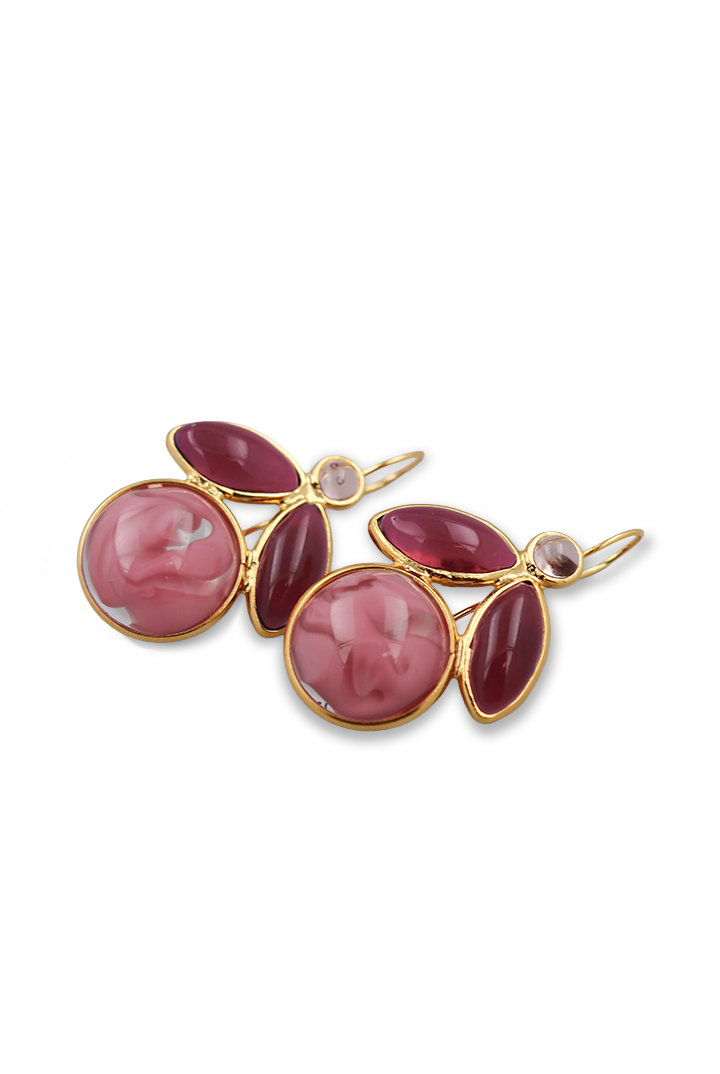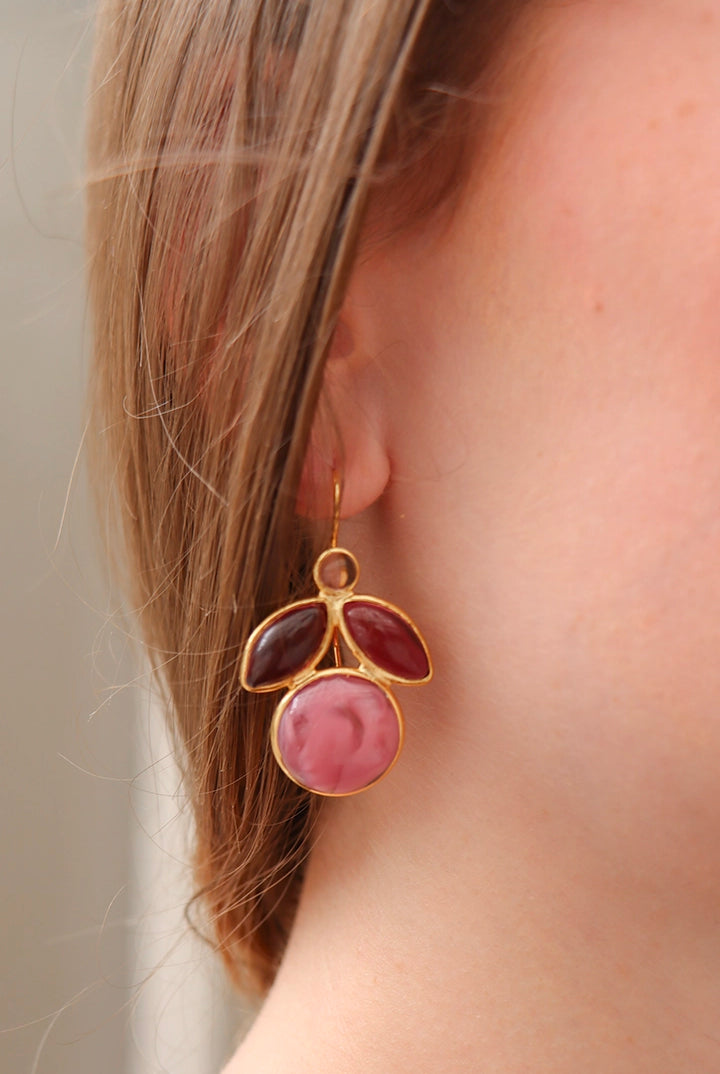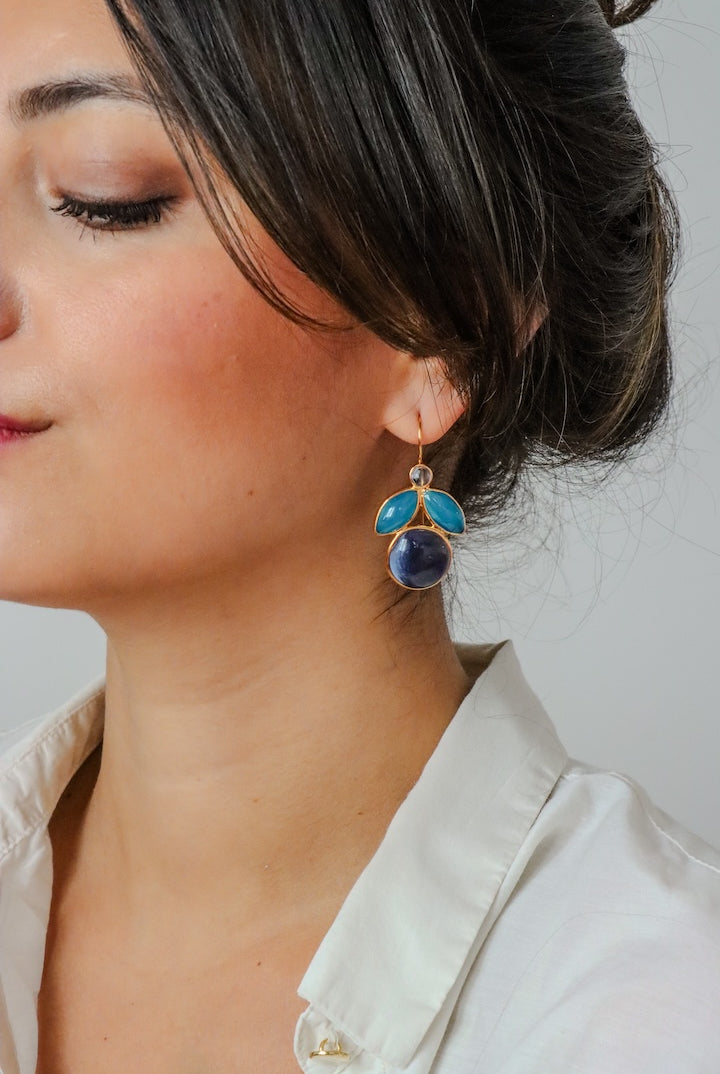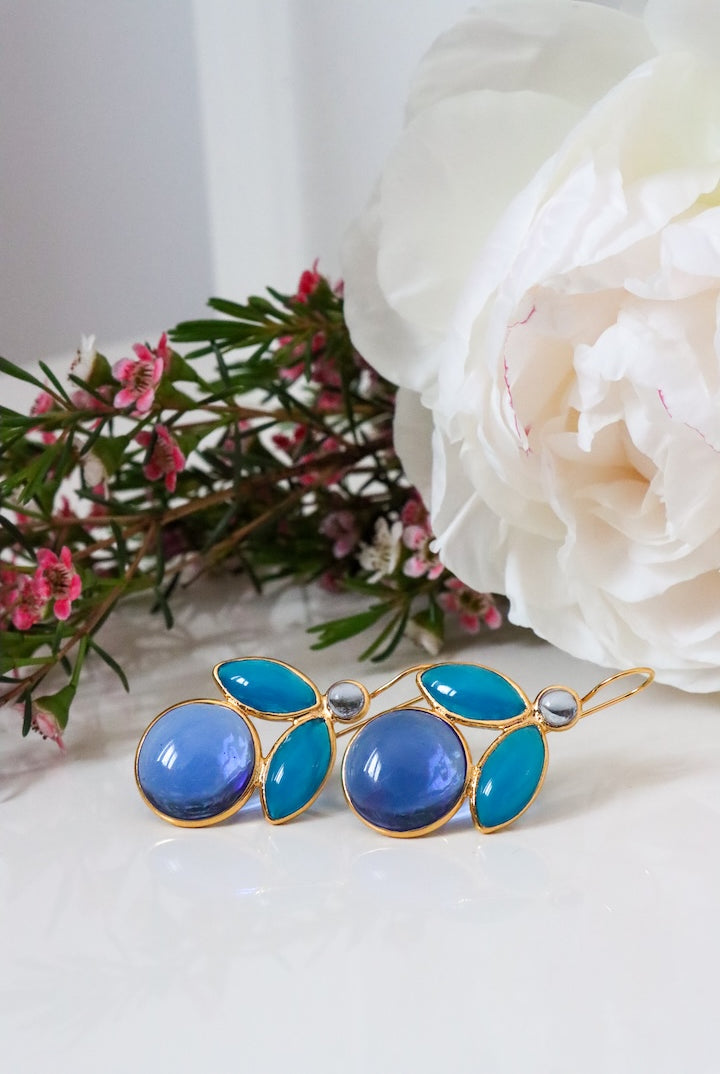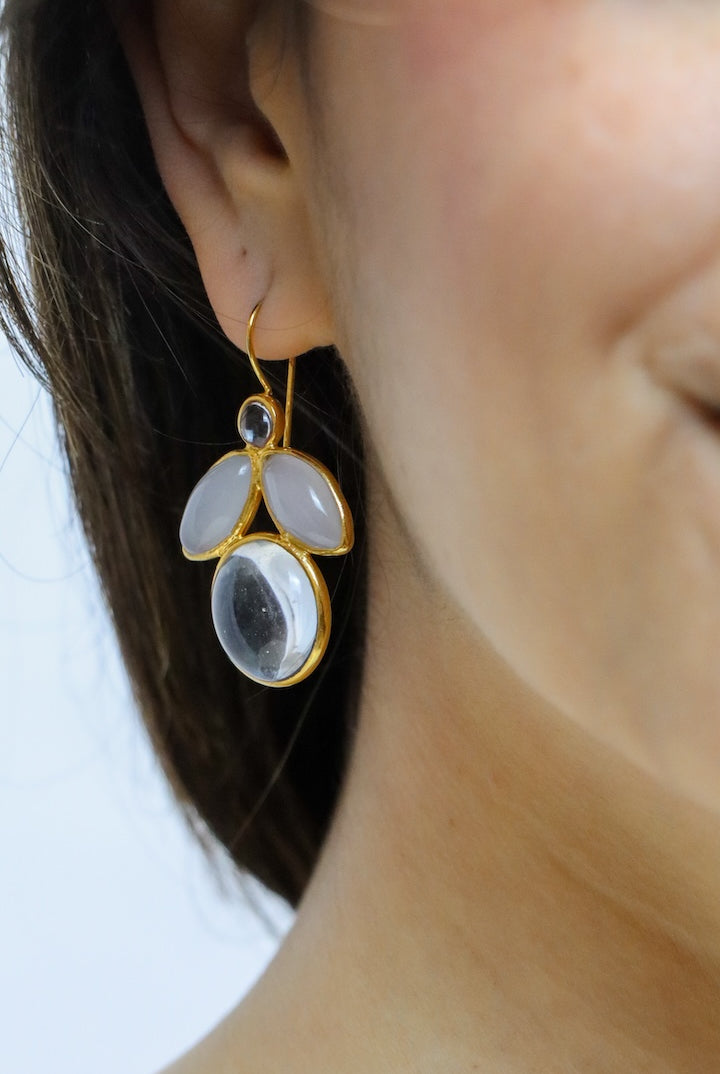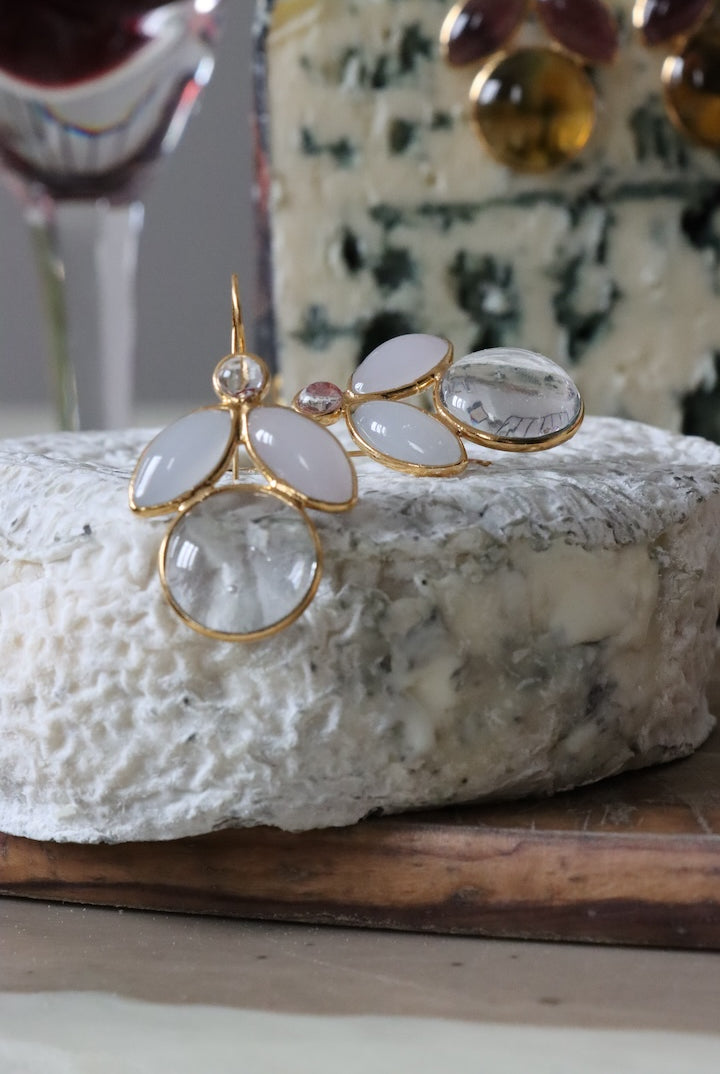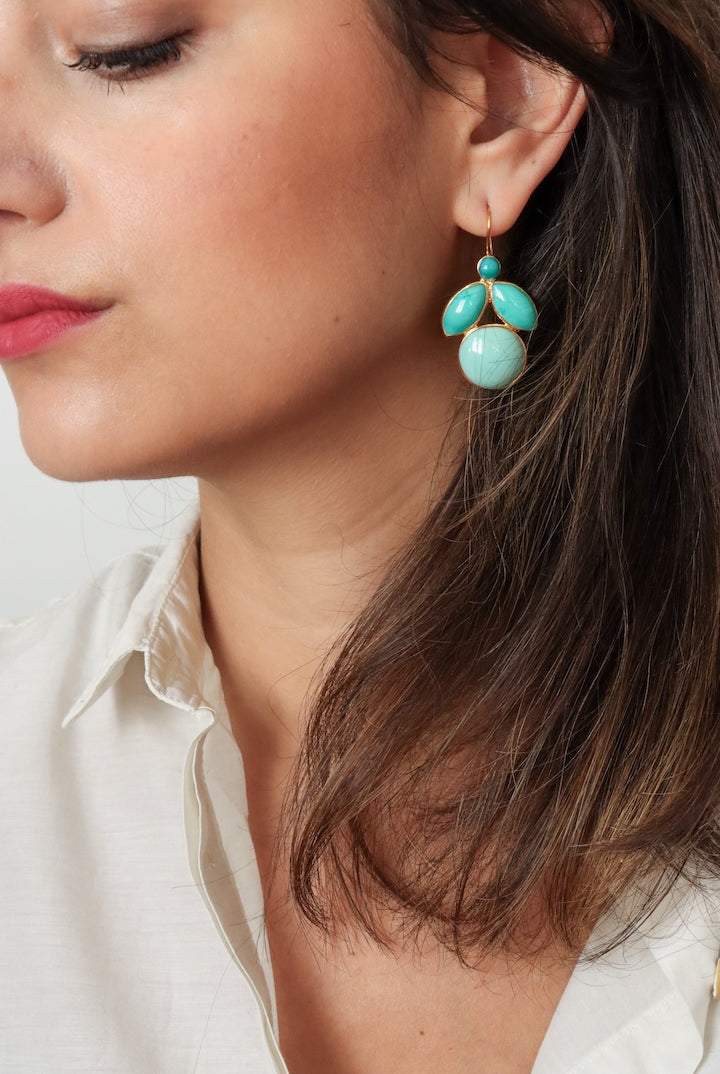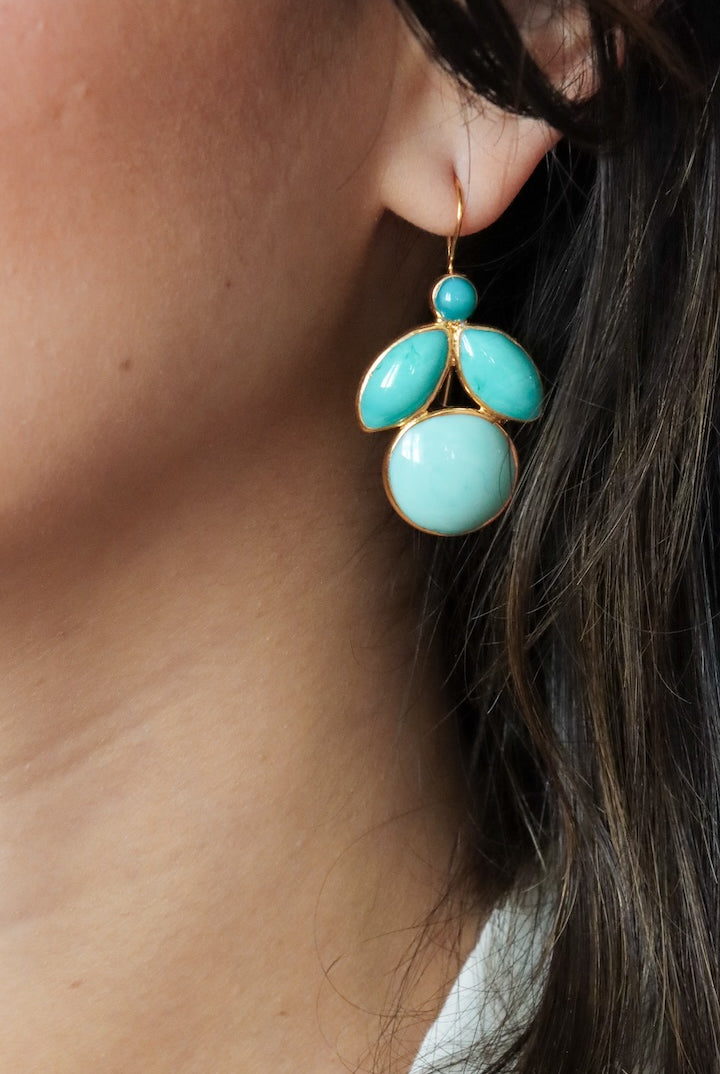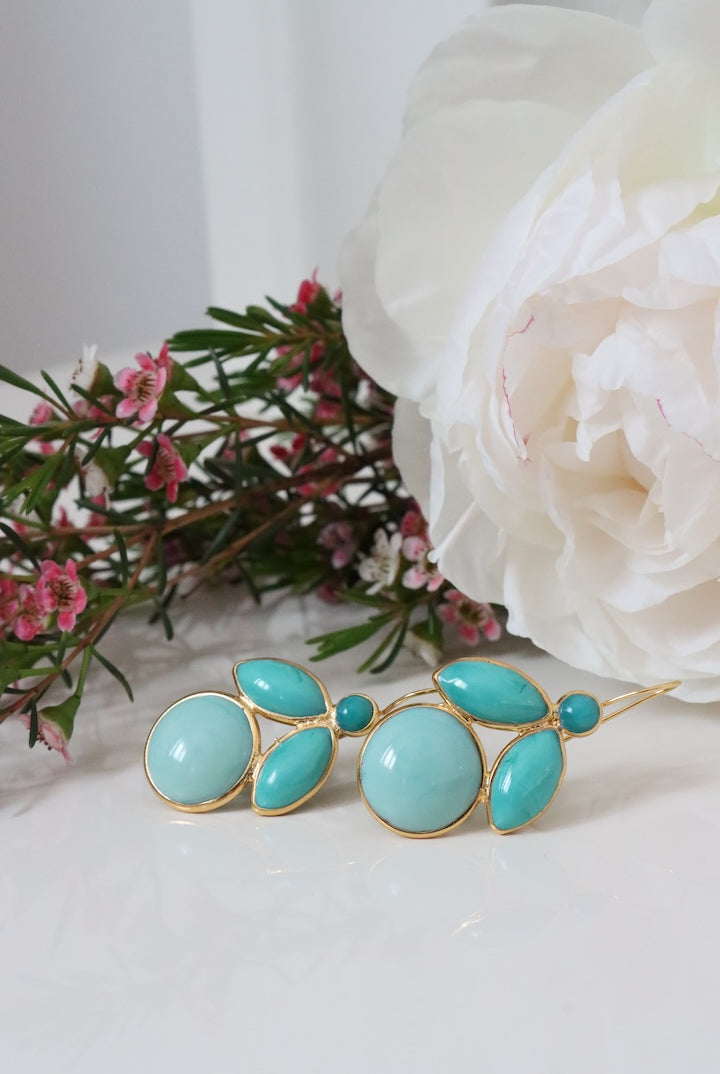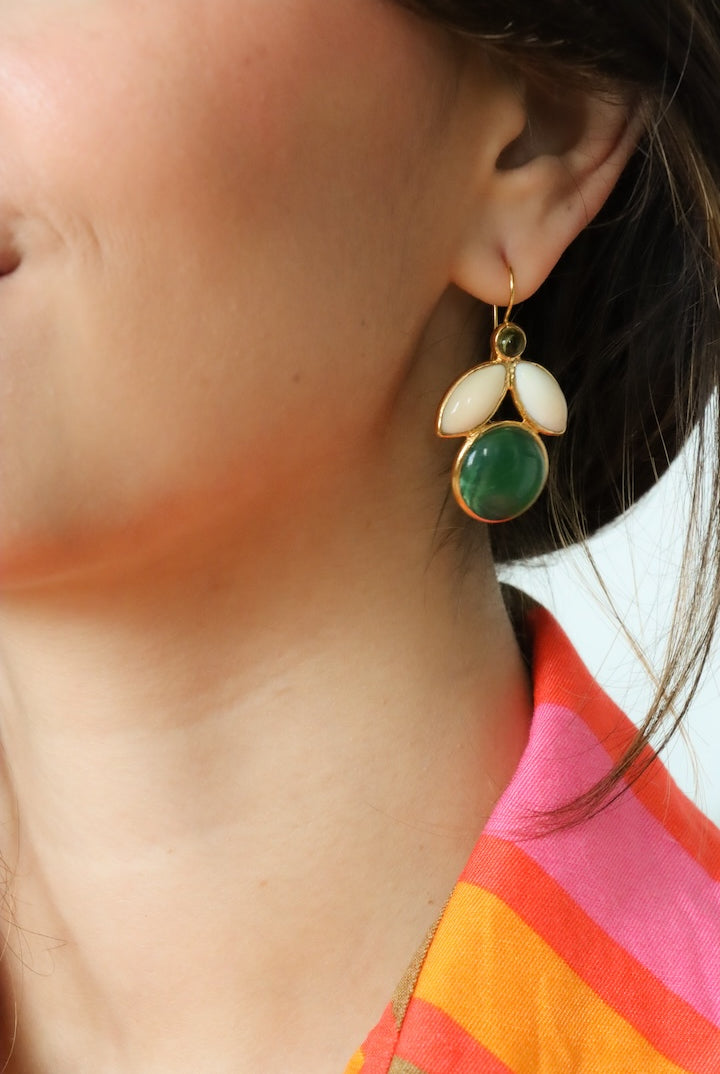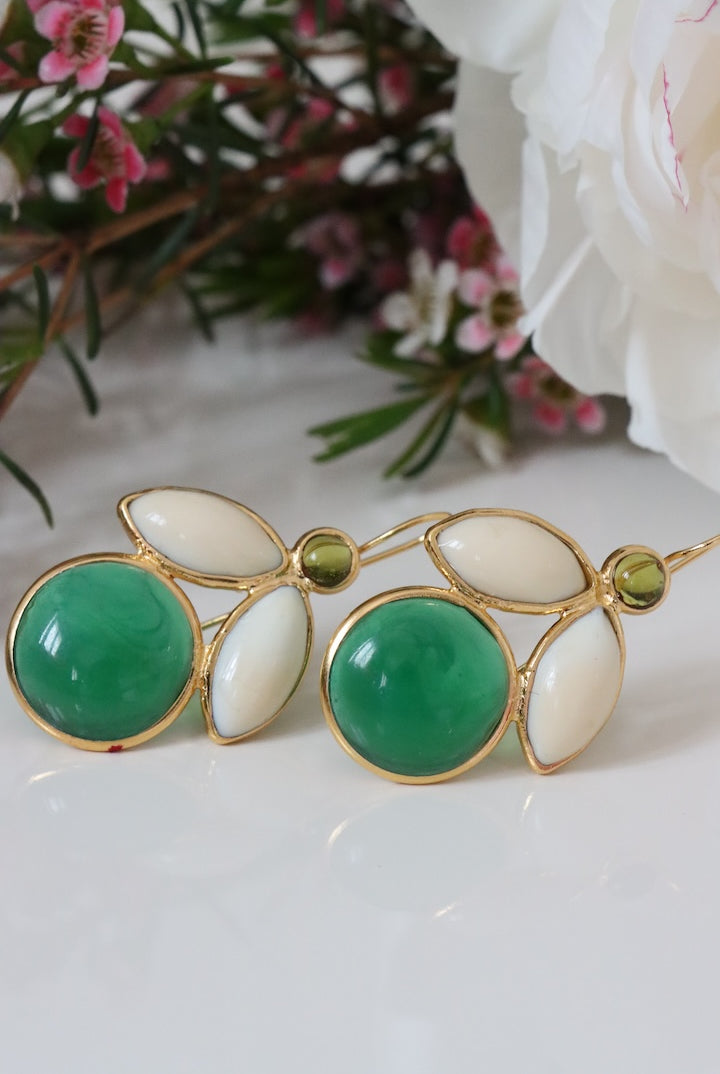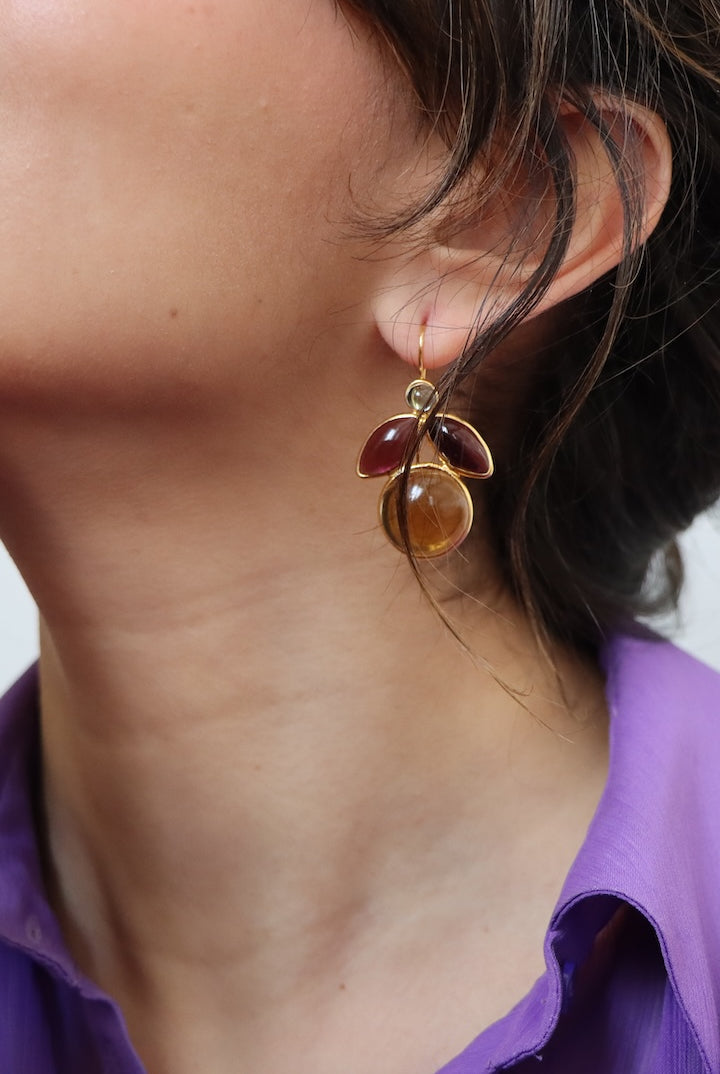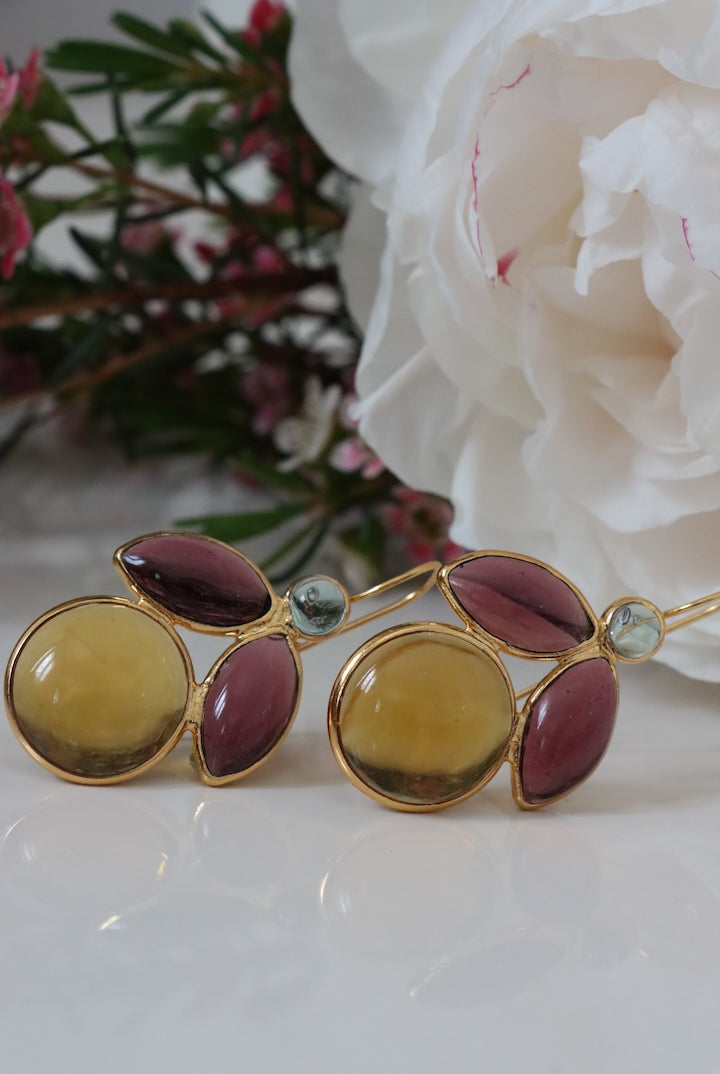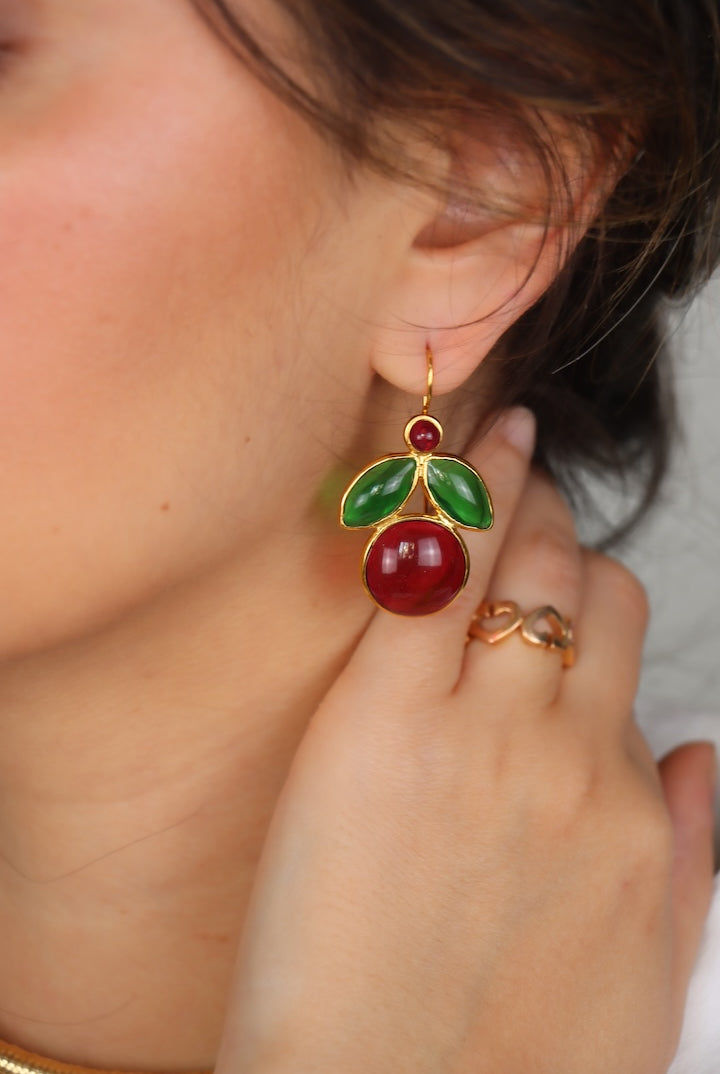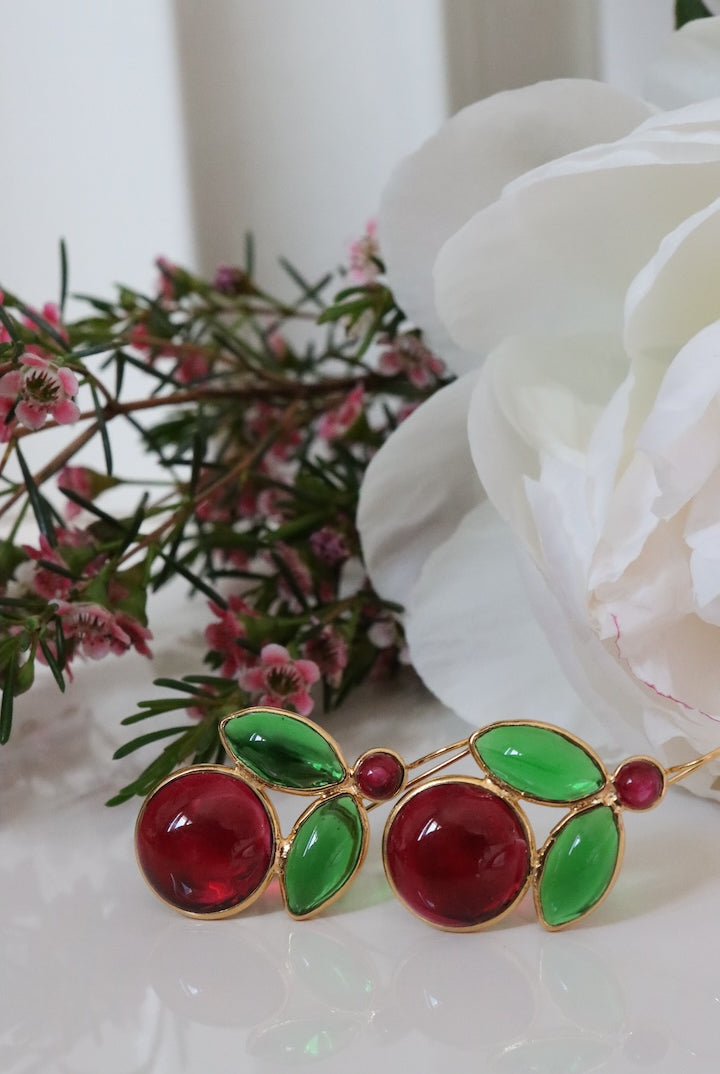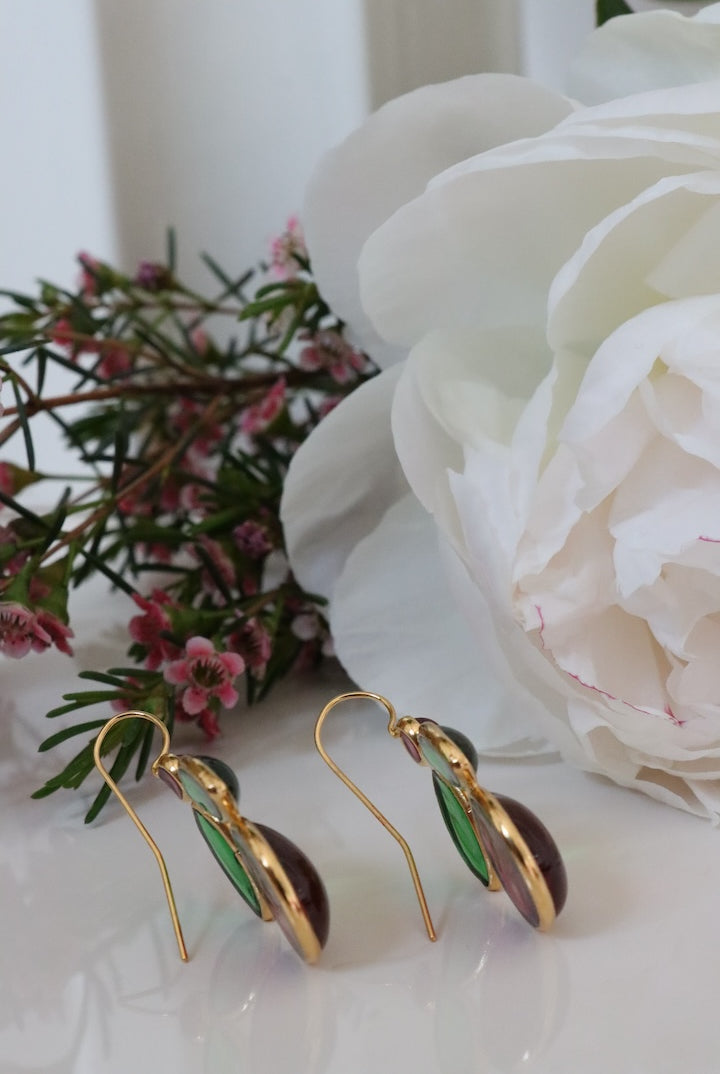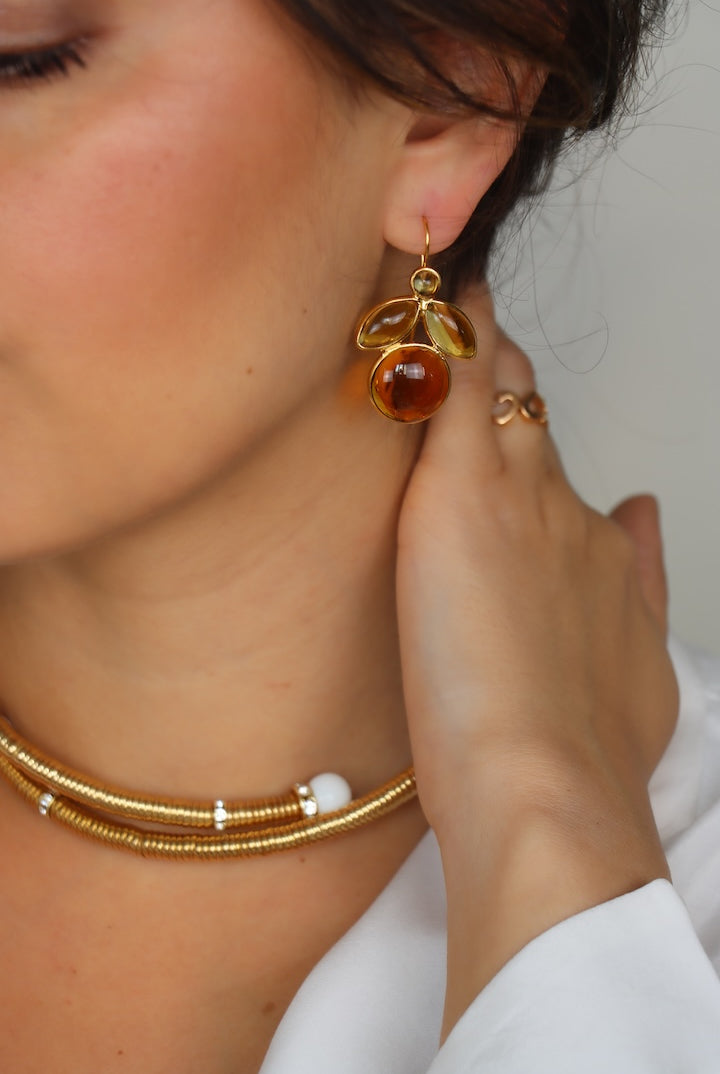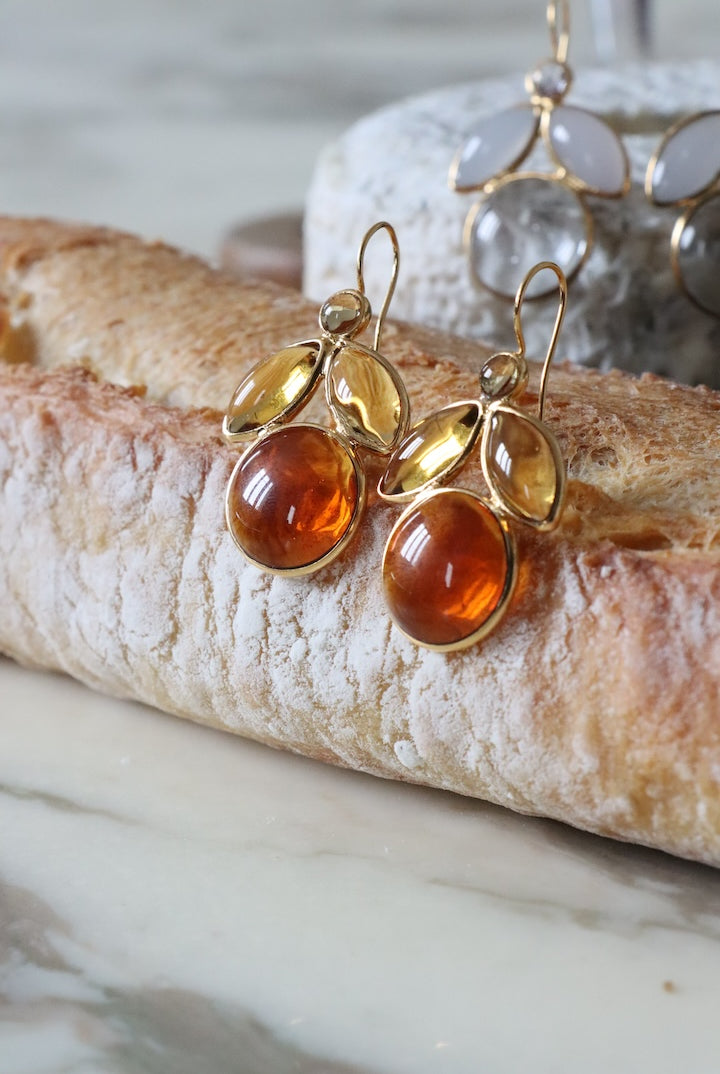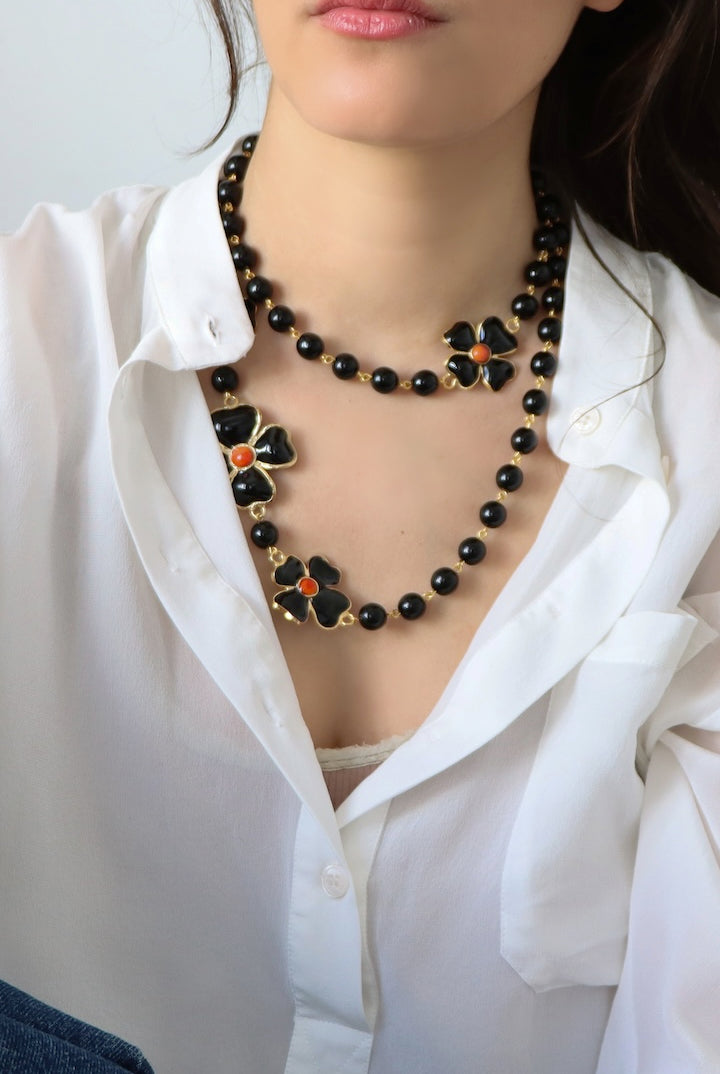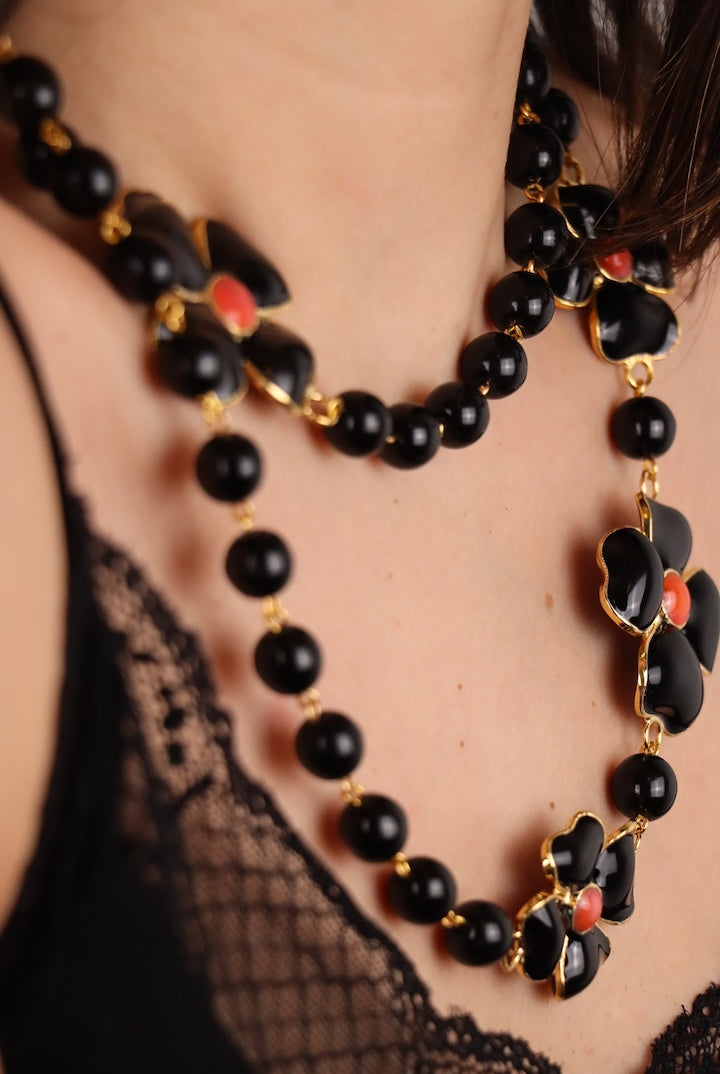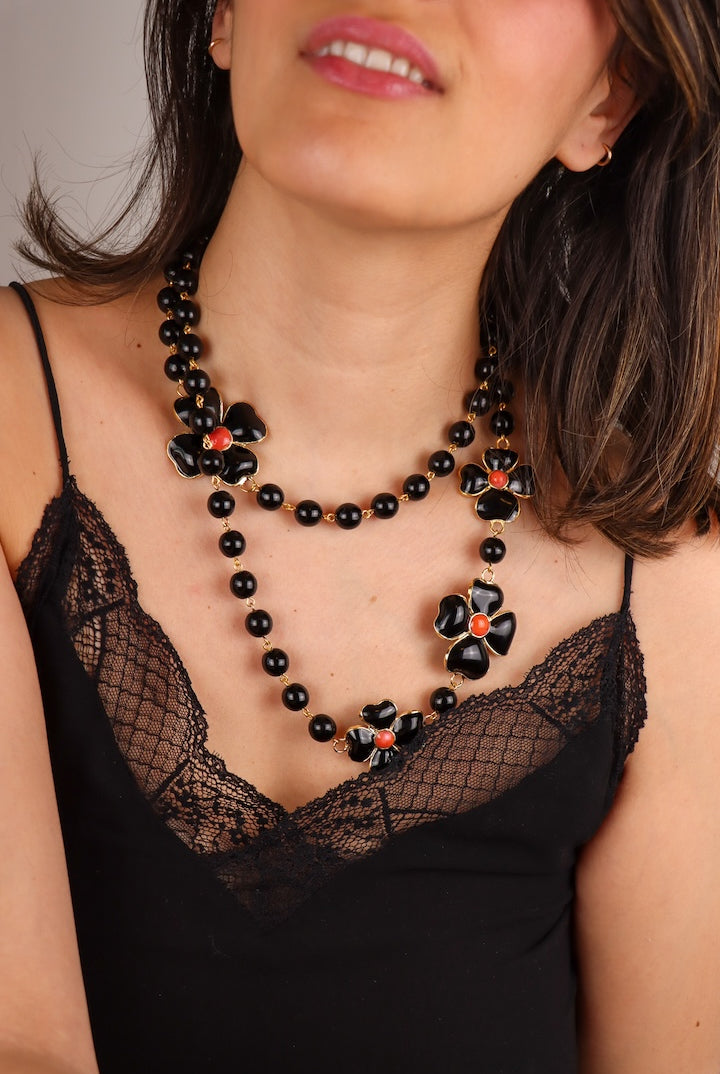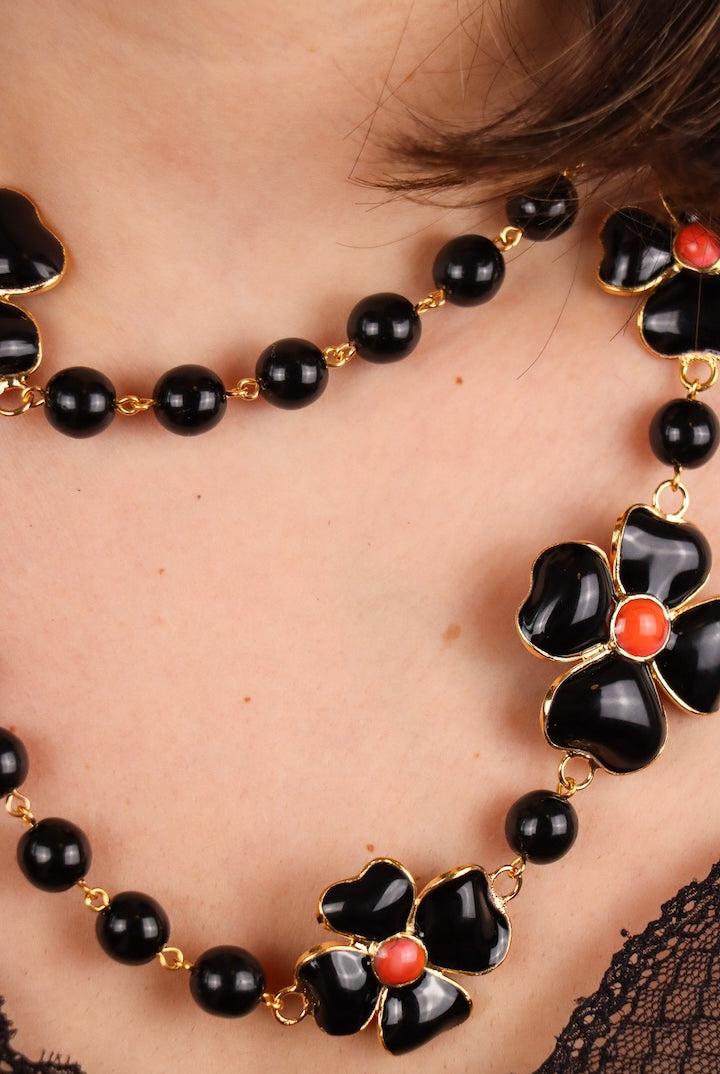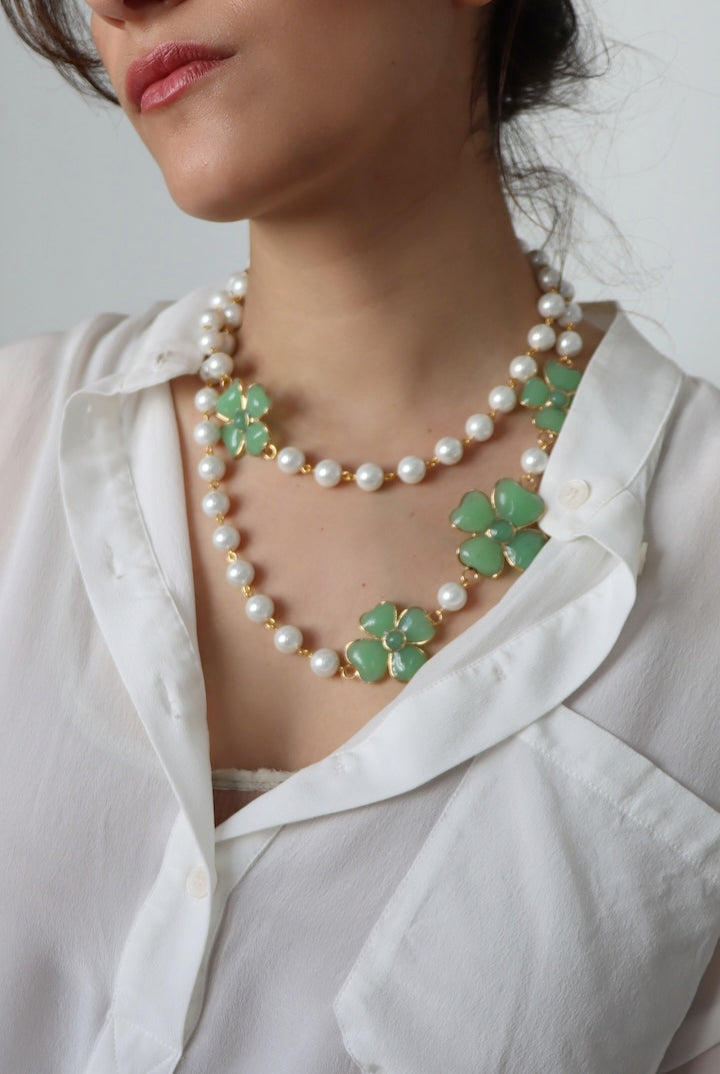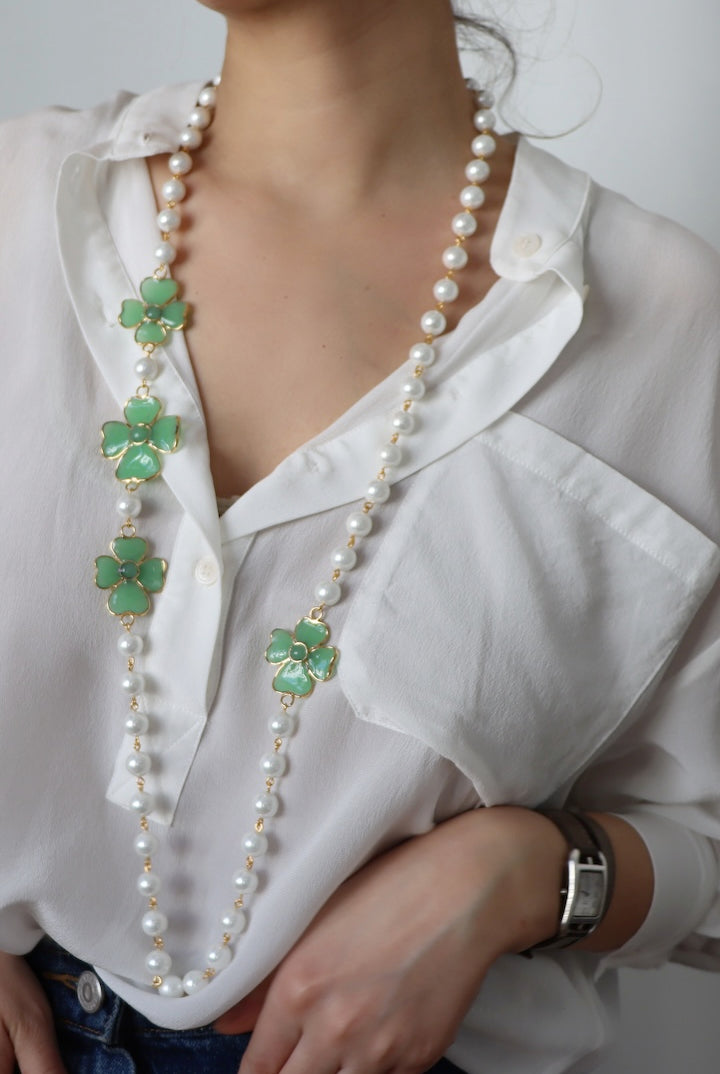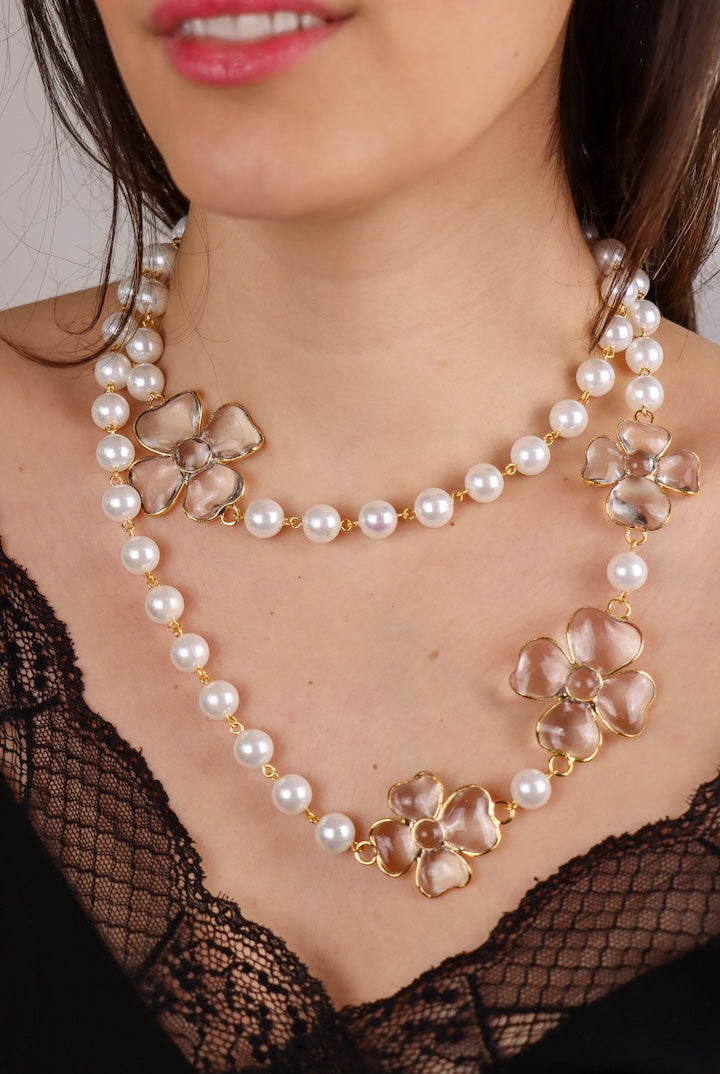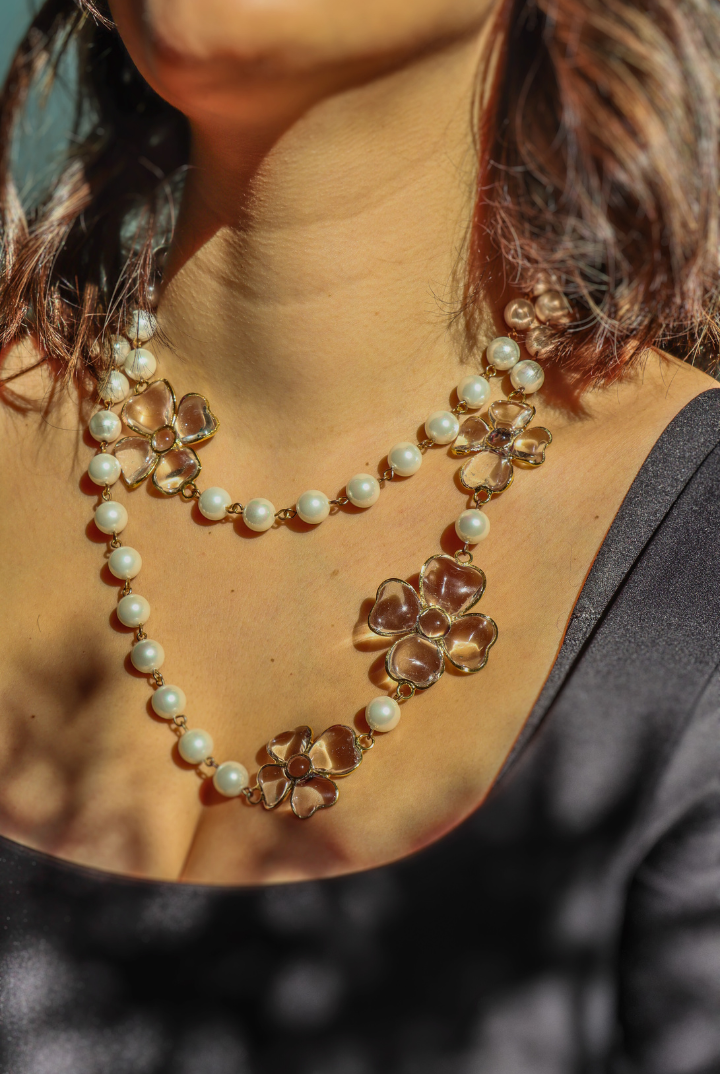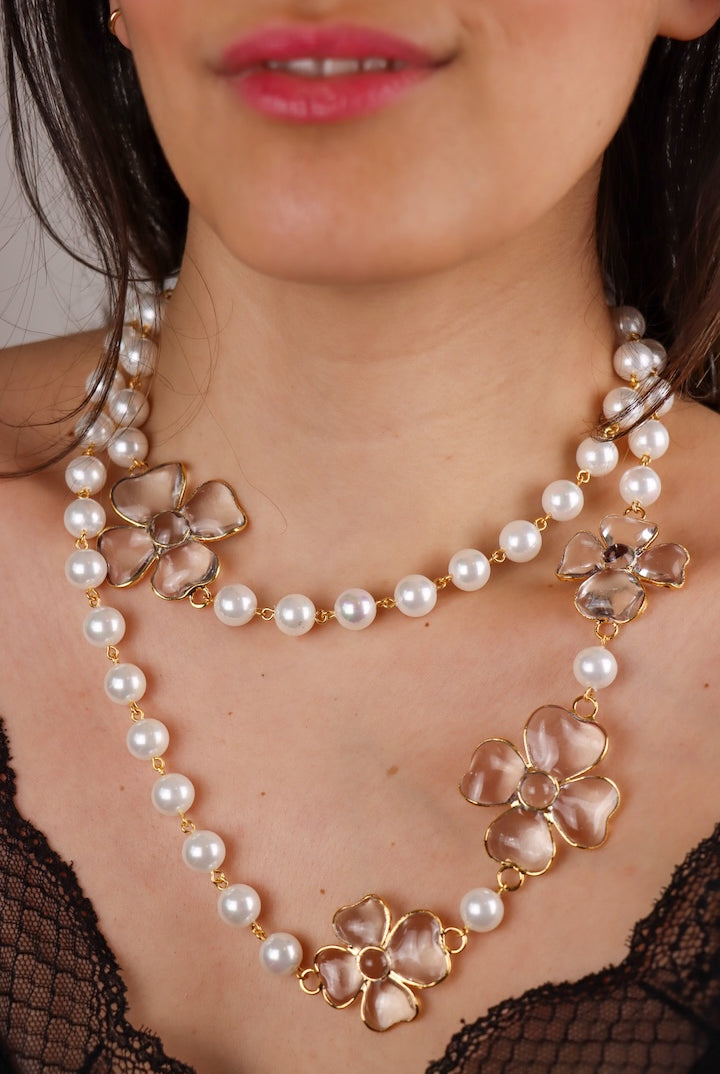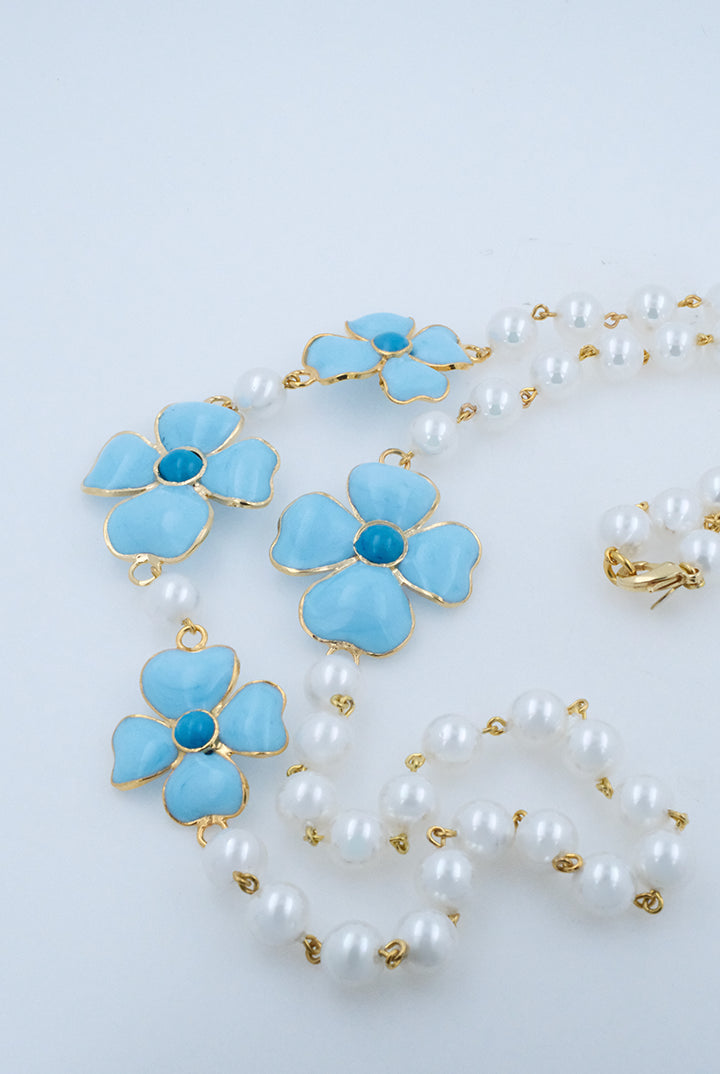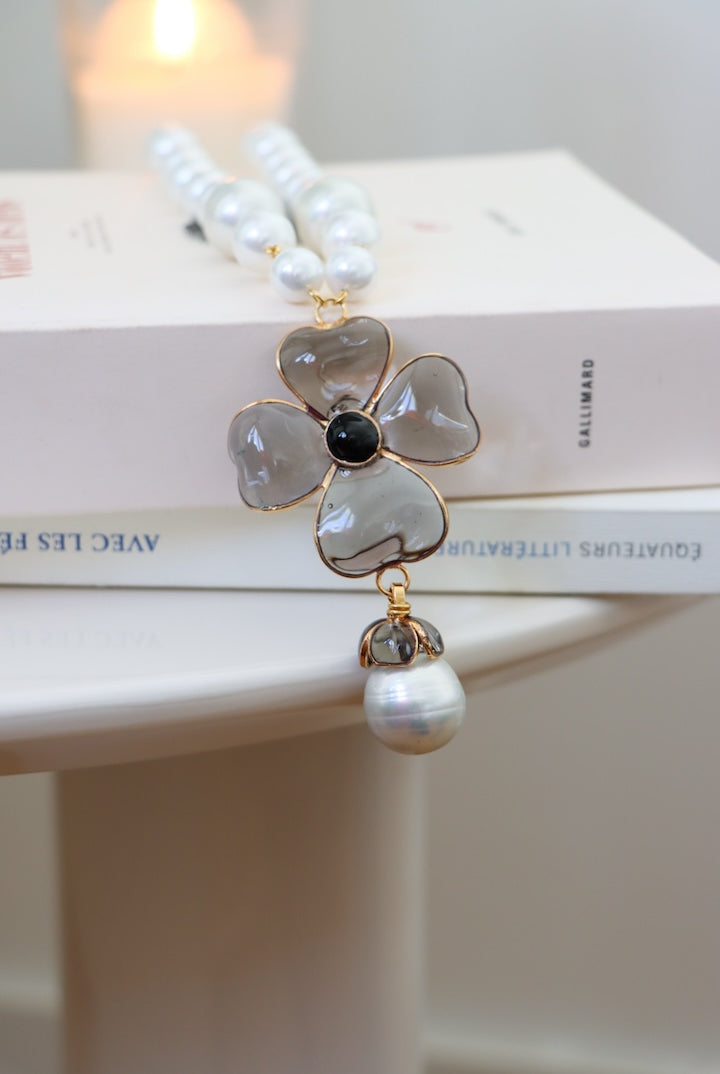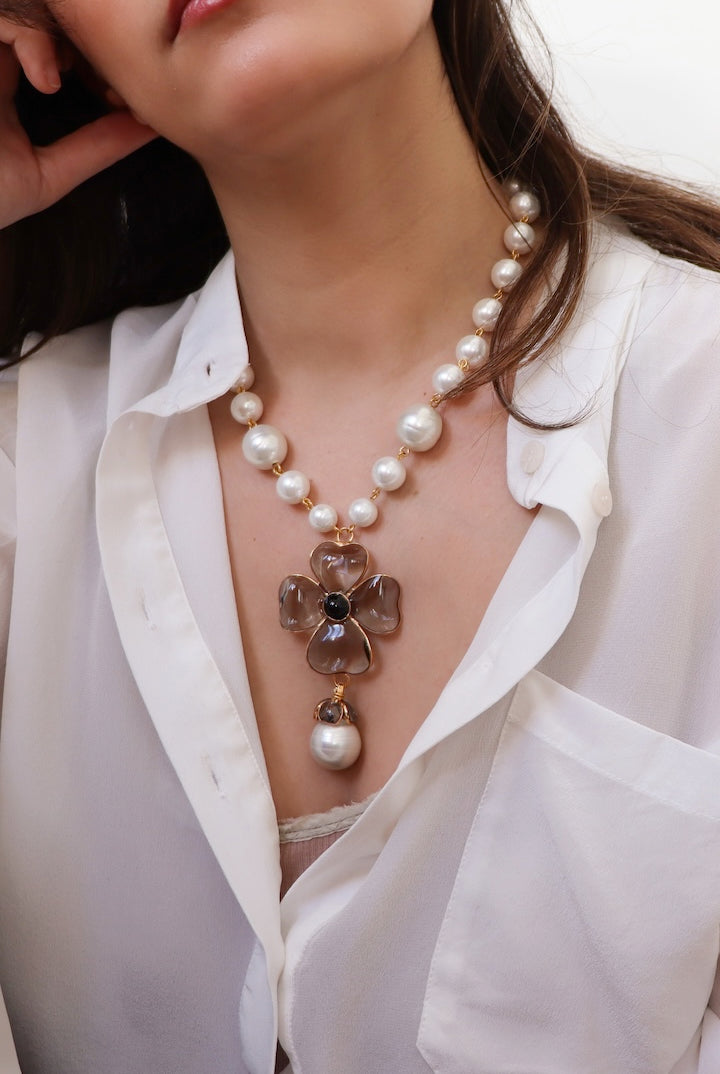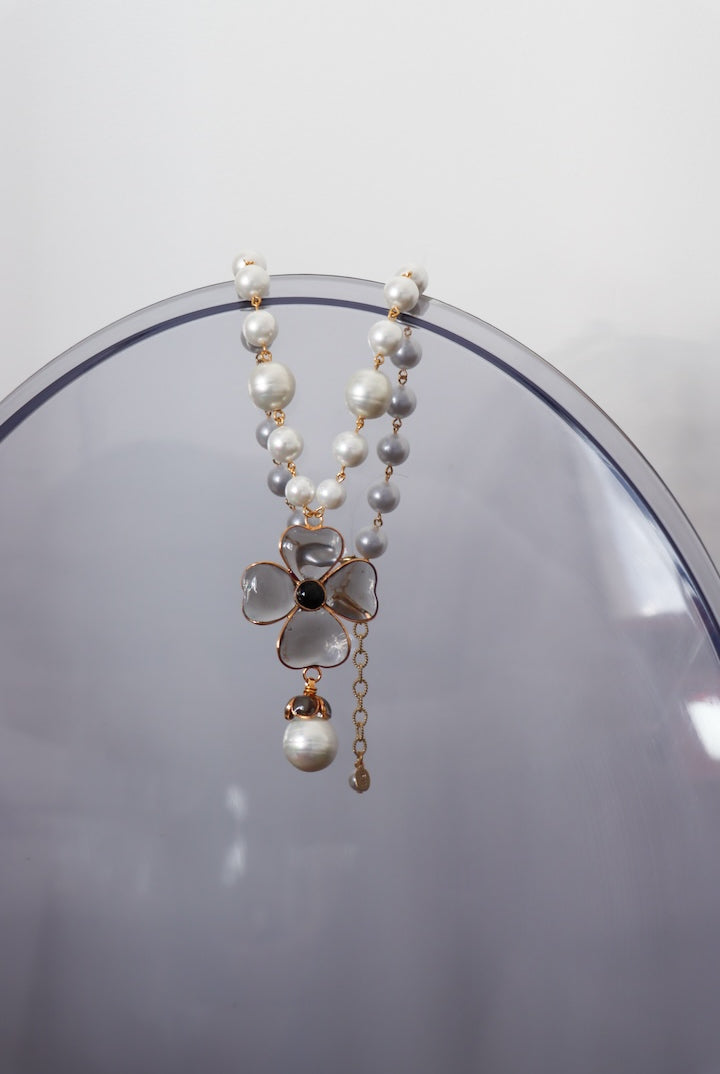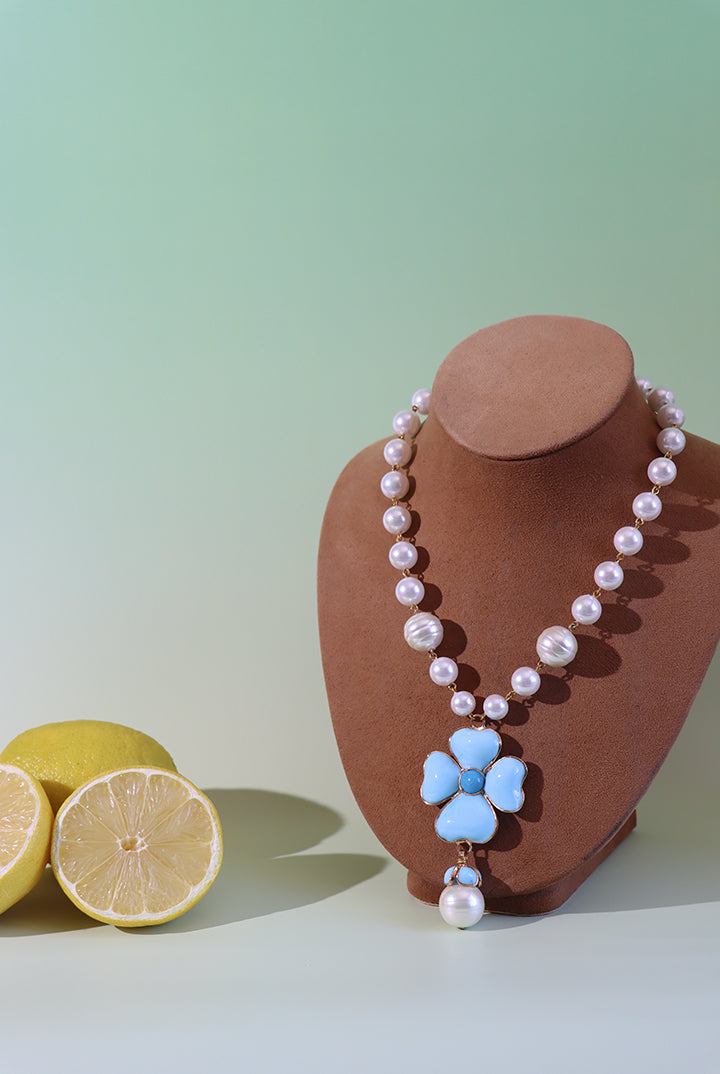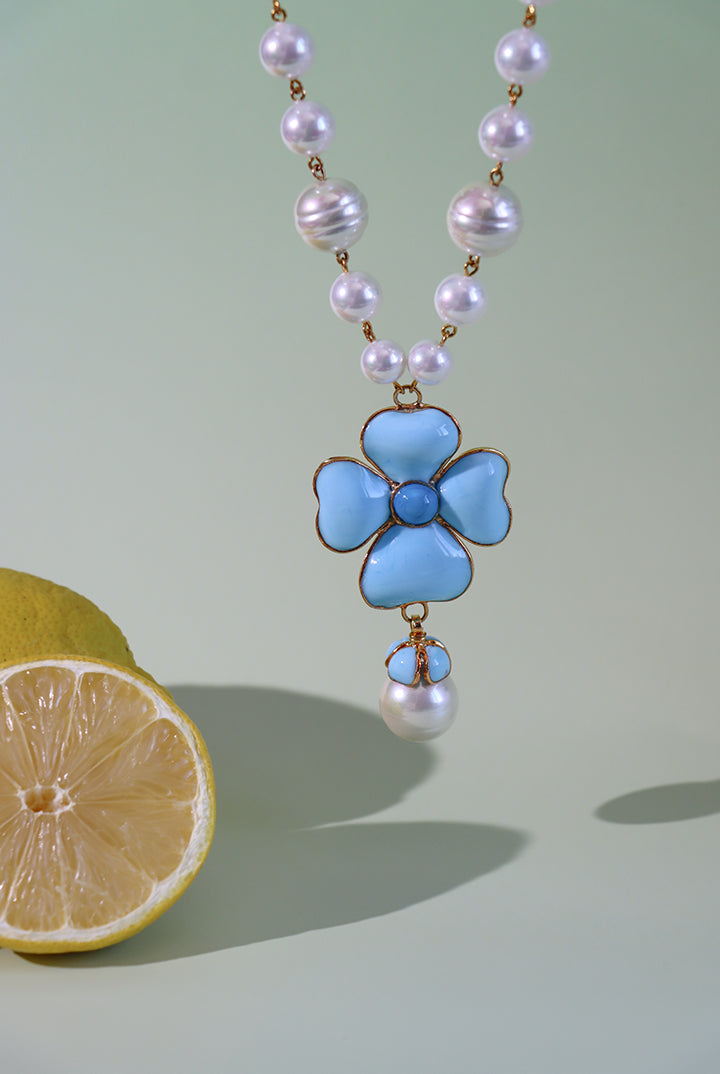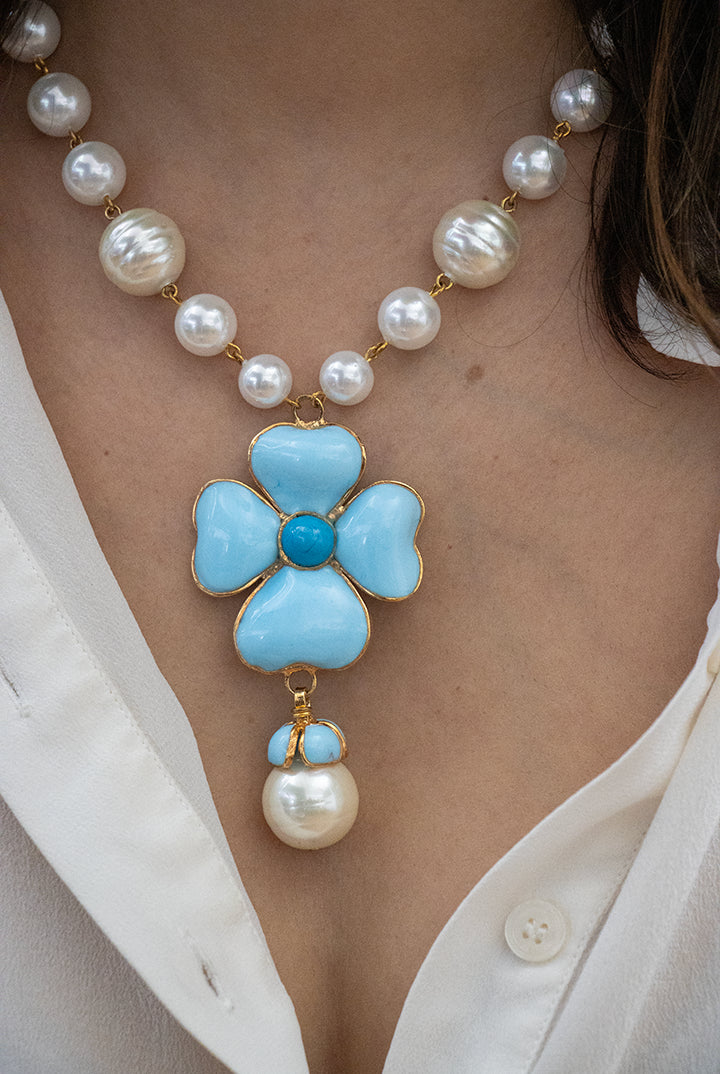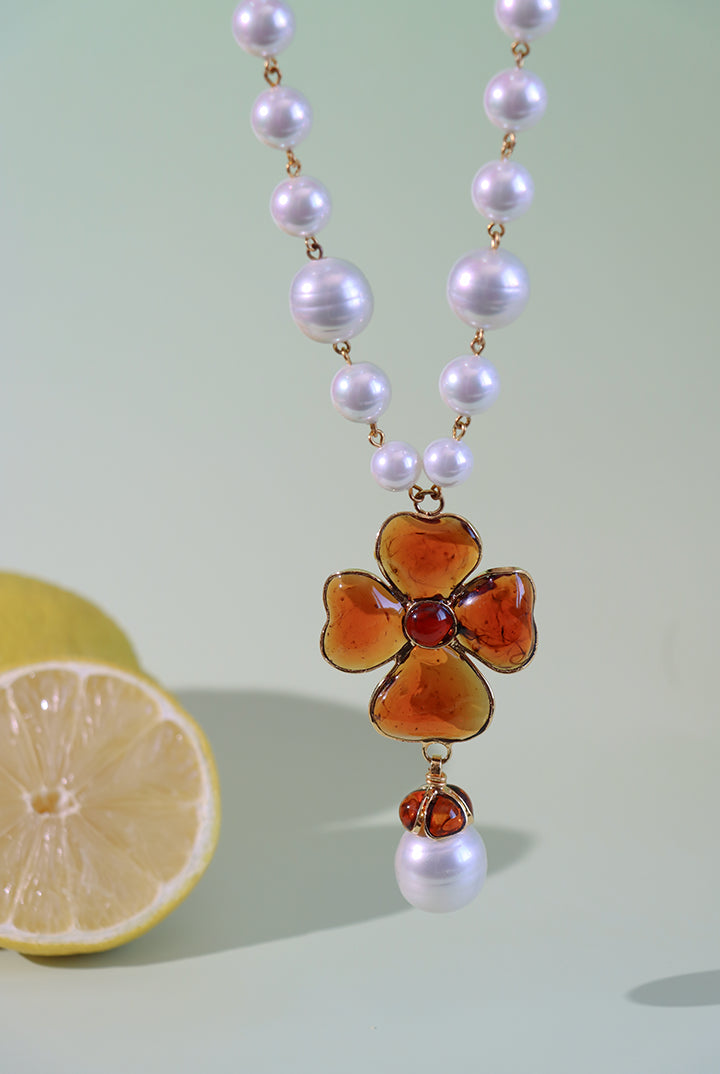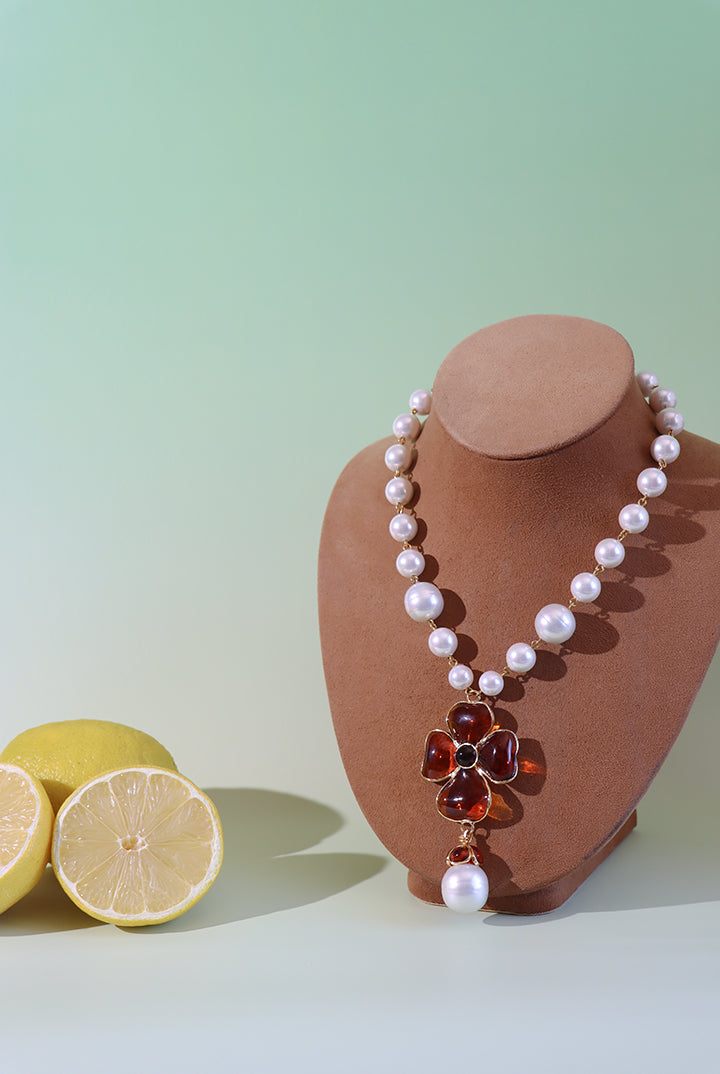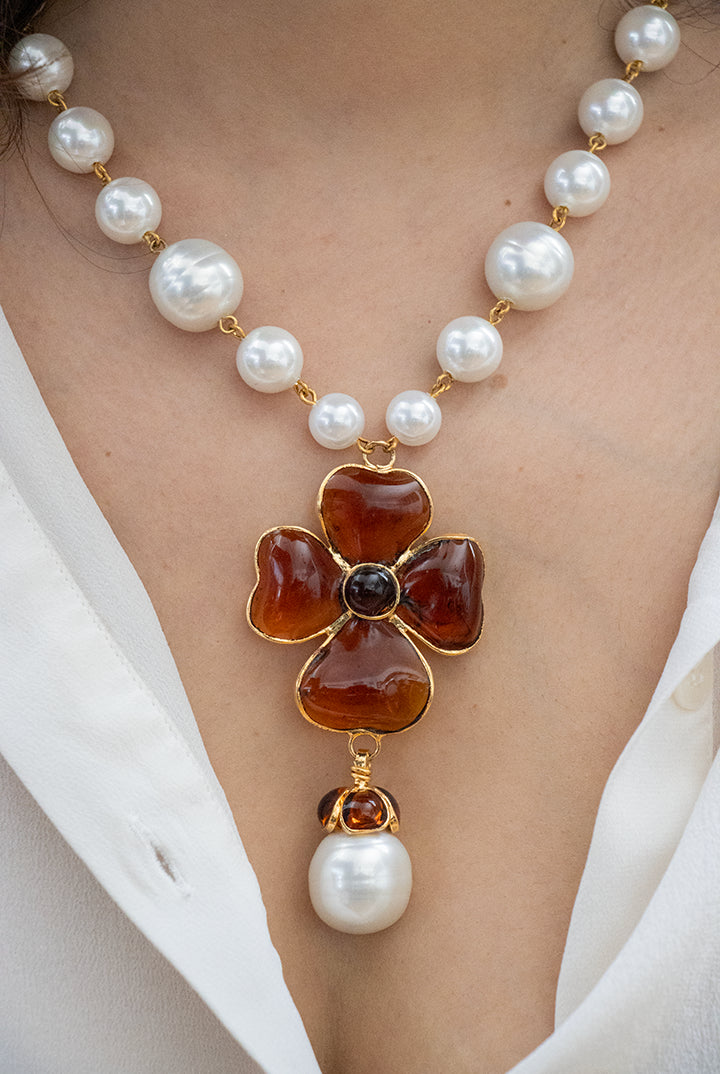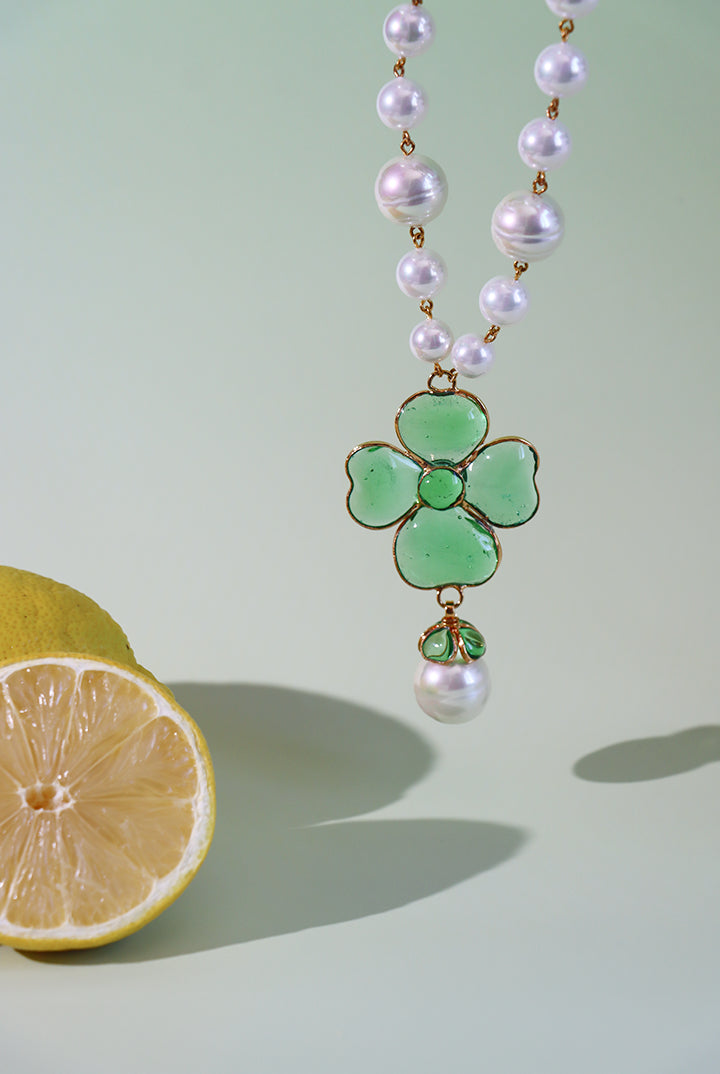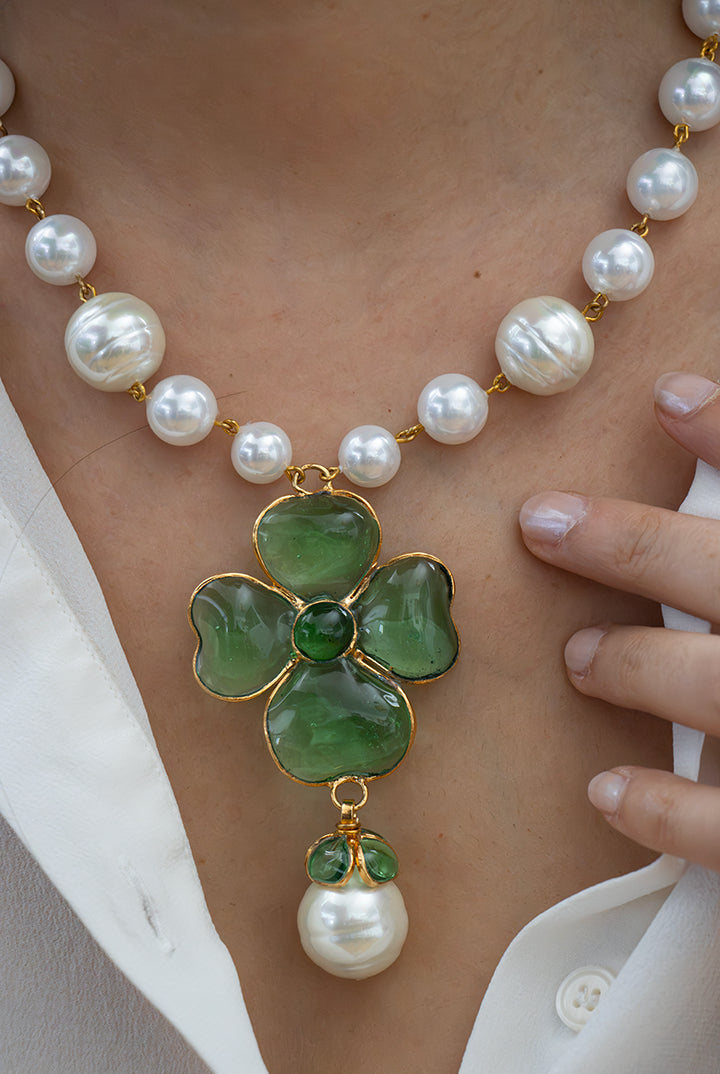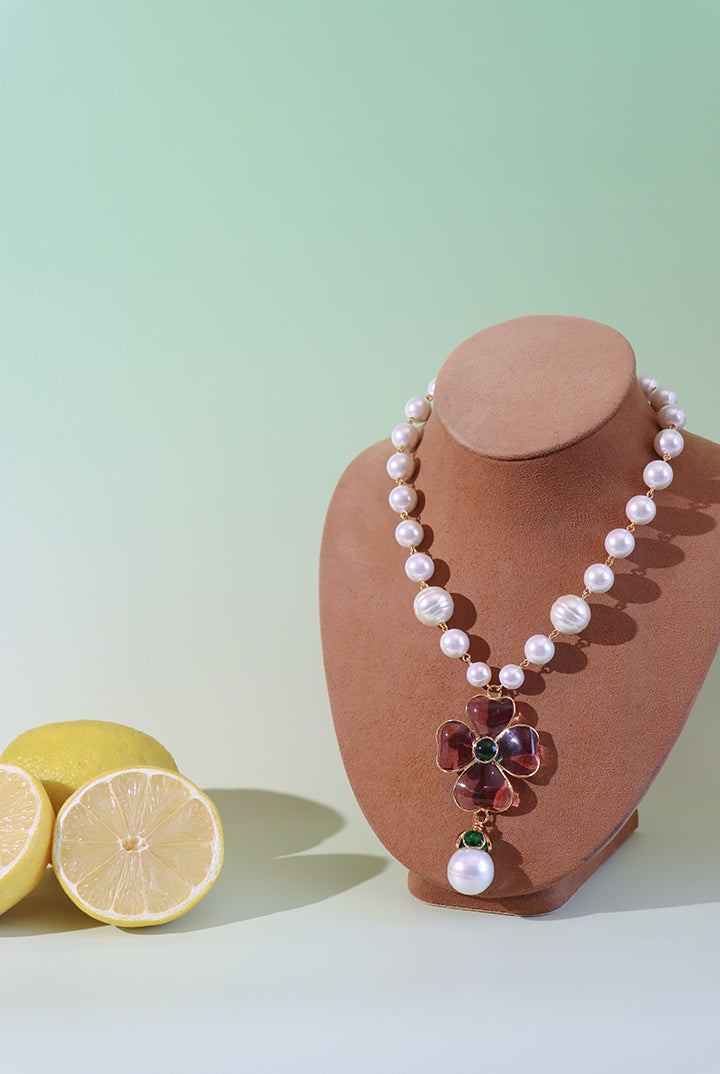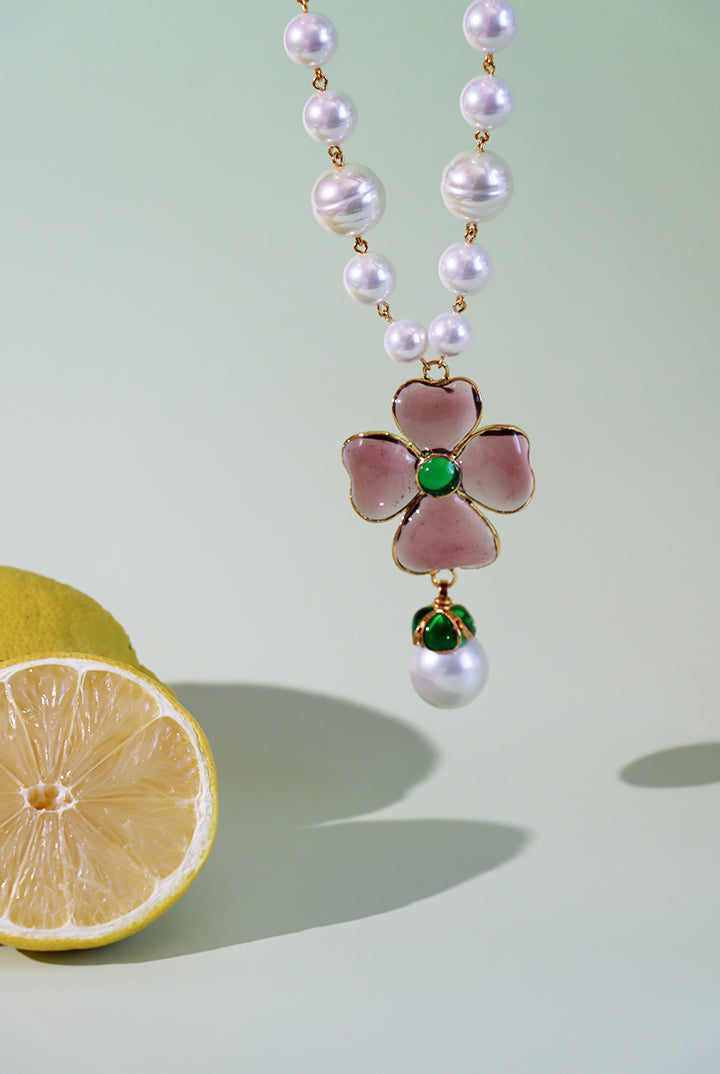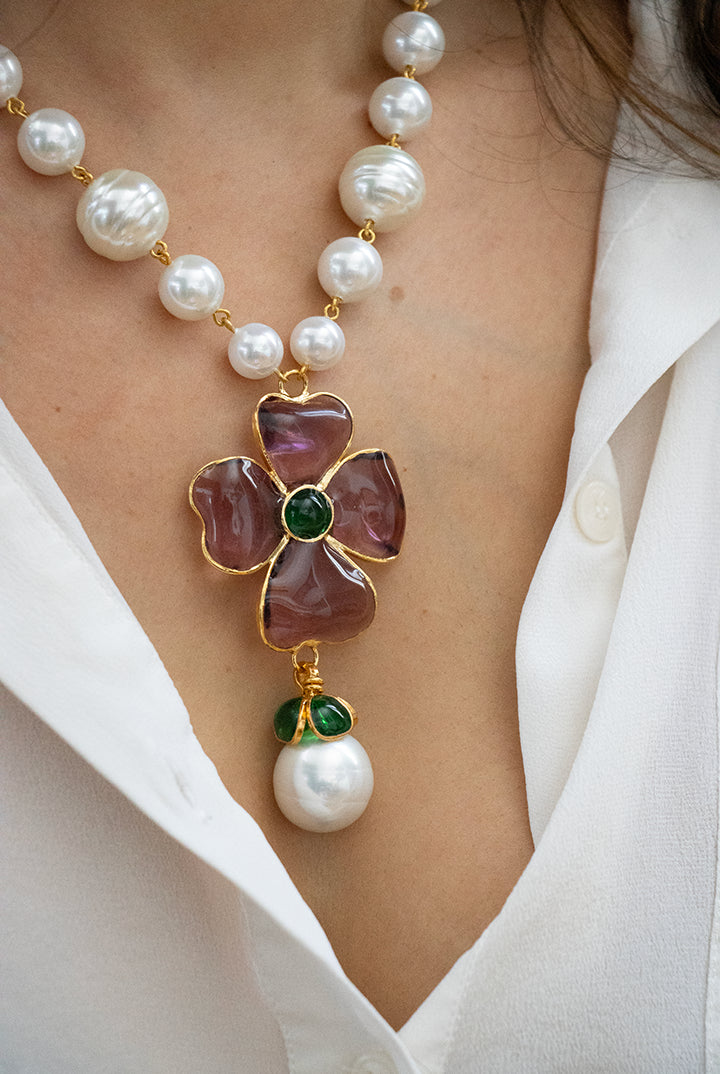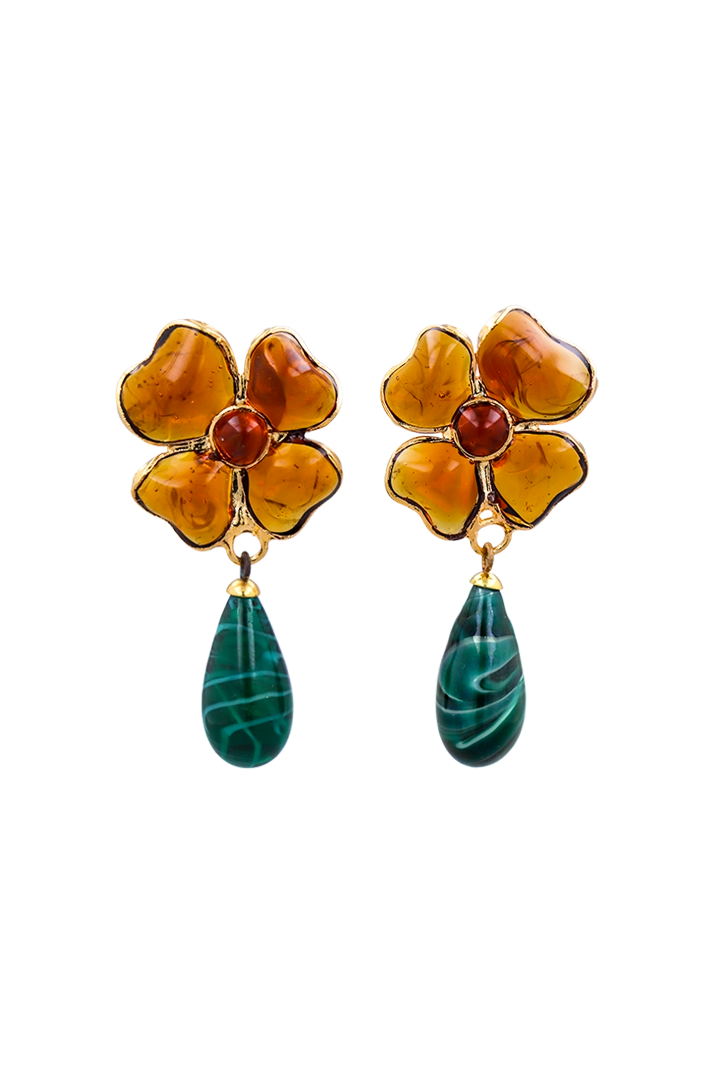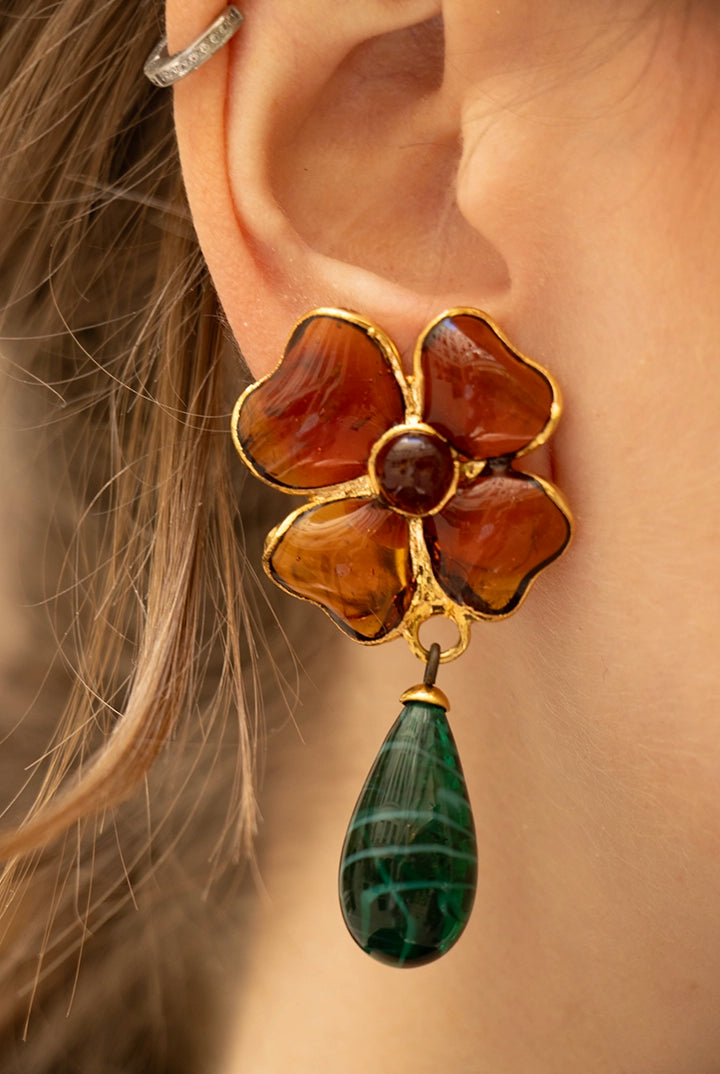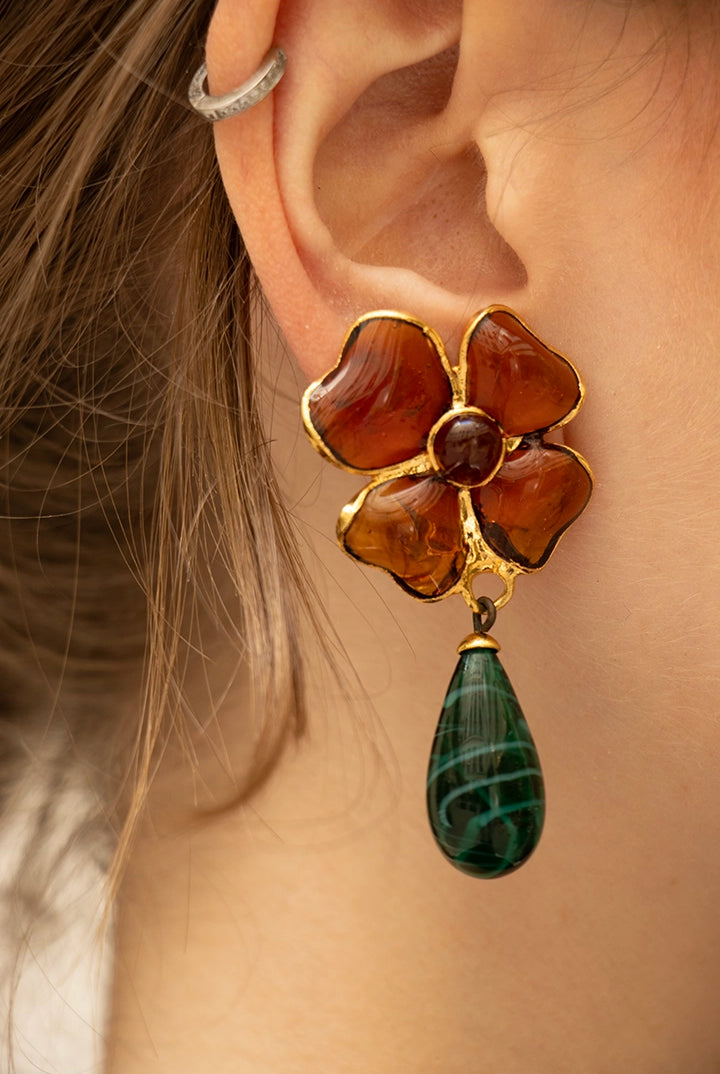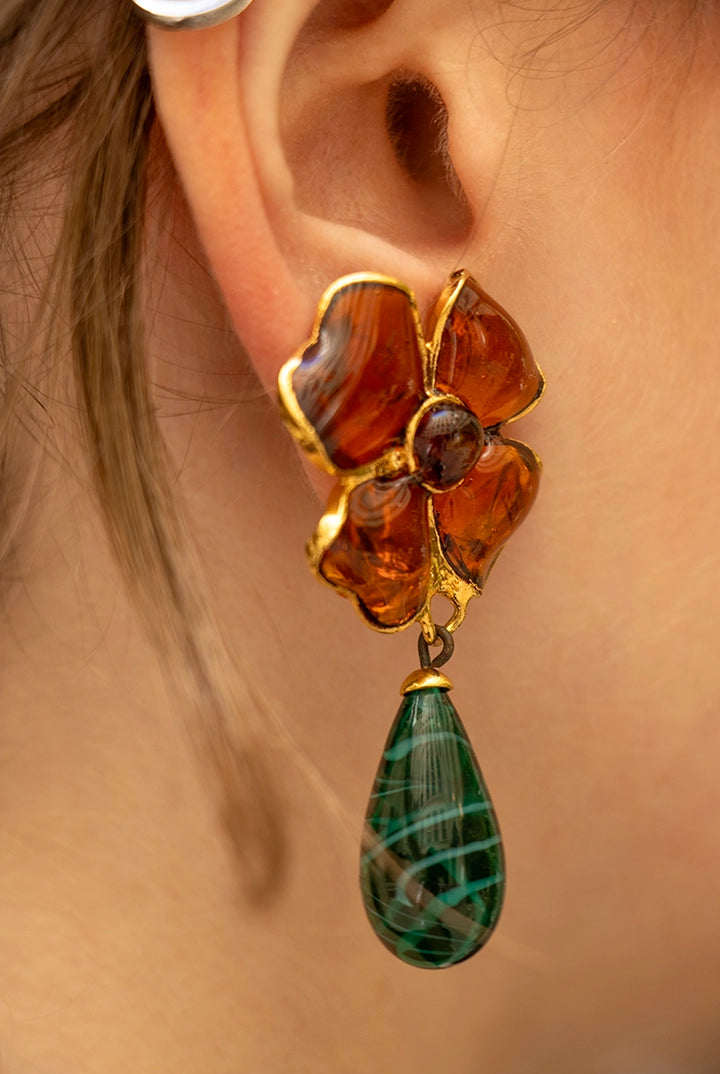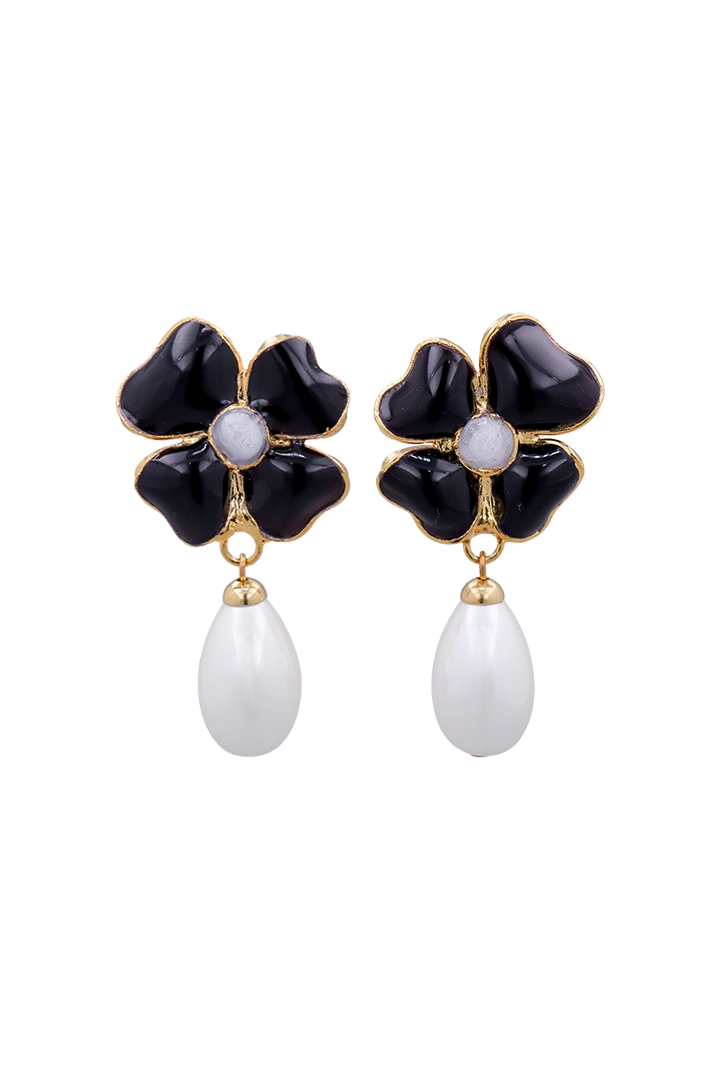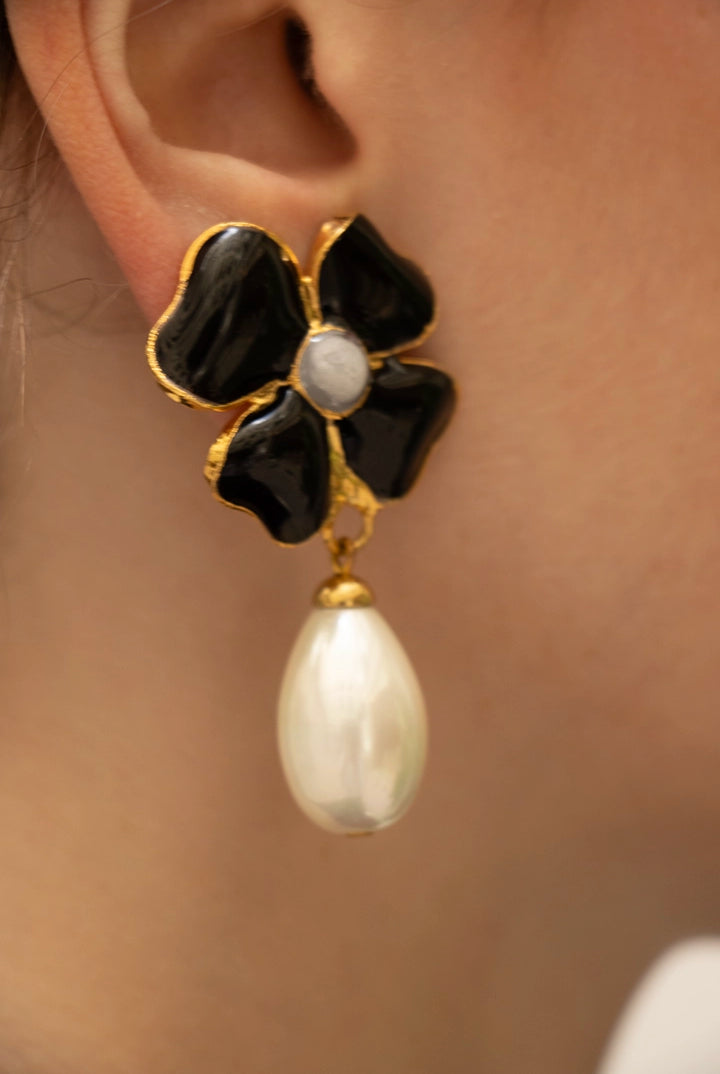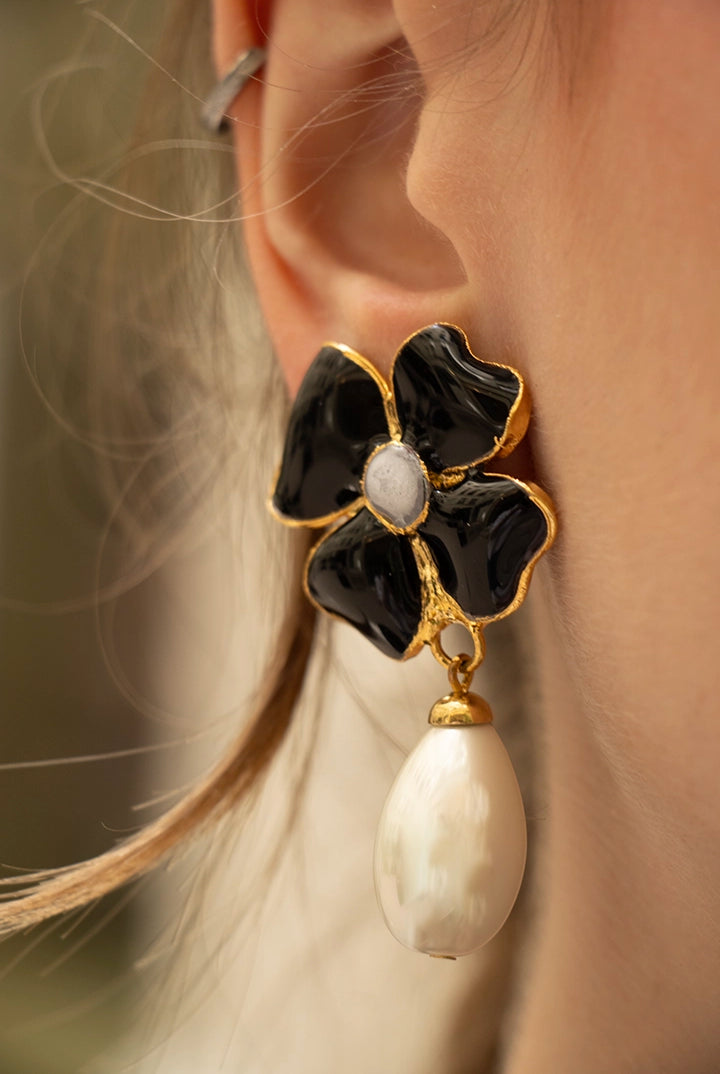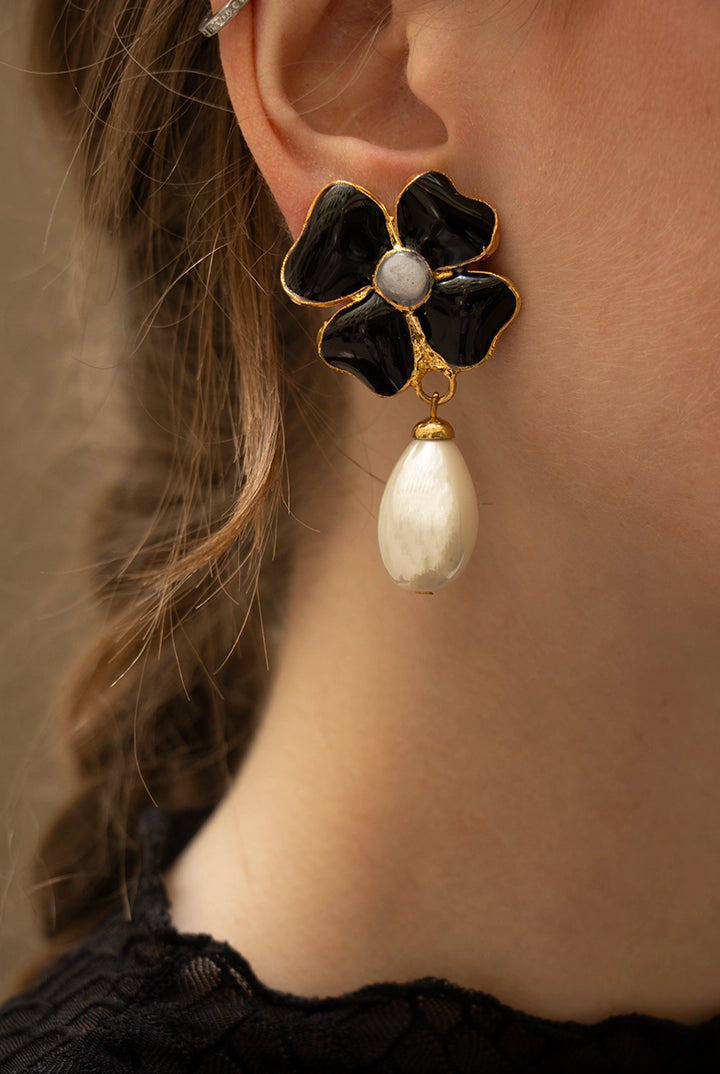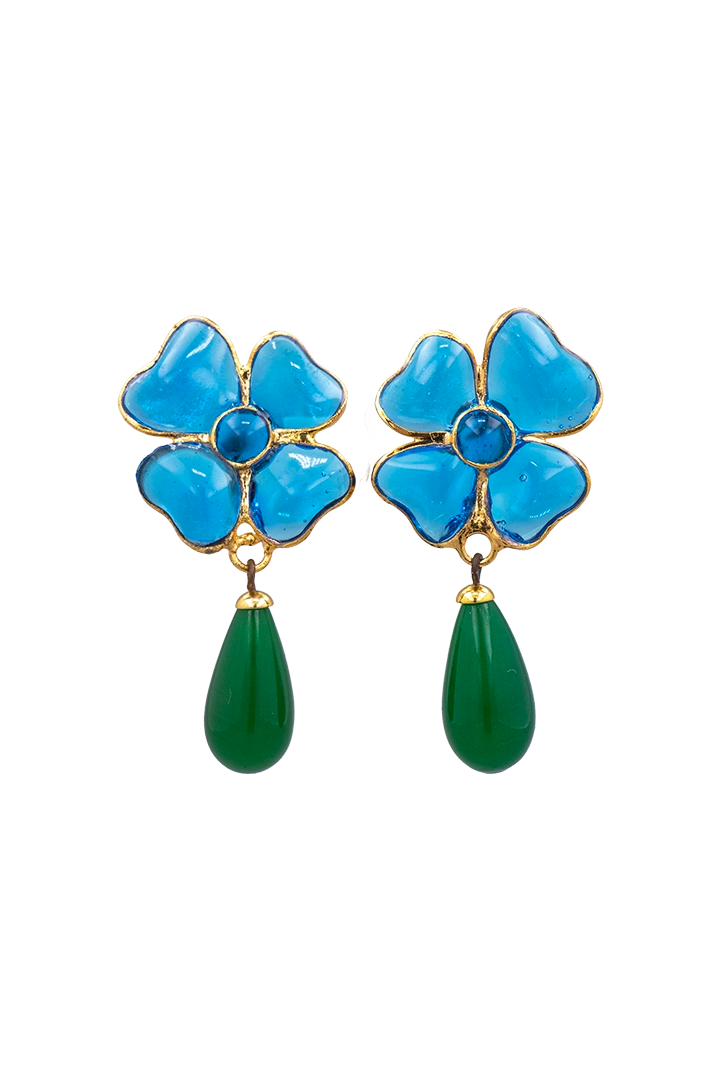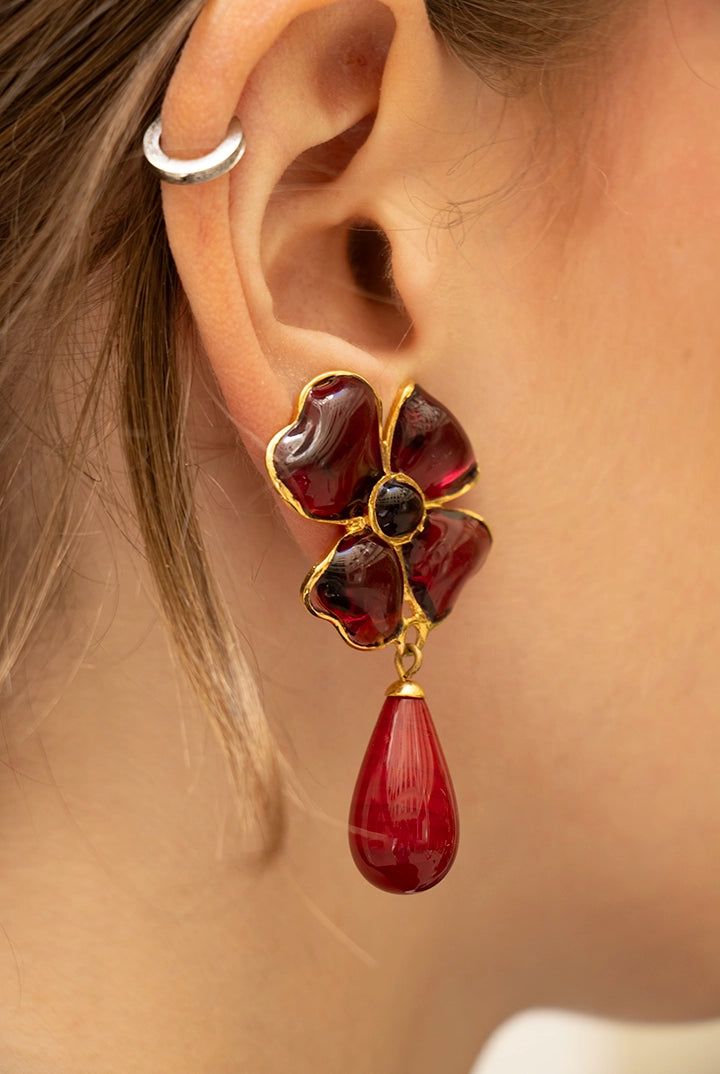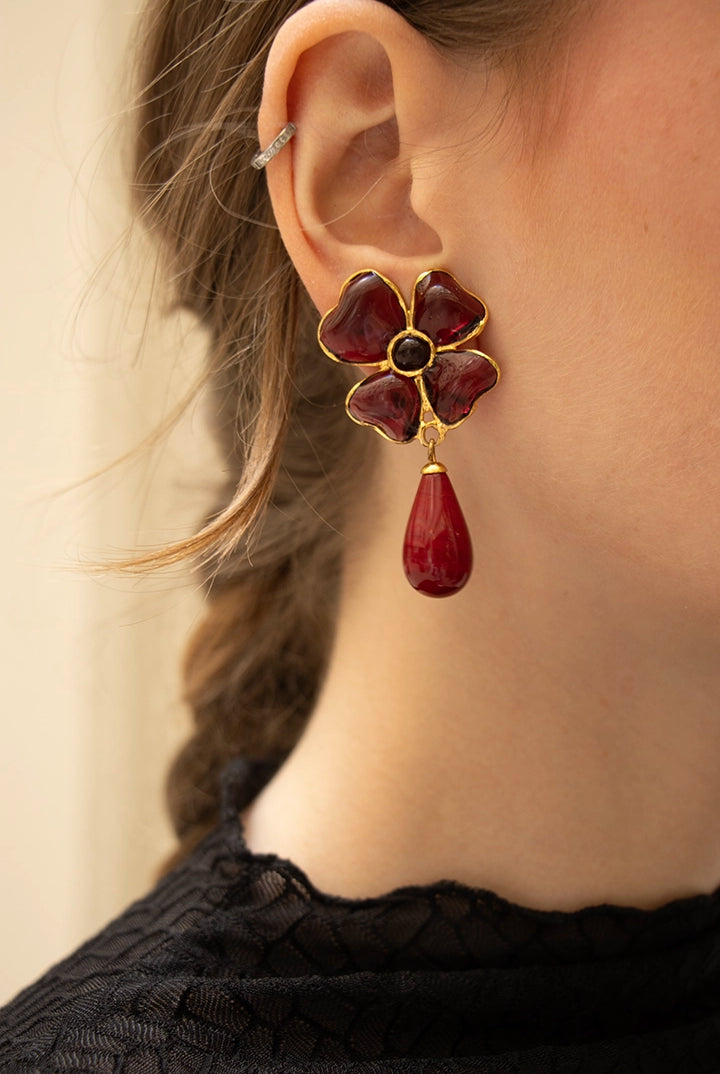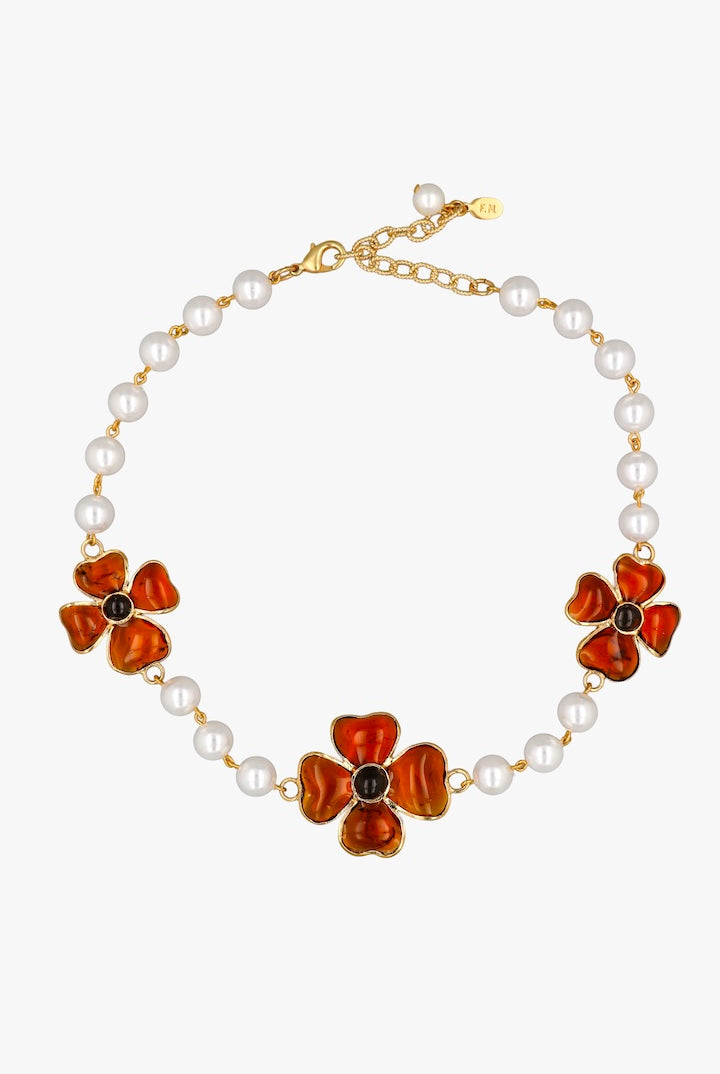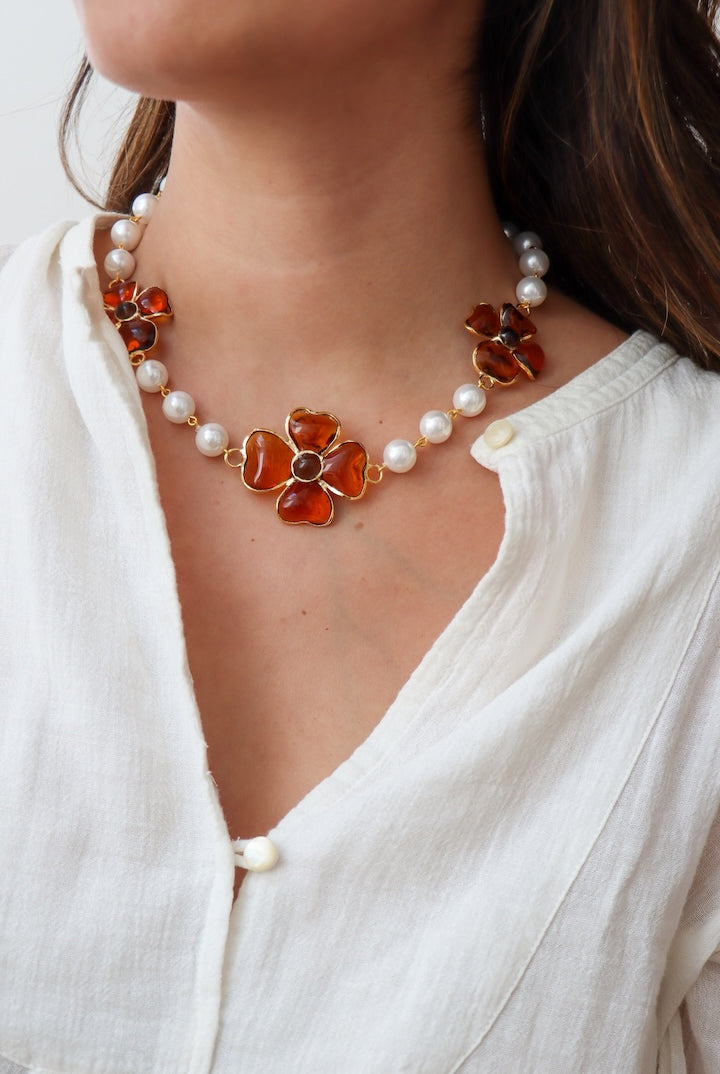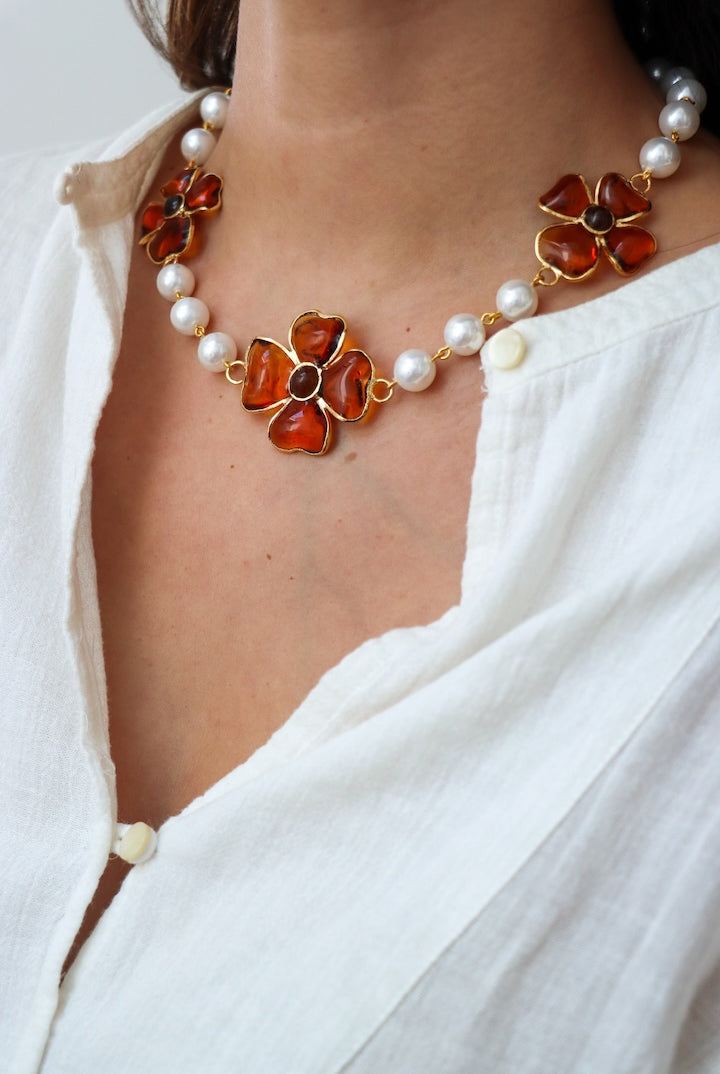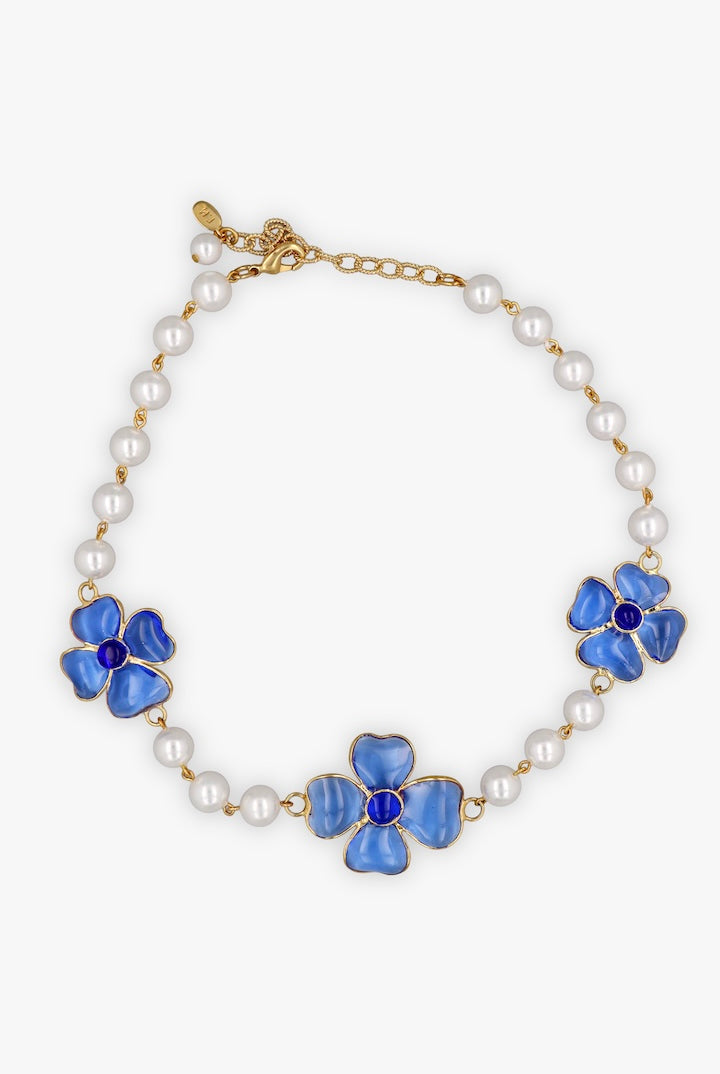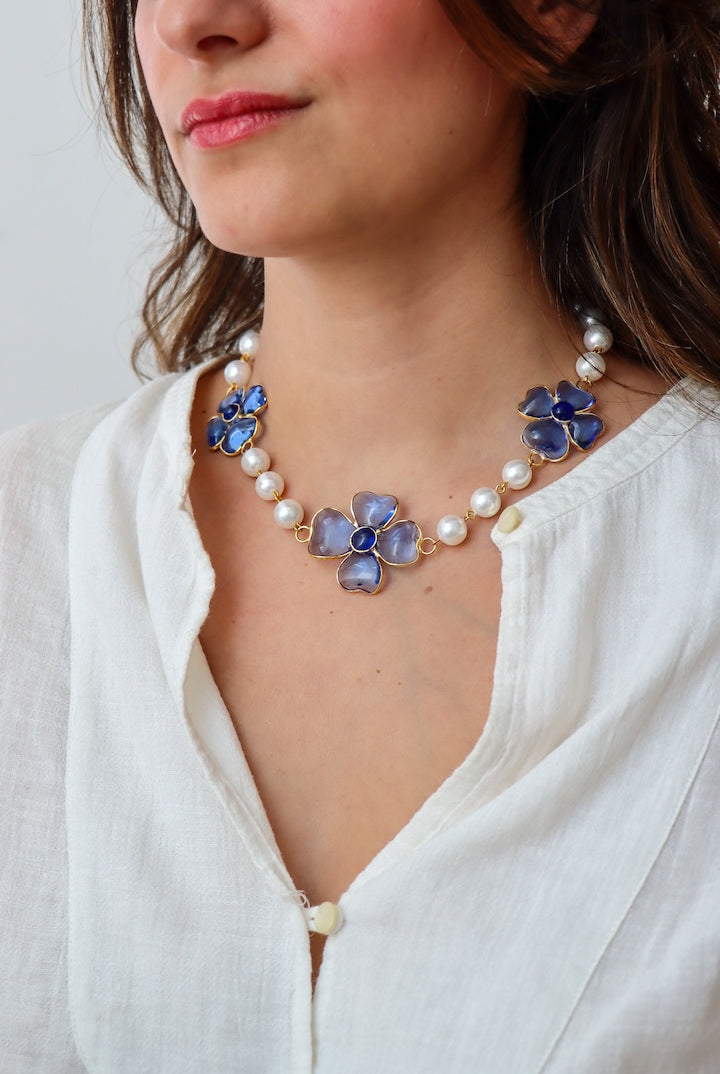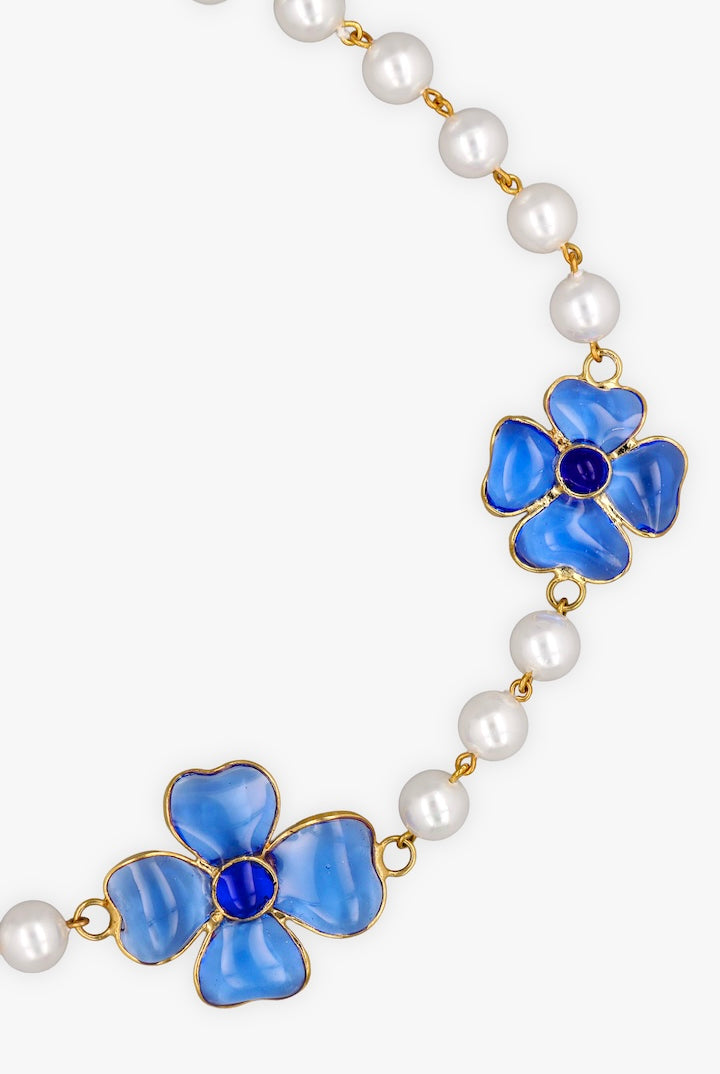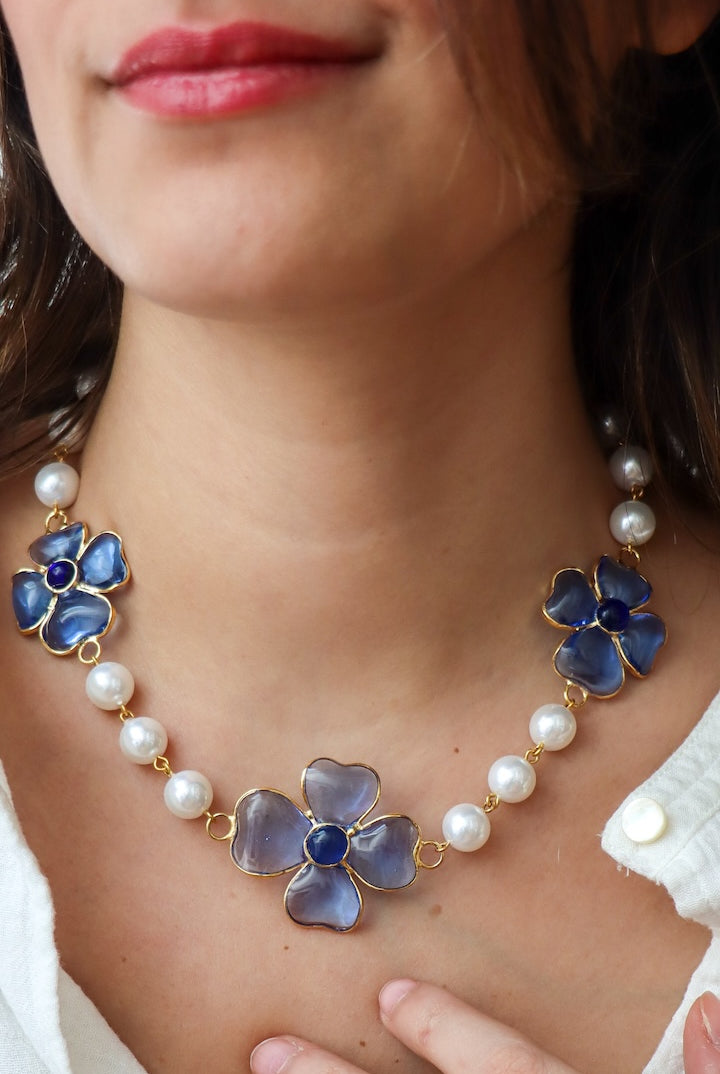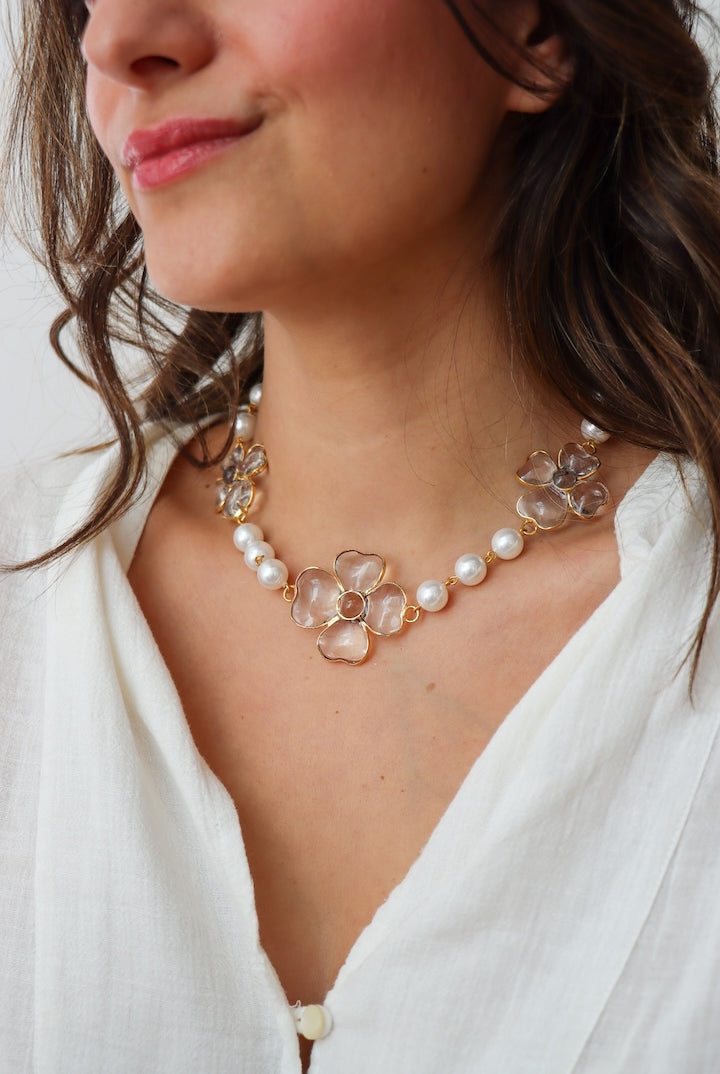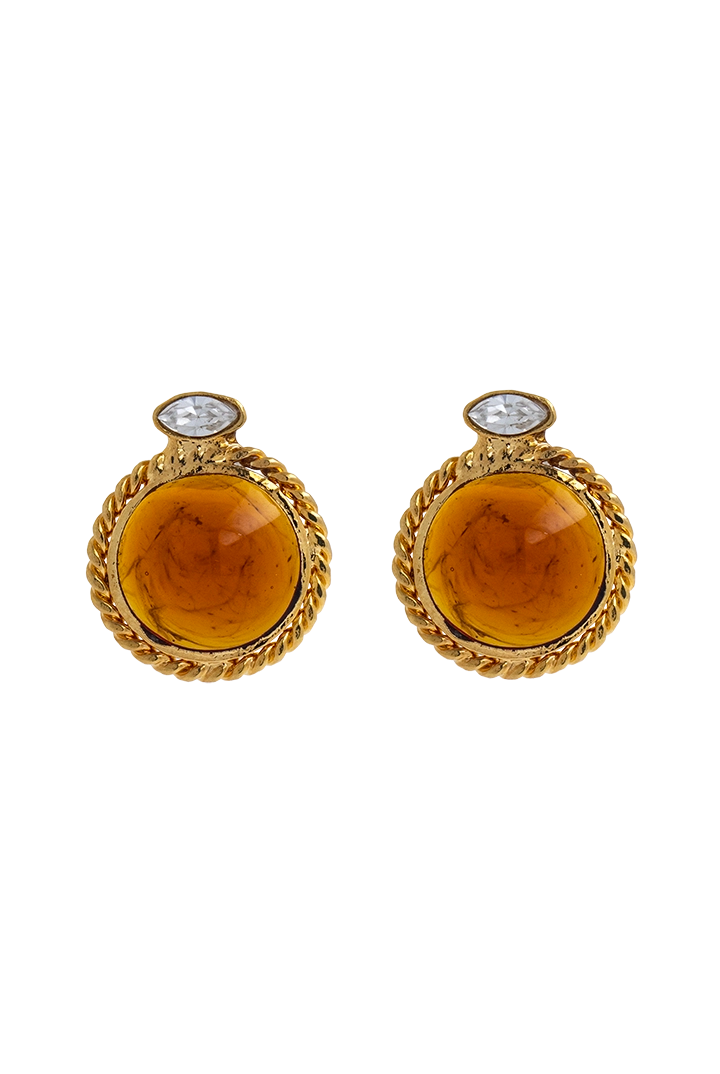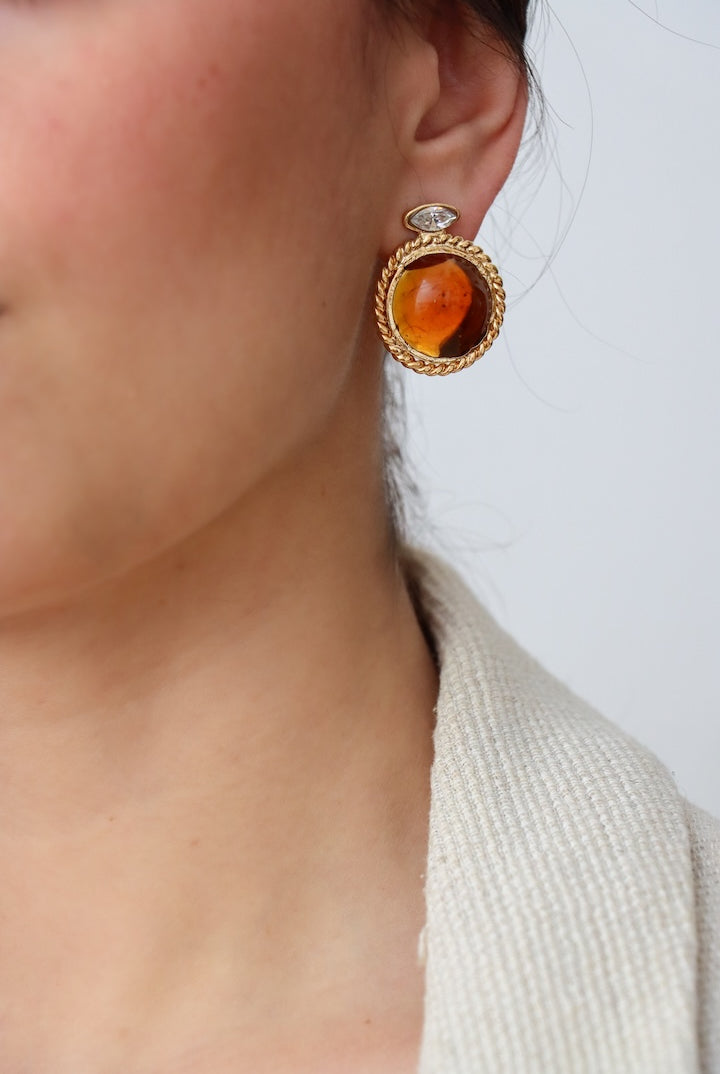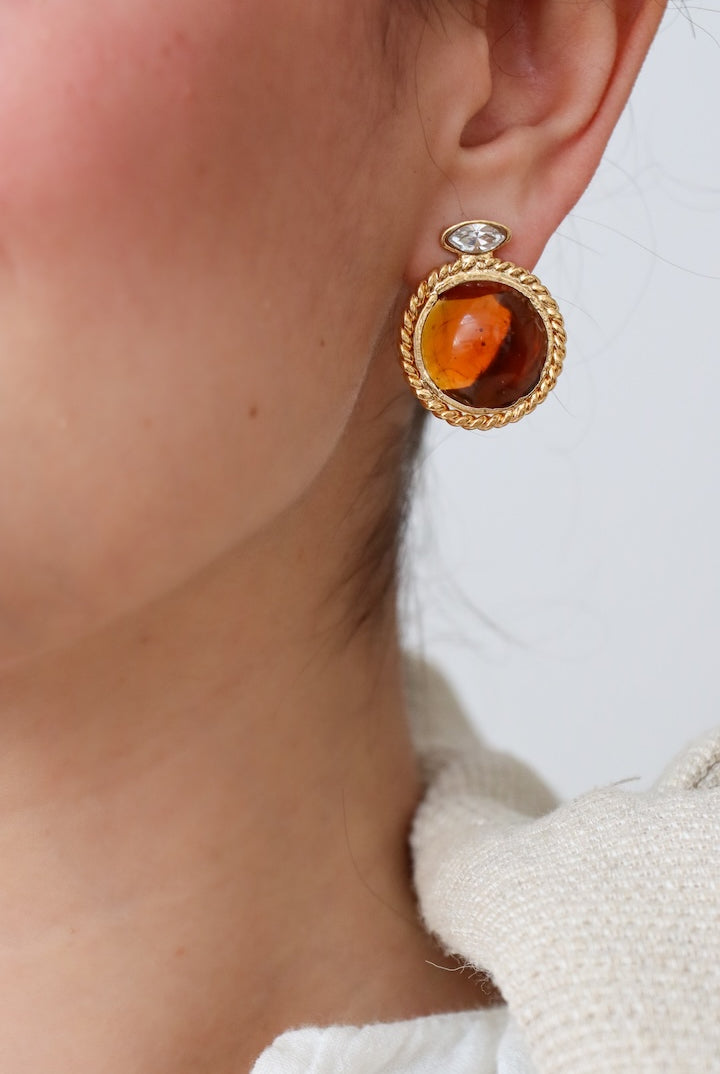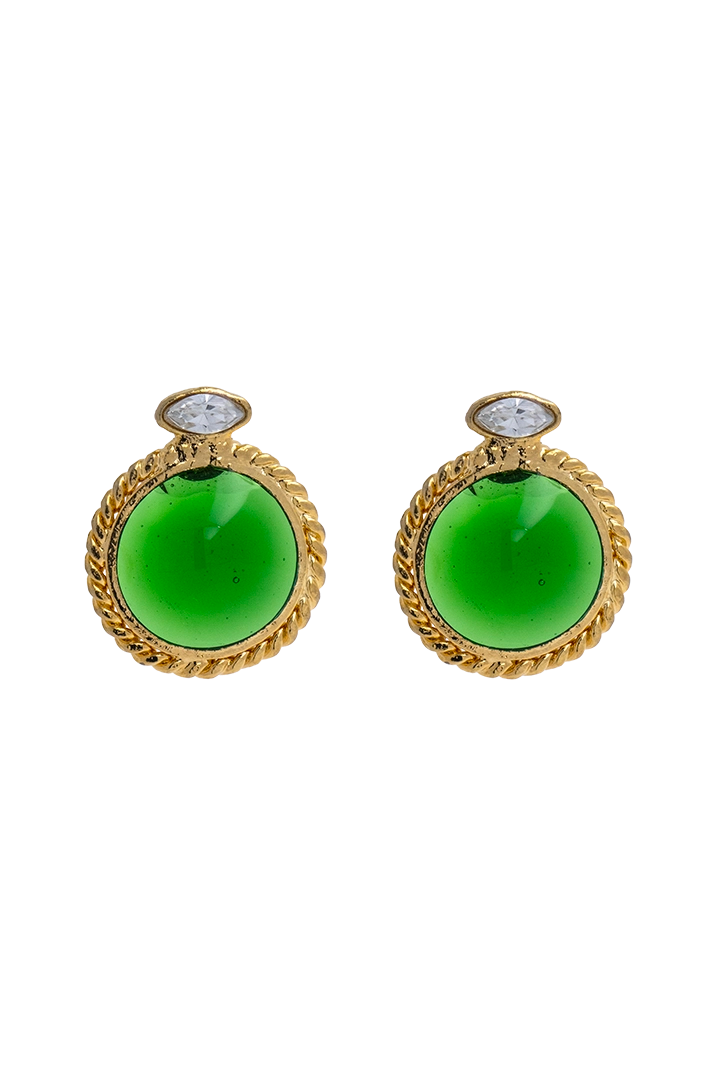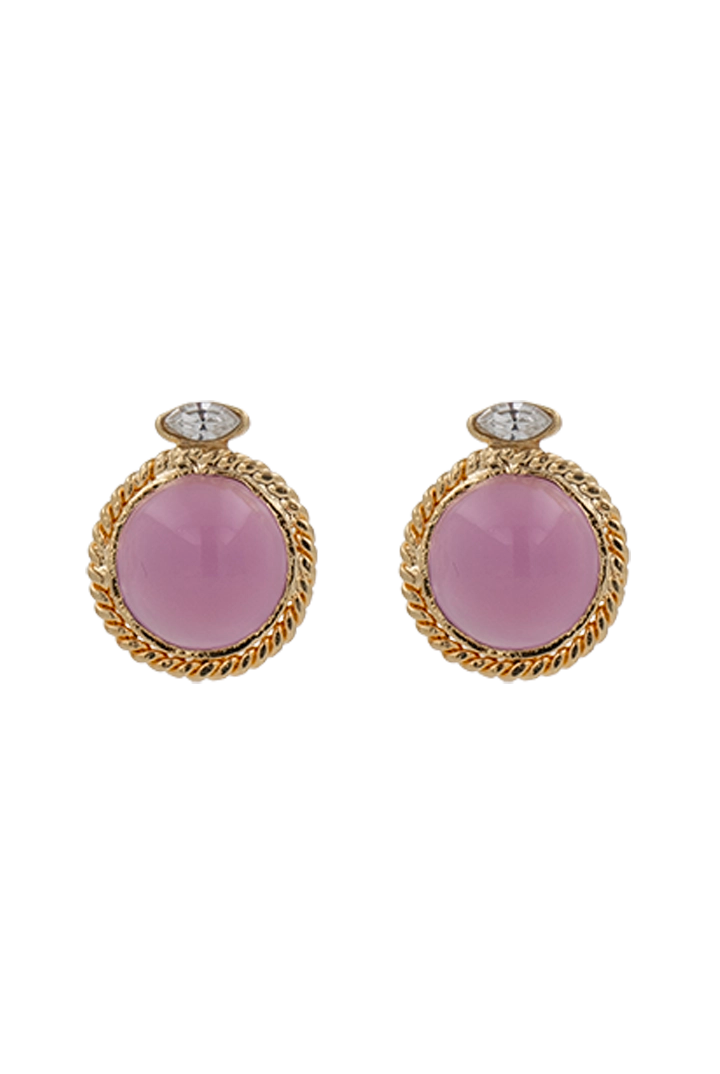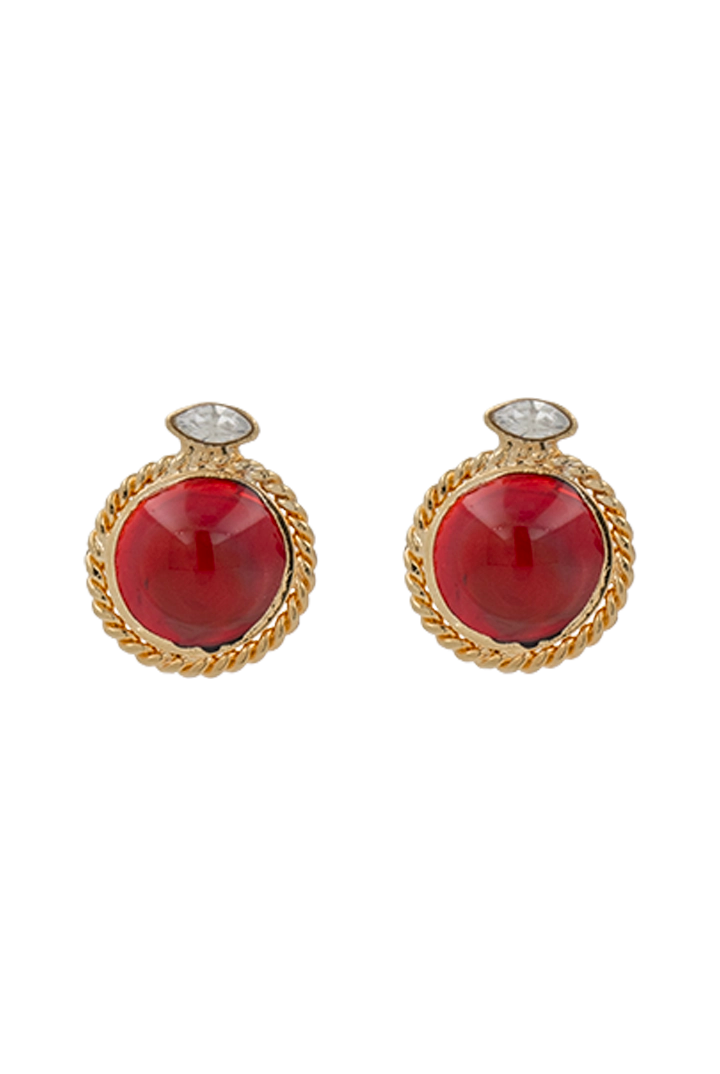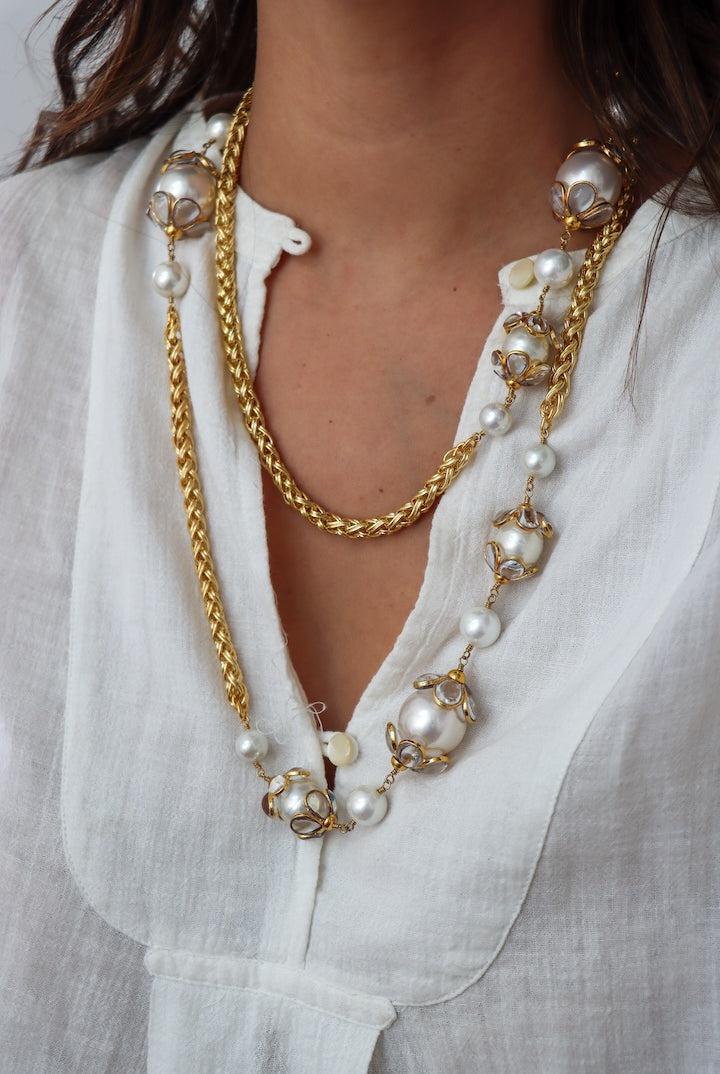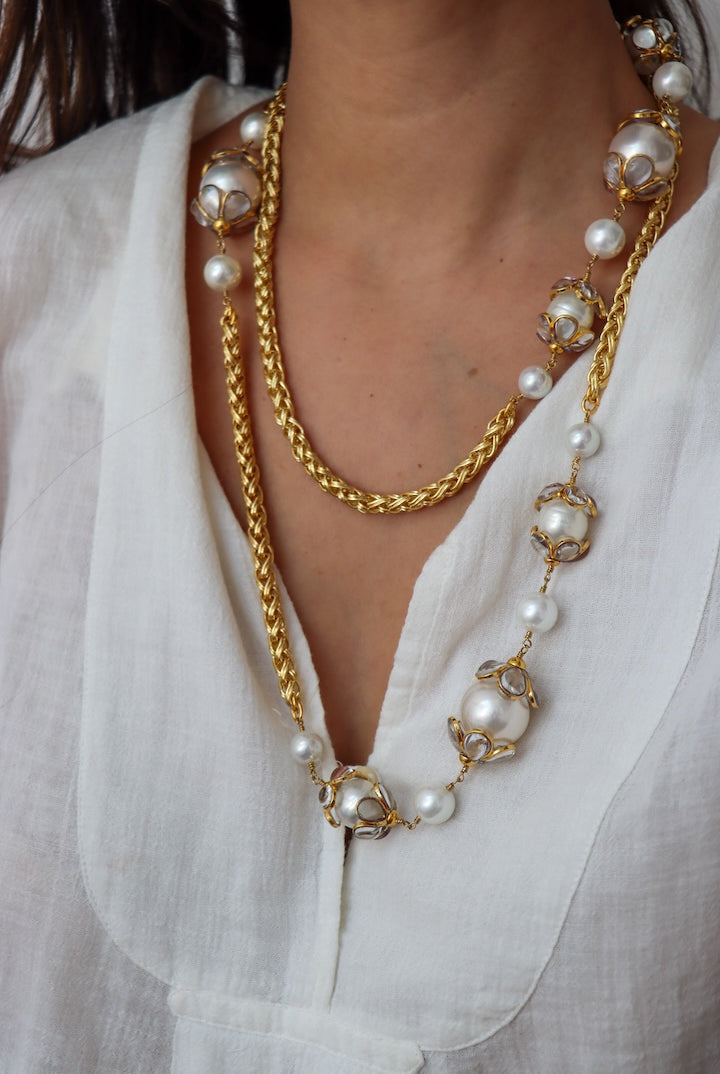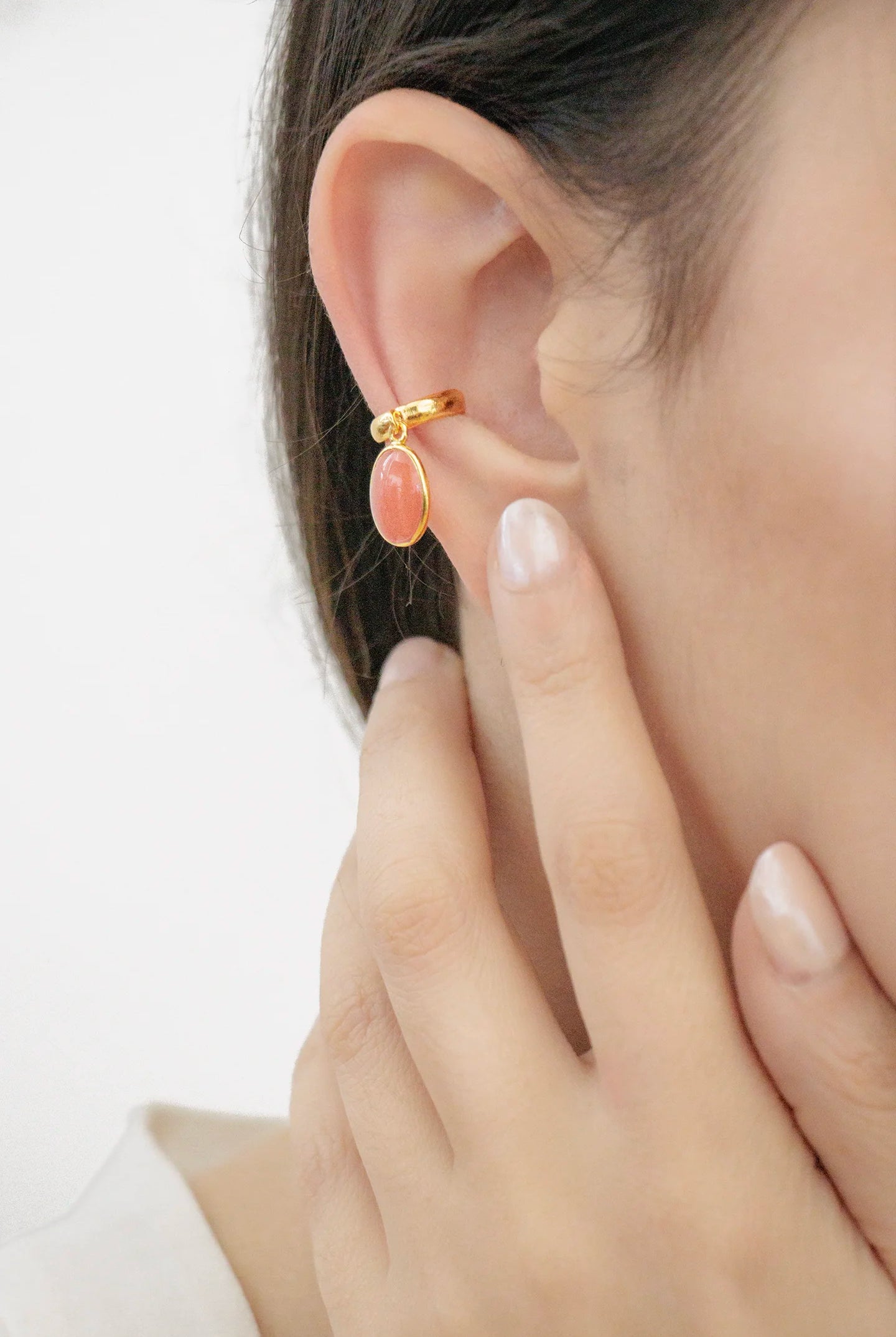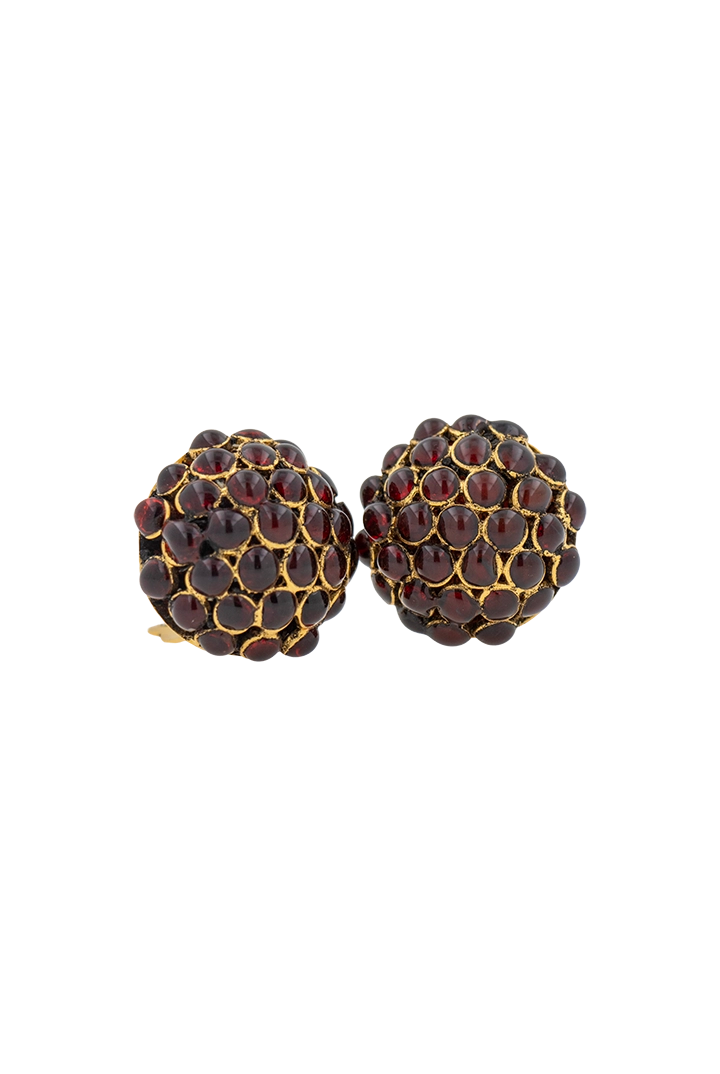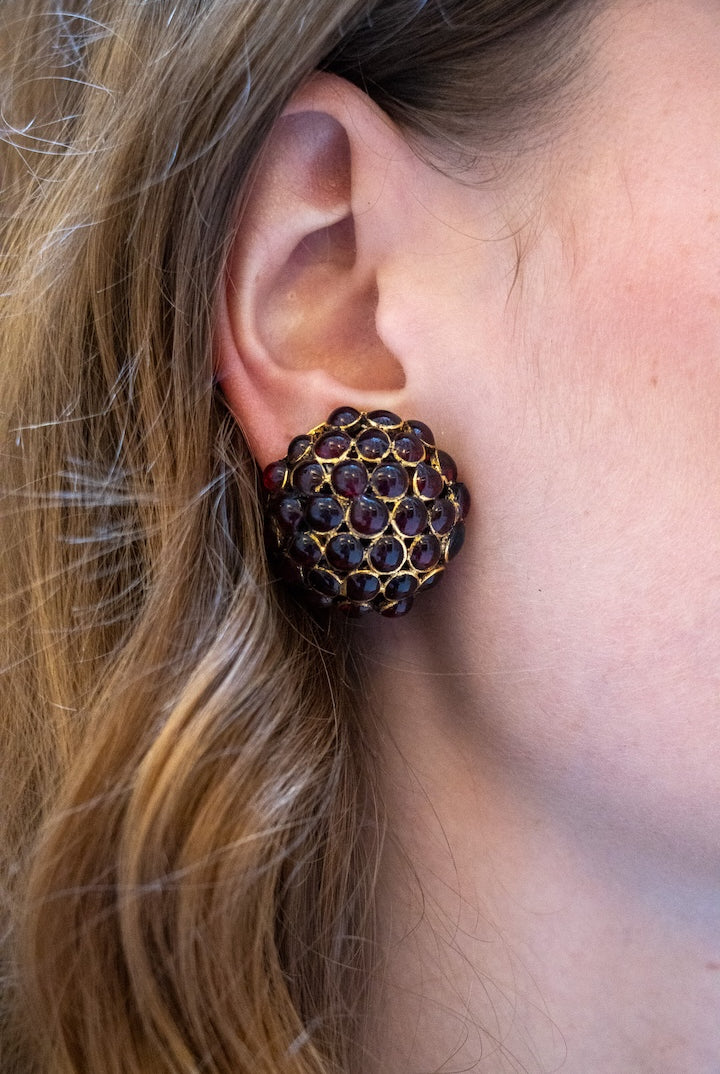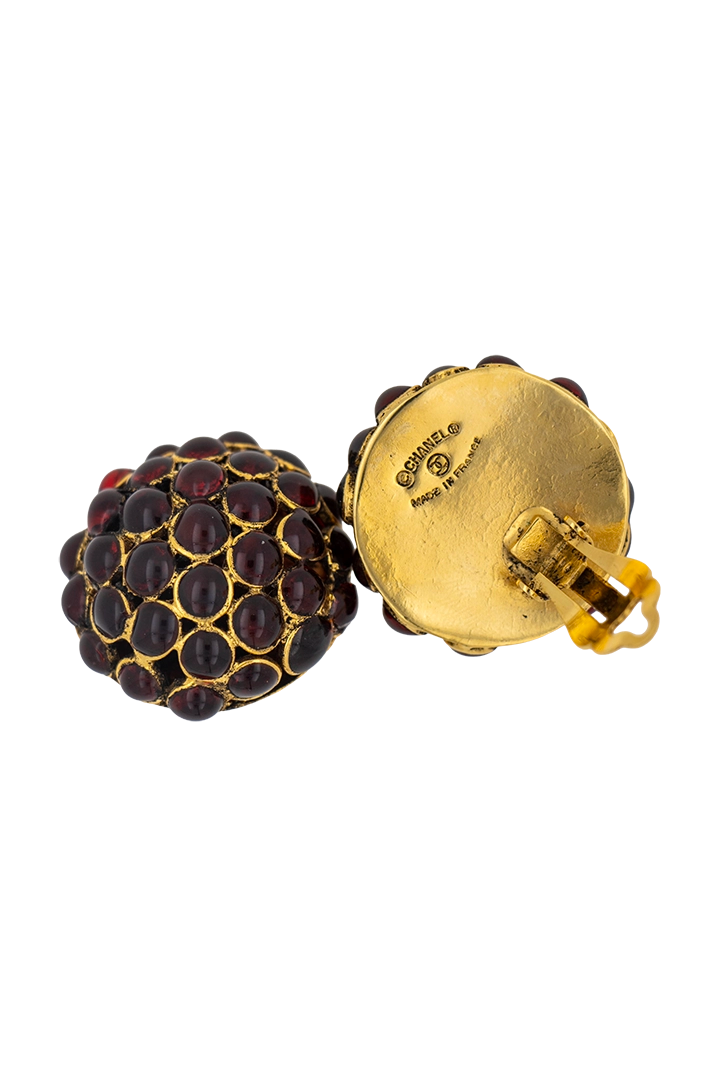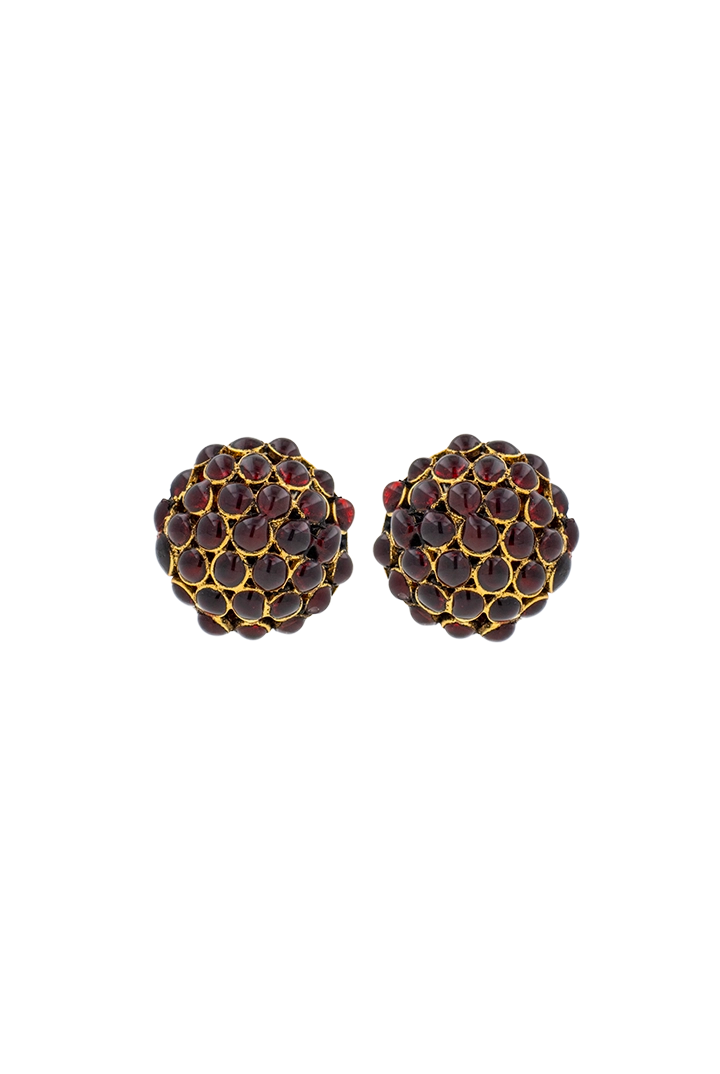


Glass paste
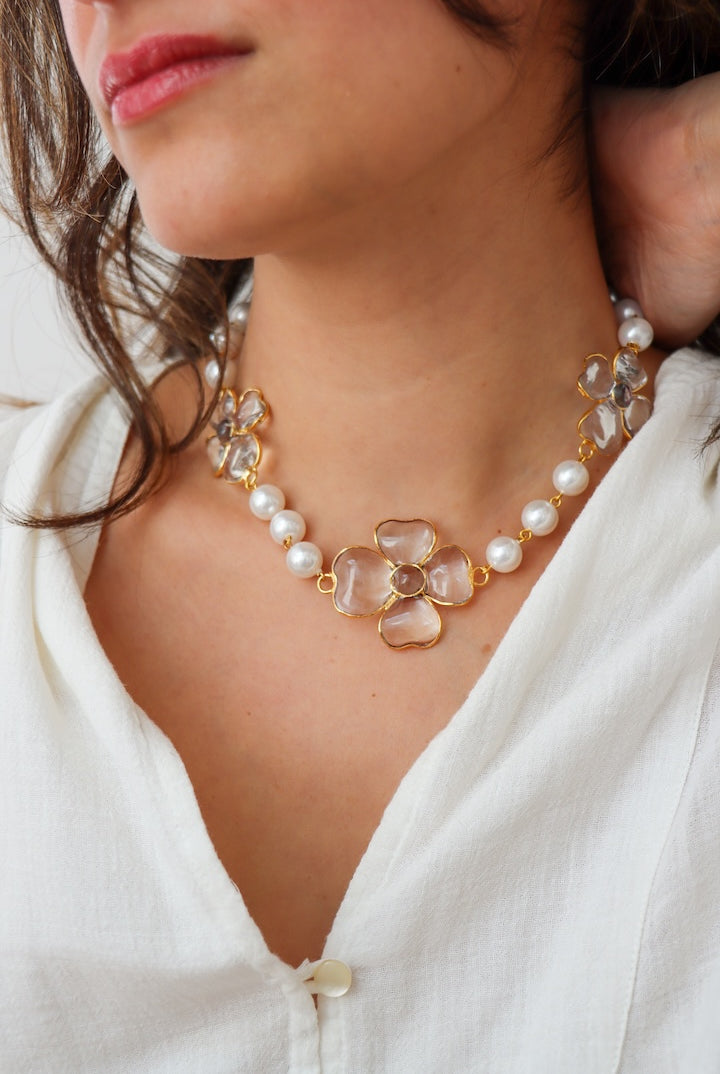
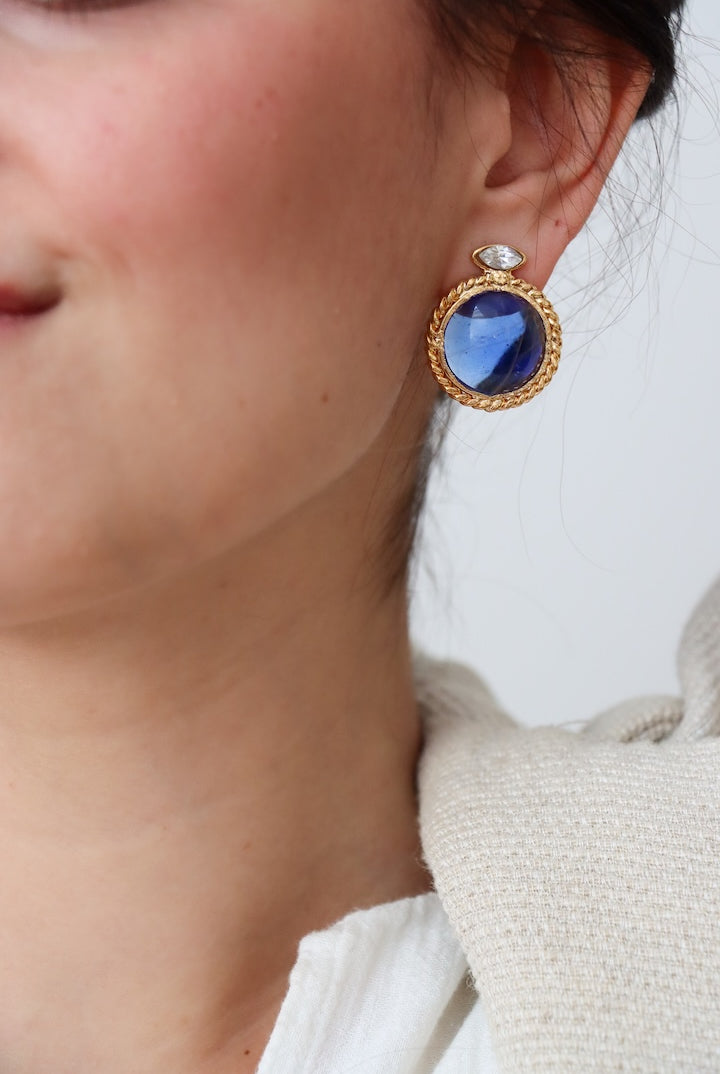
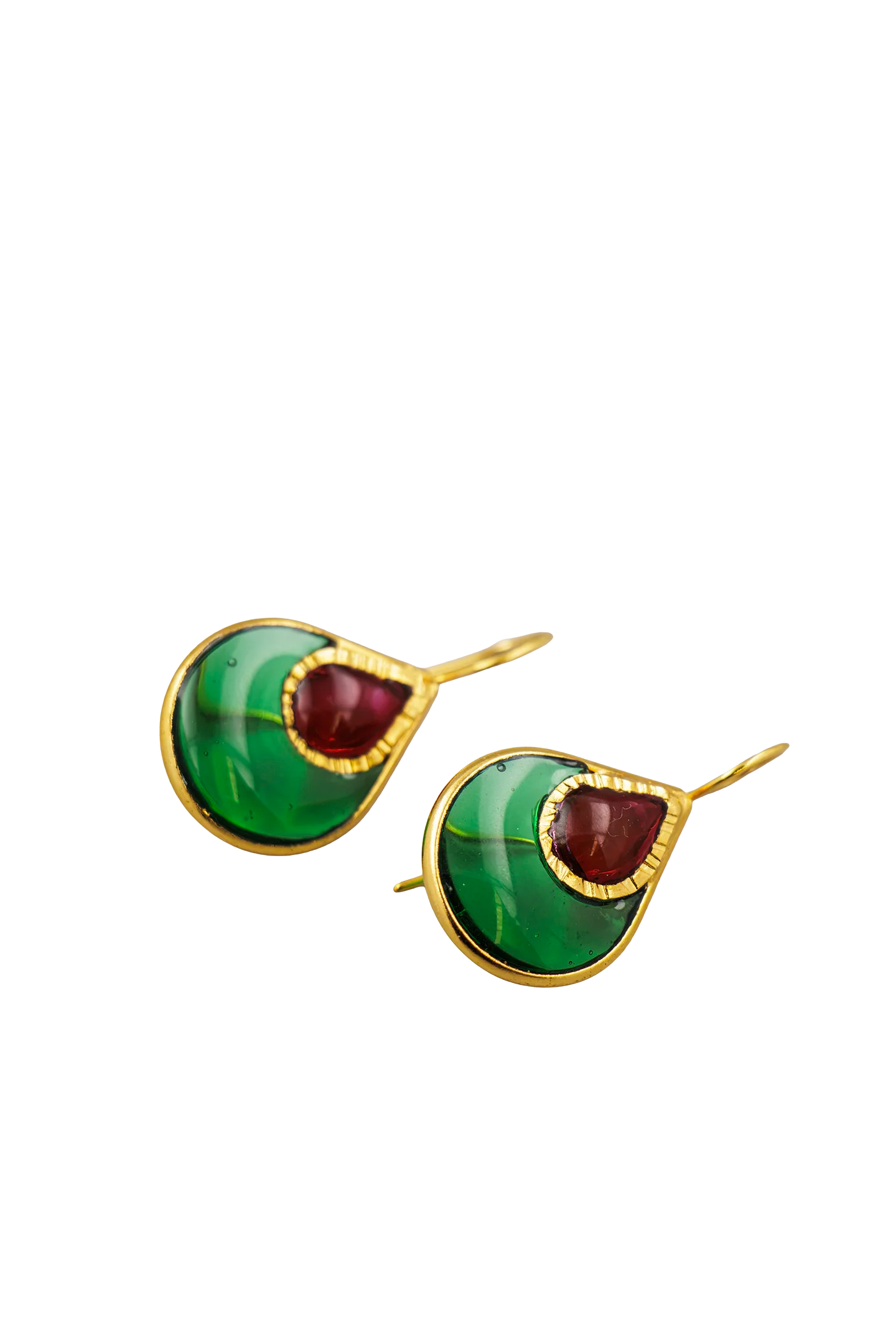
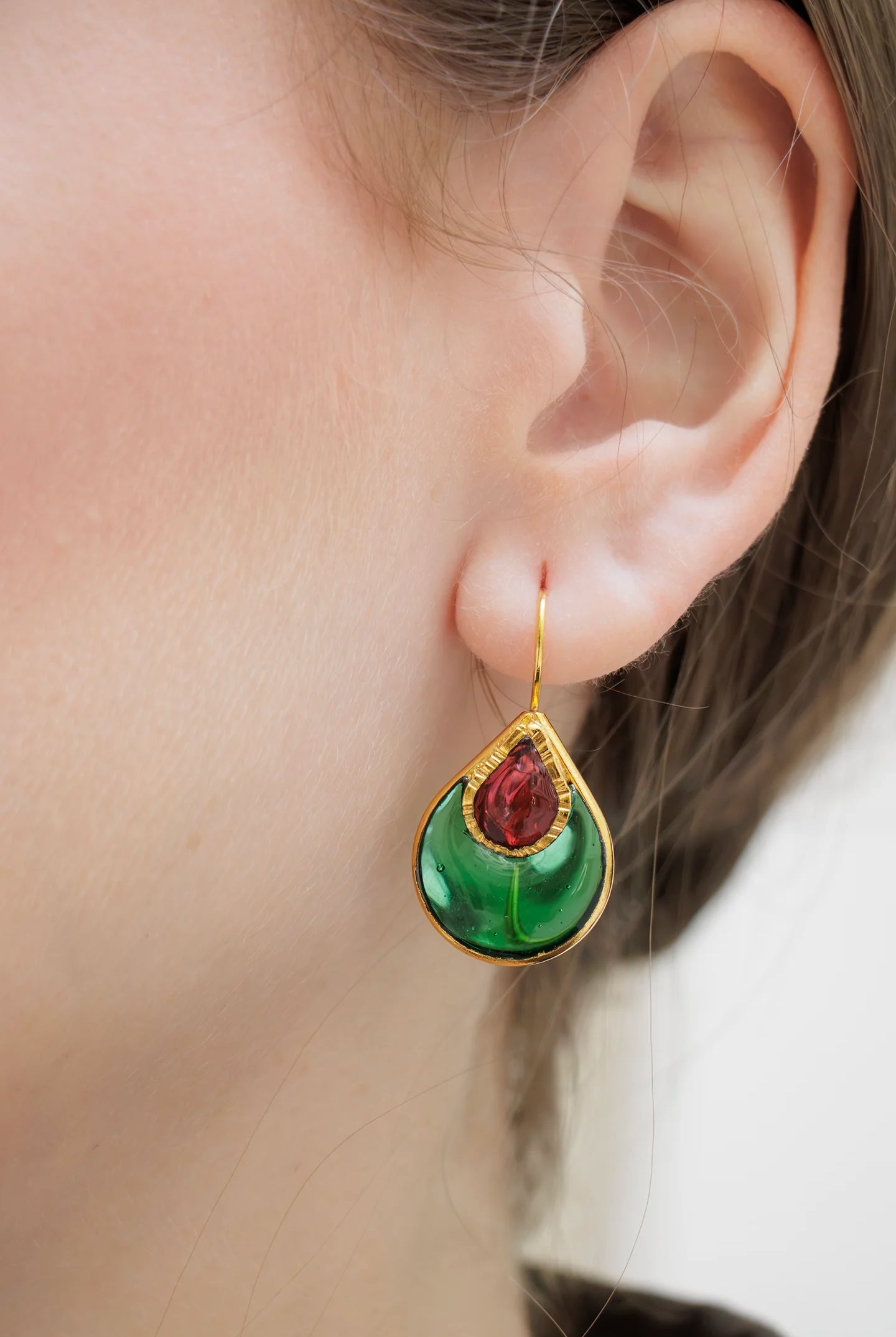
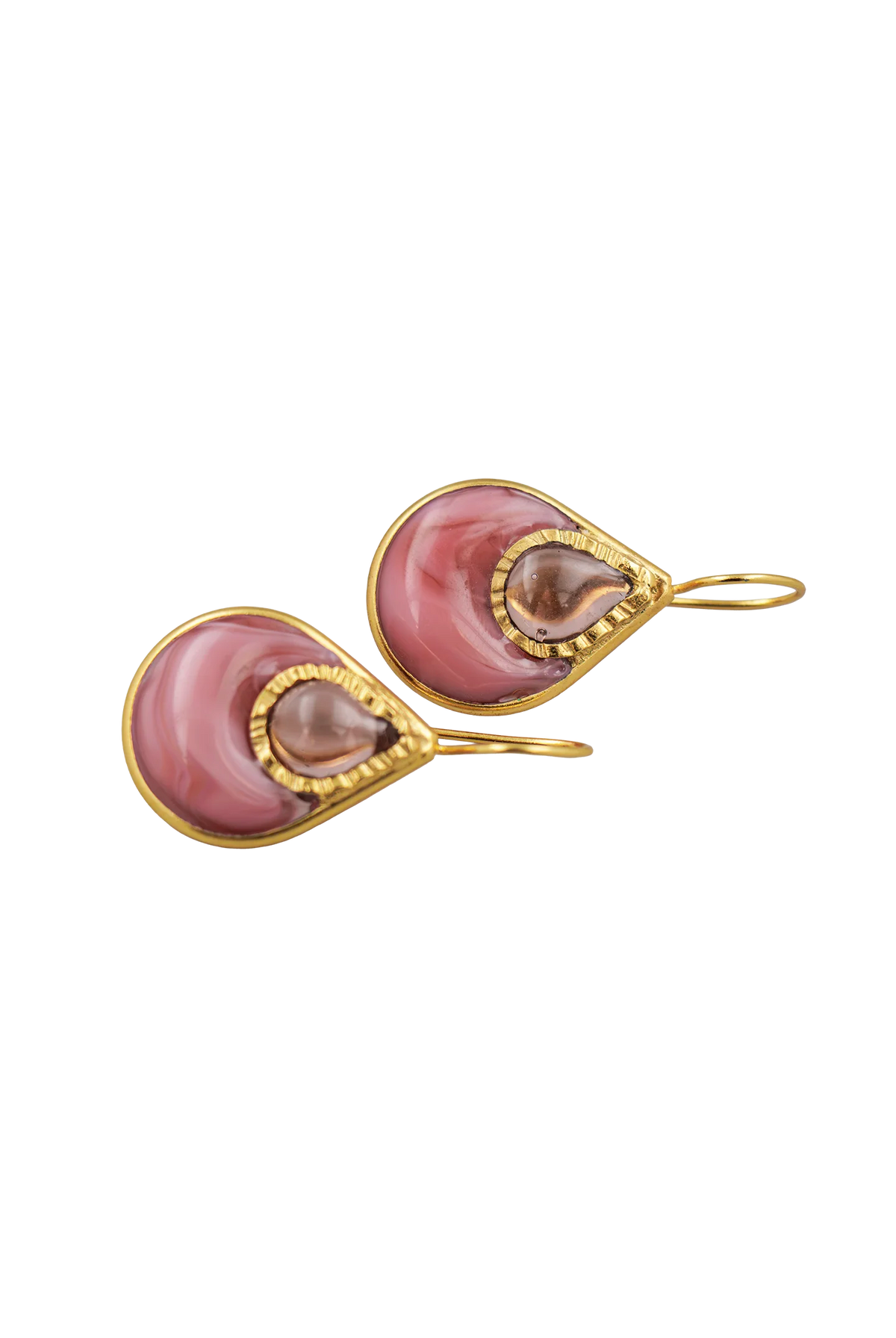
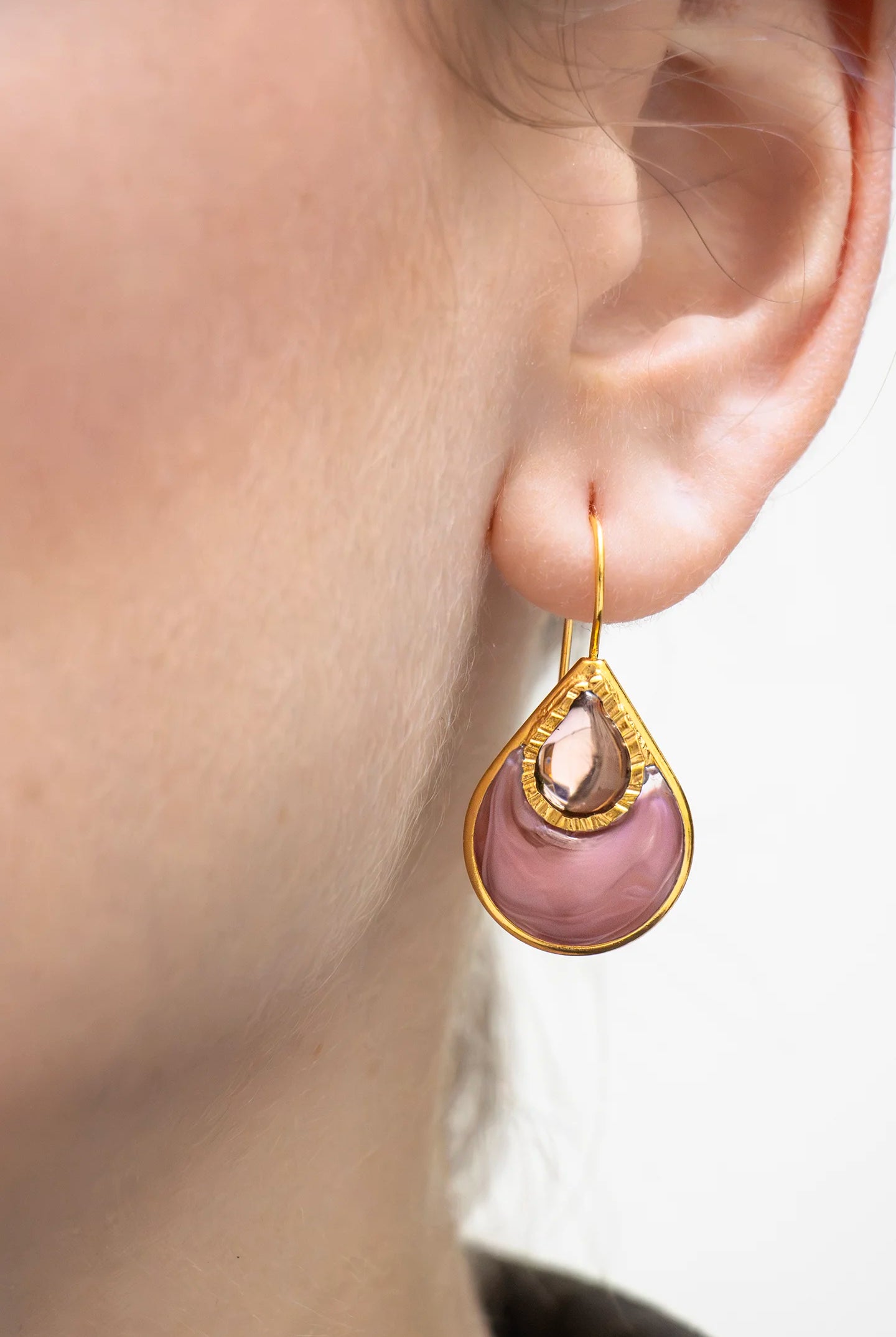
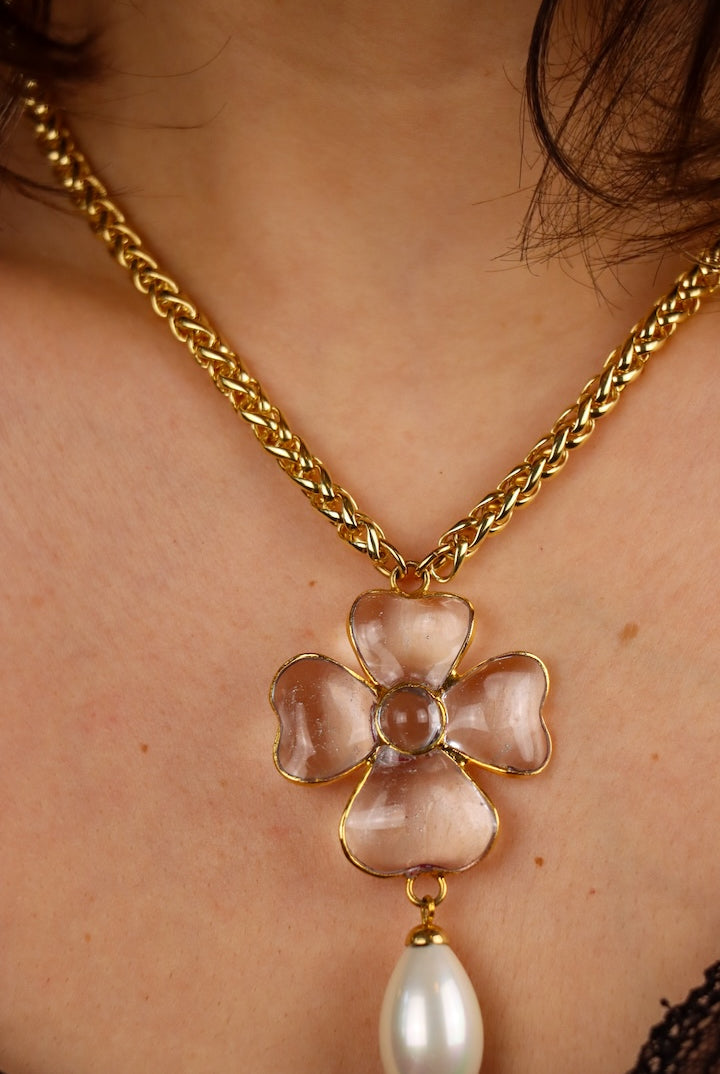
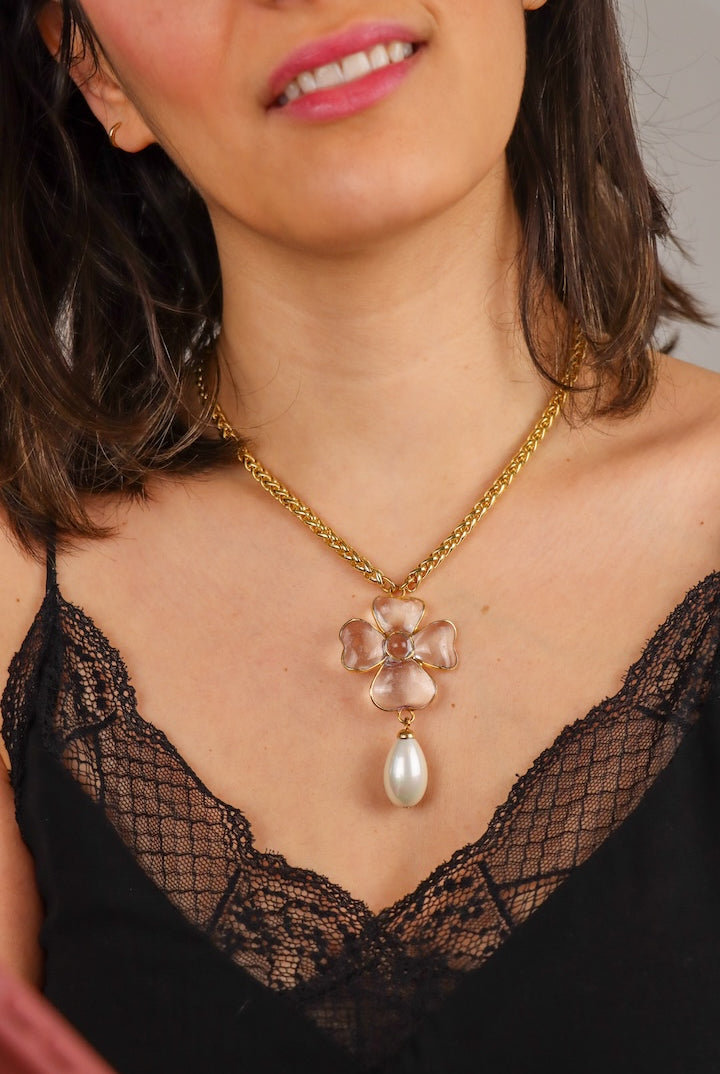
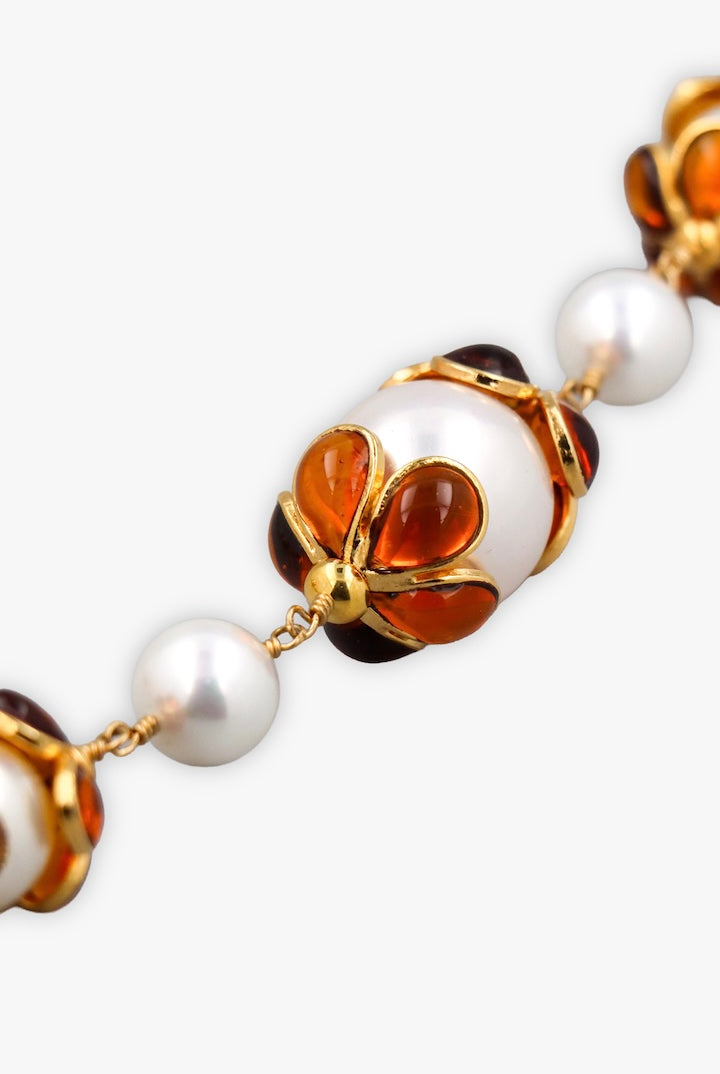
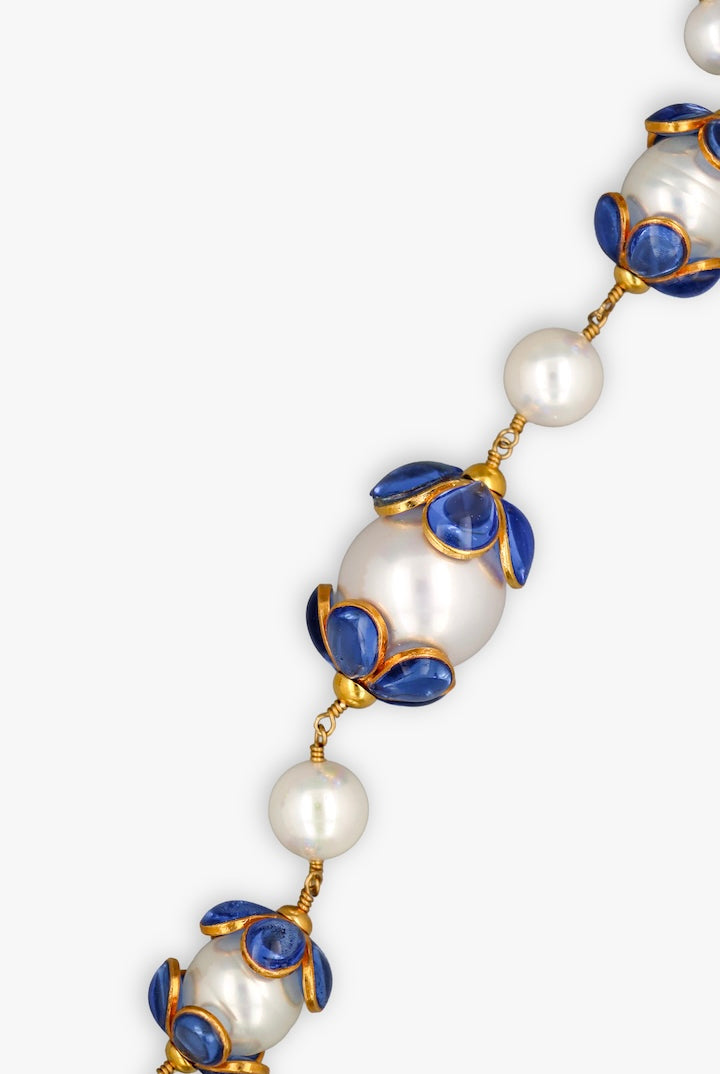
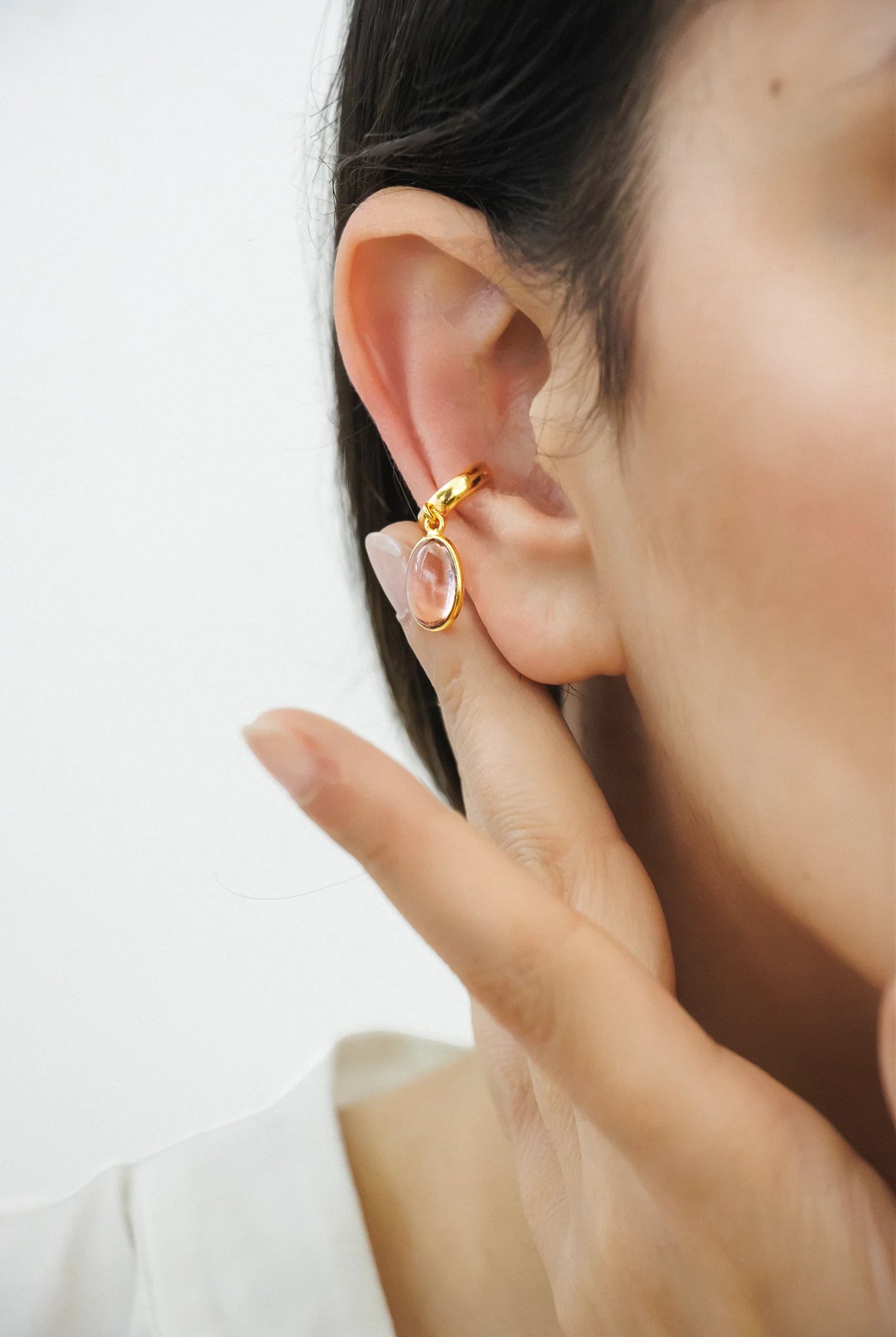
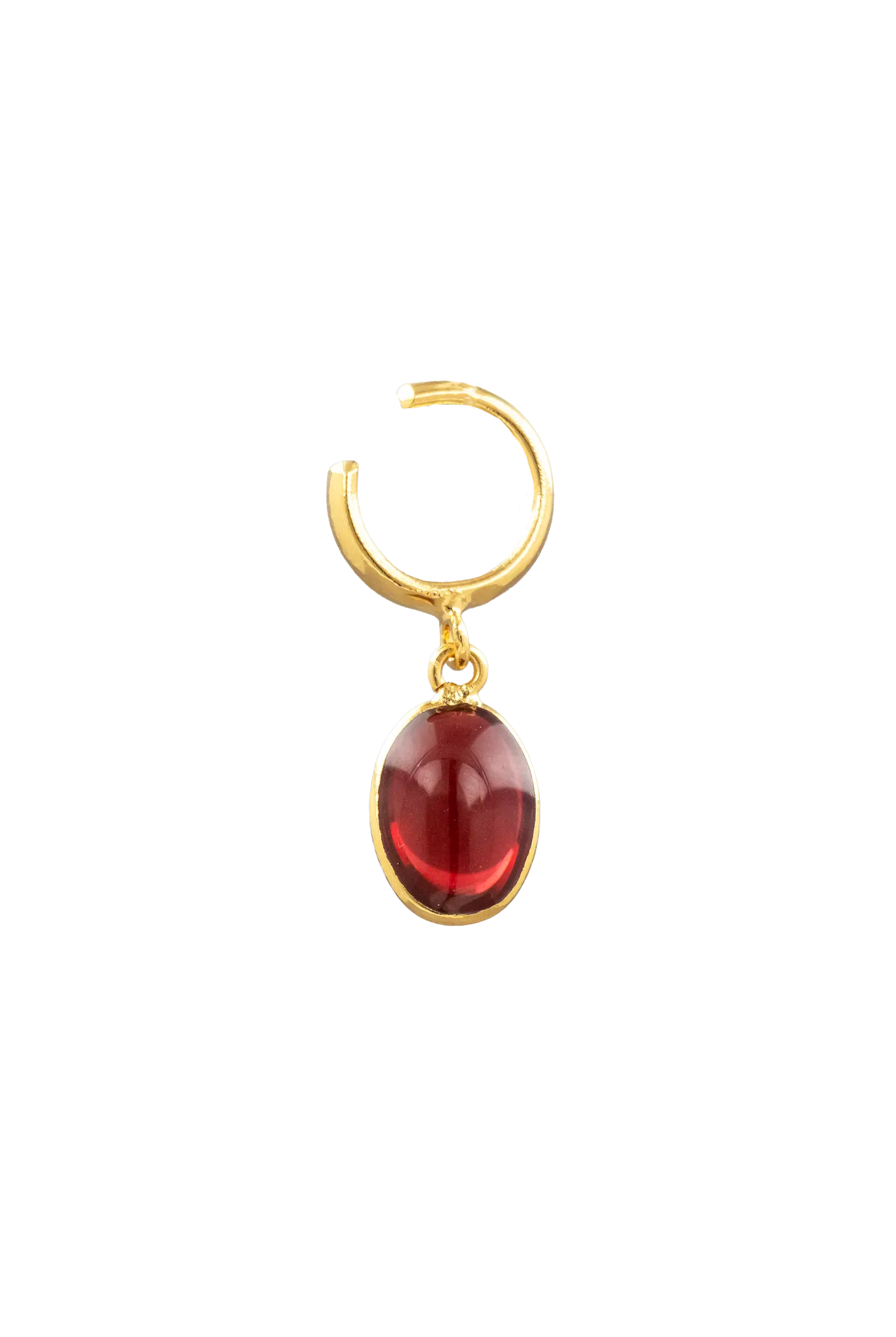
It all begins with a colored glass rod, a flame, and a copper framework. Heated to over eight hundred degrees, the glass becomes a paste, and the hand casts it into the metal. Each piece is created one after another, never identical to the previous one.
Five thousand years of history
As early as ancient Egypt, artisans worked with it to adorn royal burials, and pharaonic tombs yielded amulets, ointment bottles, and funerary ornaments that already bore the technique's signature: colors incorporated into the material, solid forms, and depth of color. Mesopotamia and then imperial Rome continued this tradition before it faded for centuries in favor of blown glass.
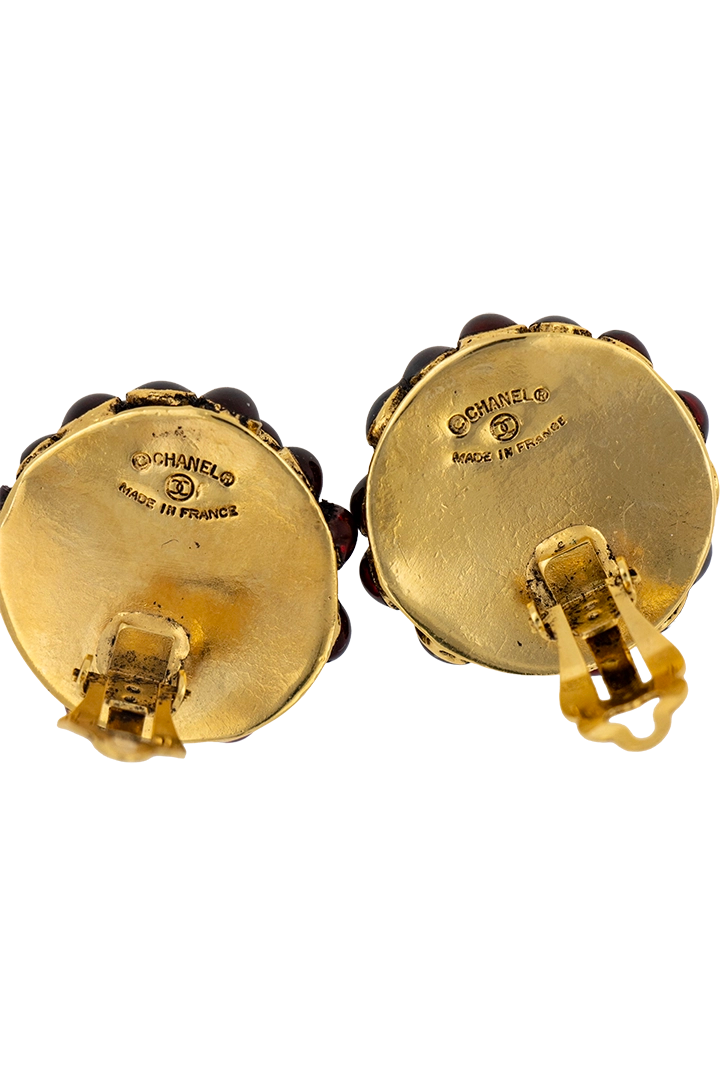
The technique was revived in Paris at the end of the 19th century, championed by the glassmakers of Art Nouveau and later by the houses that made it the signature of couture jewelry.
View the pâte de verre creations
The technique
In Françoise Montague creations, glass is cast in the flame at over 800°C. Our artisans melt colored glass rods onto a copper framework that they shape by hand, then apply the colors one after another. Cooling comes next, and it requires patience.
How to recognize pâte de verre
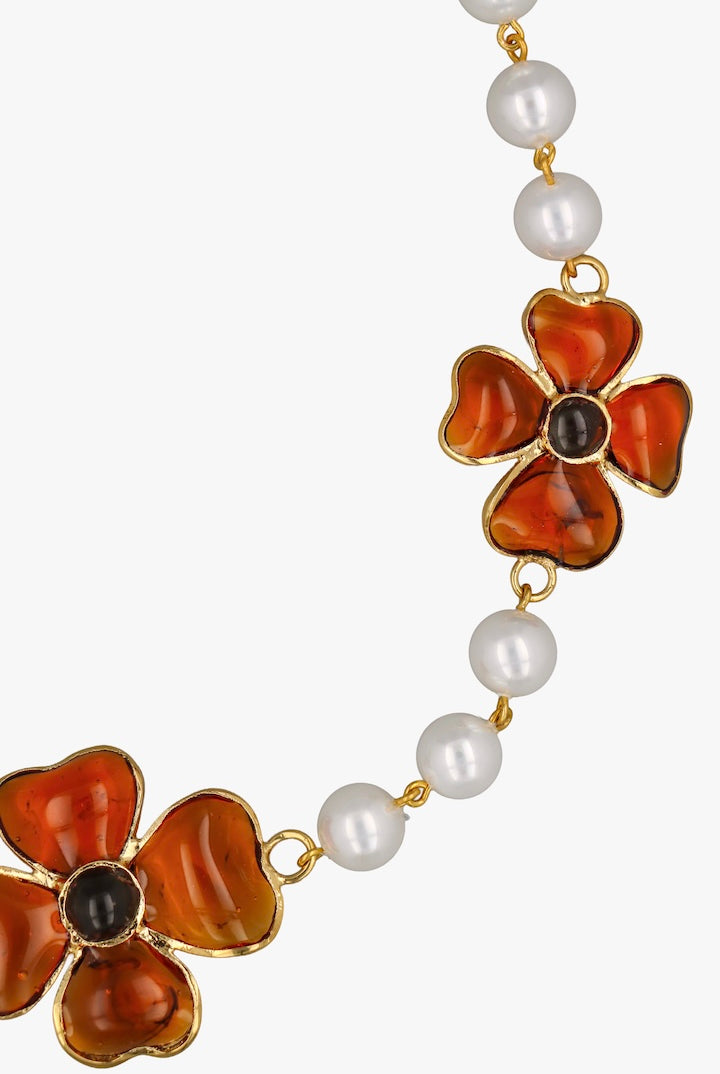
A few clues are enough to distinguish pâte de verre from a resin imitation.
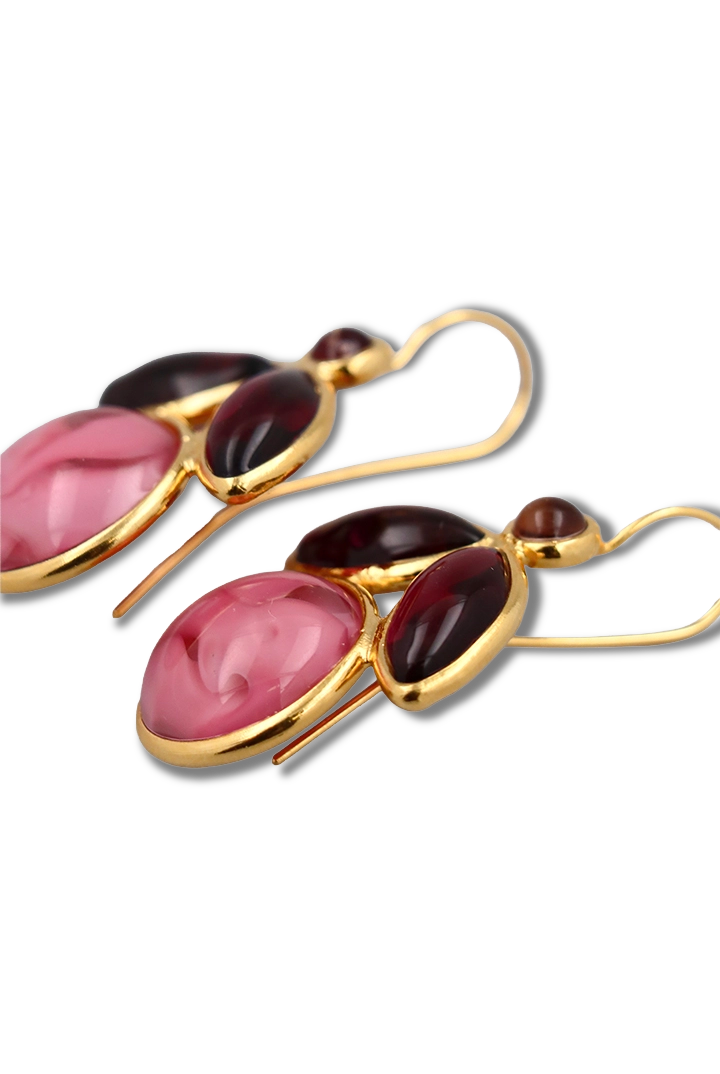
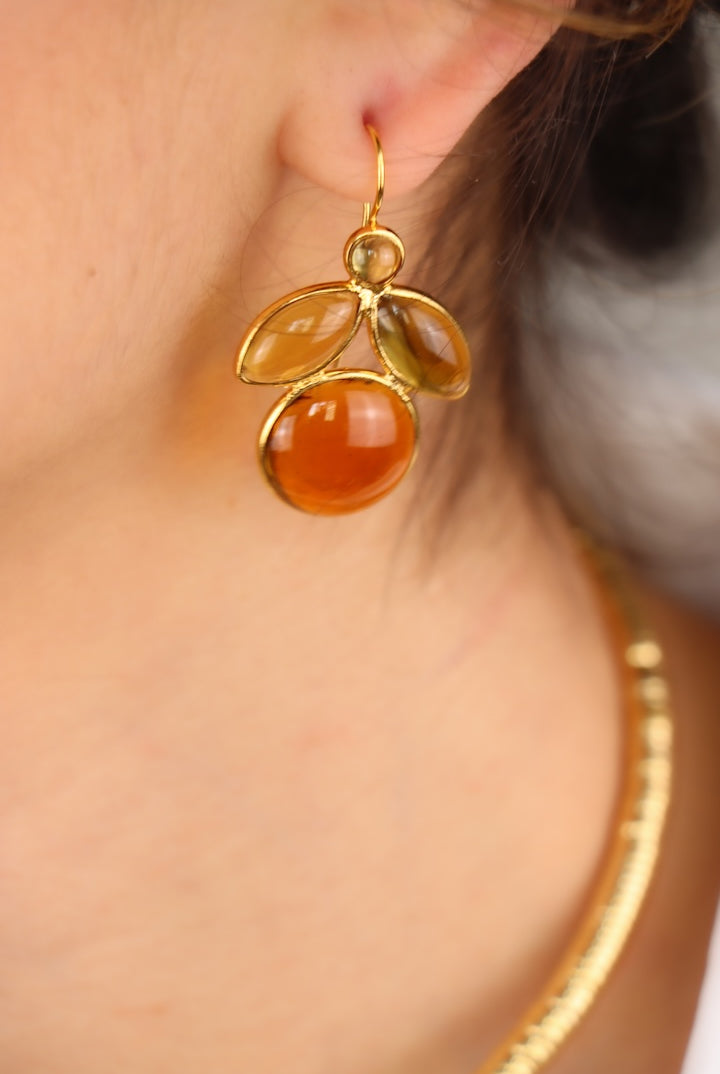
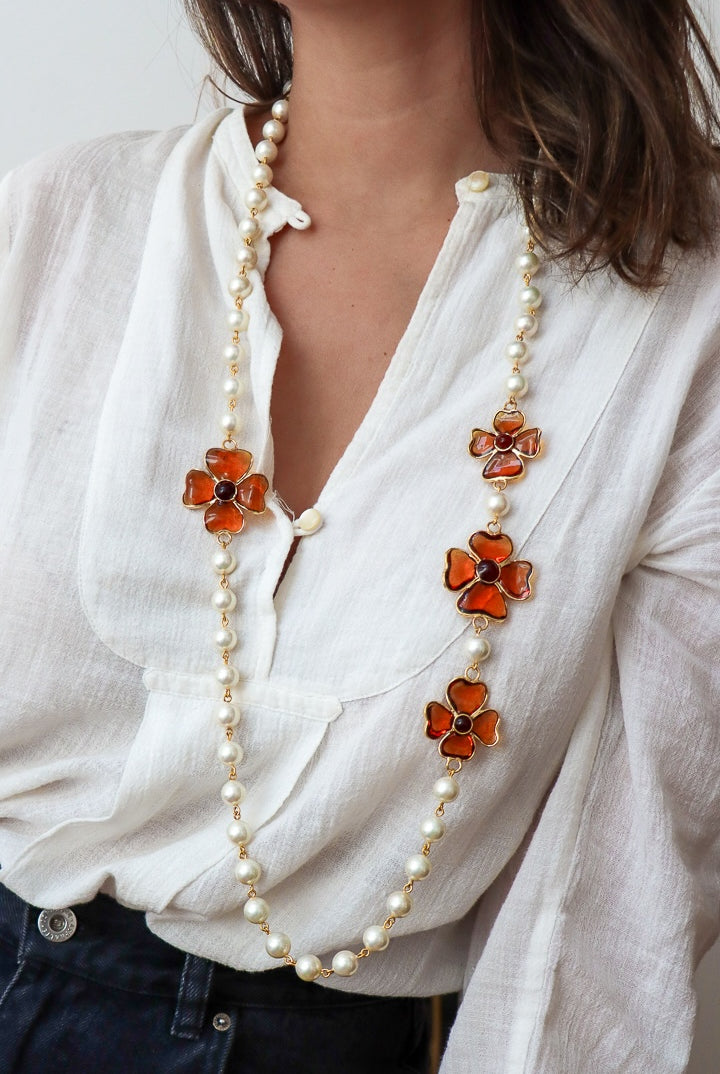
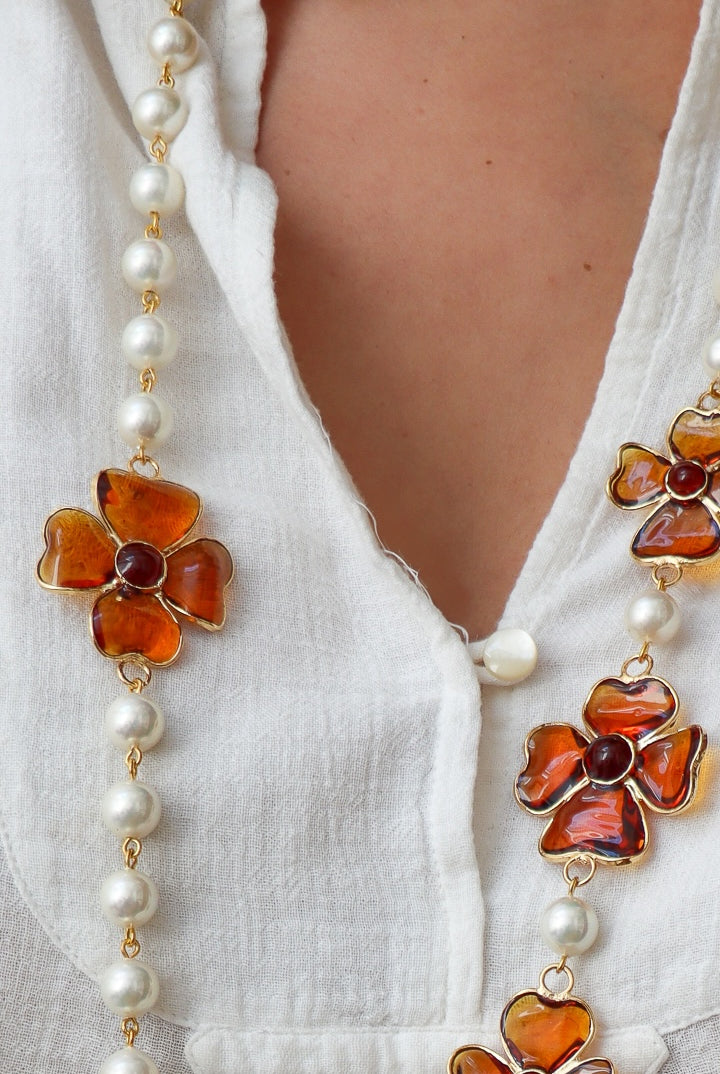
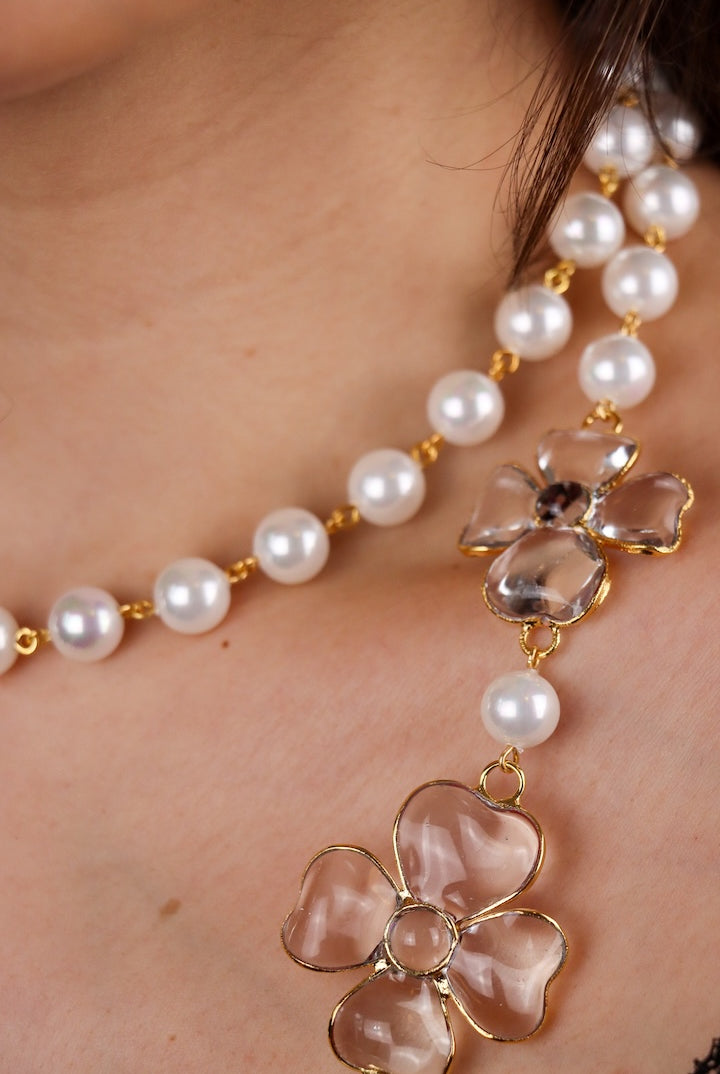
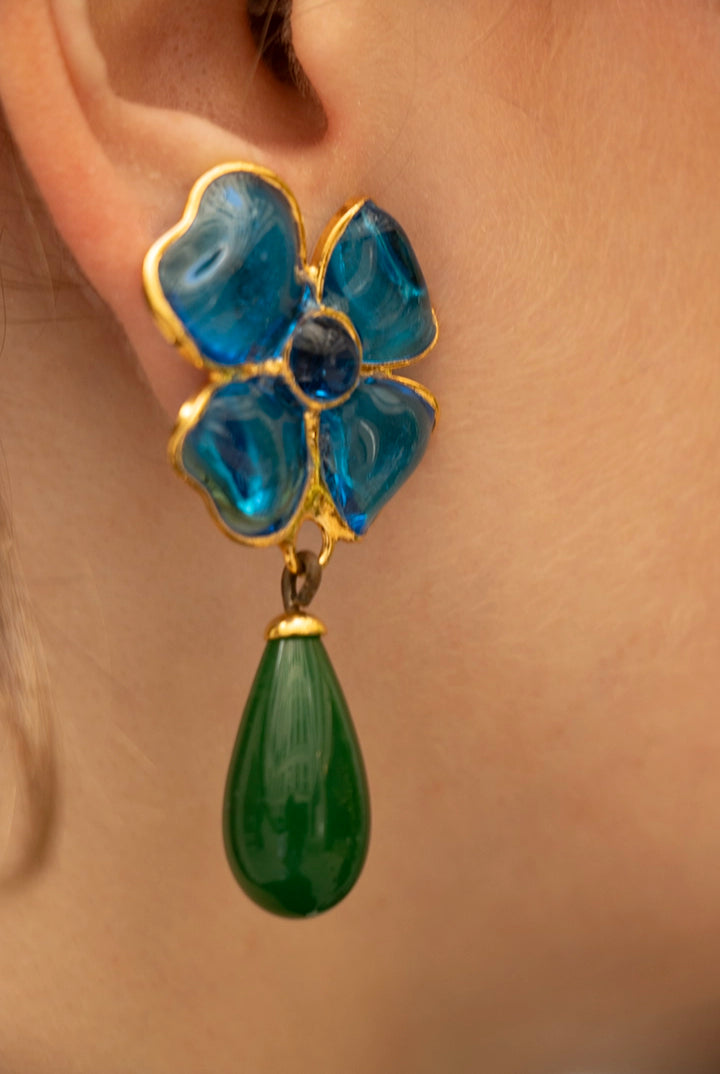
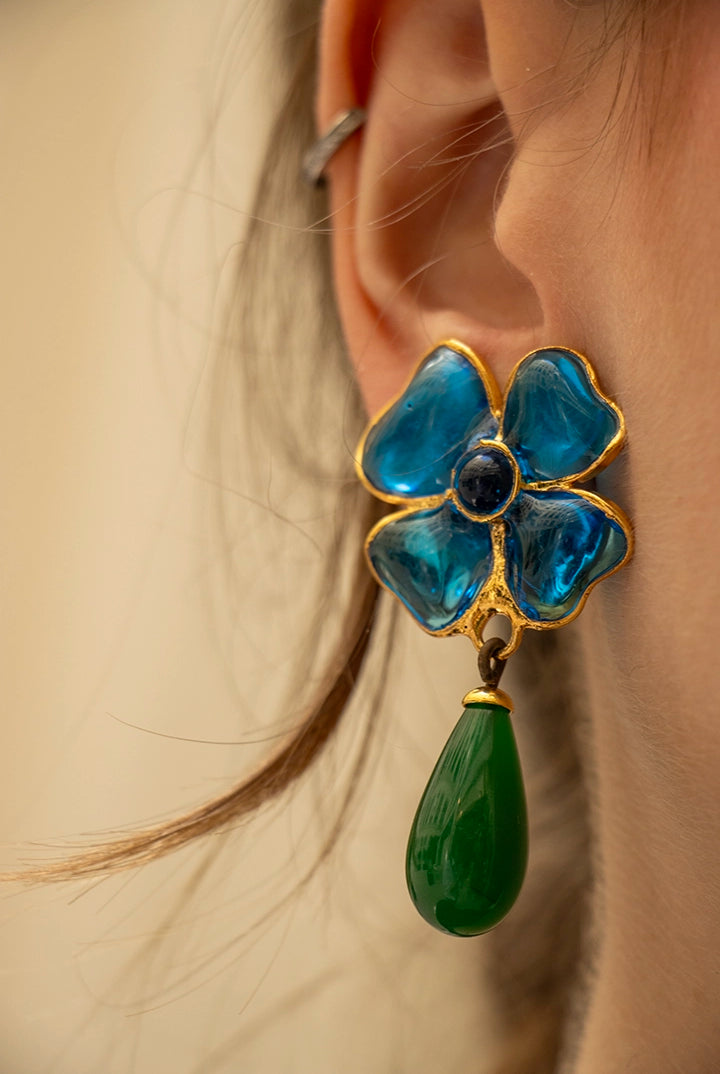
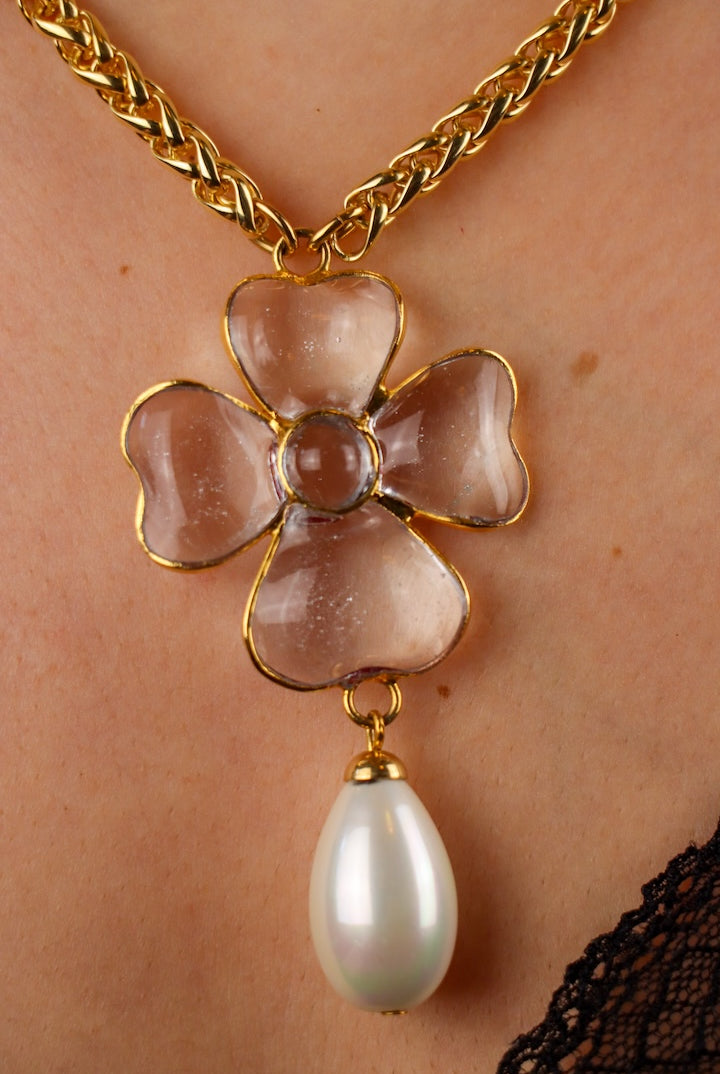
- The depth of the color: When held up to the light, the material lets light through and reveals veils, gradients, and nuances that vary depending on the angle, whereas resin remains opaque and flat
- The weight: Pâte de verre weighs more than resin, and a piece that is too light for its volume should raise doubts
- The mark of the hand: Fine bubbles, slight asymmetries, and a vein created by the torch flame reveal the artisan's hand, whereas a perfectly smooth and symmetrical piece reveals industrial production
How to care for a pâte de verre jewelry piece
Fused glass withstands the passage of time, but it cannot withstand impact or abrasion. A few simple gestures are enough to preserve its material.
- Clean it with a soft, dry cloth, never using an abrasive product or an ultrasonic cleaner
- Store it in a protected place, away from metal pieces that could scratch the surface.
- Avoid perfumes and hairsprays applied directly to the jewelry
- Remove it before exercising, swimming, and sleeping
For thorough care, our workshop on Rue Saint-Honoré handles maintenance and repairs, excluding soldering.
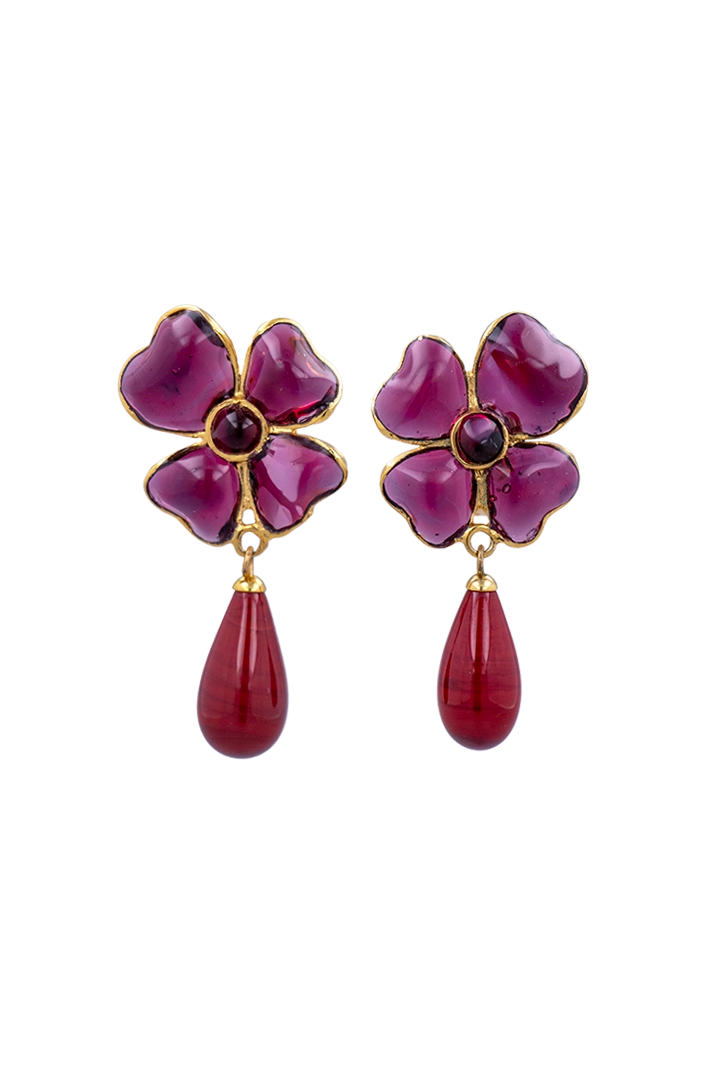
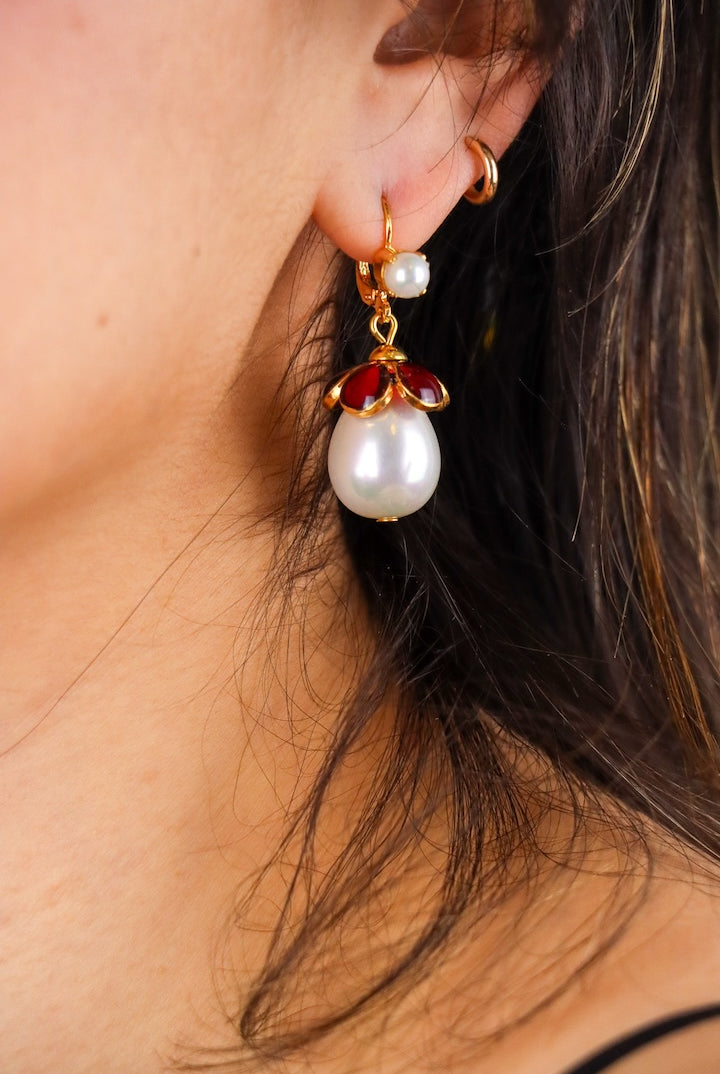
Some of our creations feature this material, crafted on Rue Saint-Honoré. Others, selected from couture archives, preserve its memory.